Browse

Log in / Register
 Share
Share
September 30, 2024 — Thousands of German auto workers streamed out of factories across Germany on Monday, three days after Volkswagen's shock profit warning laid bare a crisis in the country's most important industry. Protests at Volkswagen, BMW and parts maker Bosch underscored growing fears of job cuts, plant closures and a widening competitive gap with Asian automakers, escalating a confrontation that now reaches deep into German politics.
IG Metall, the country's largest industrial union and the driving force behind the protest wave, made clear that Monday's rallies were only an opening move. Union officials portrayed the demonstrations as a warning shot to management, saying they would escalate into full-scale strikes if Volkswagen follows through on threats to dismantle long-standing job guarantees. The automaker has signaled it may rescind a long-standing employment protection pact that ruled out dismissals until 2029, a rupture that would upend decades of German labor-management compromise.
IG Metall's Horst Ott, a leading union negotiator for southwestern Germany's auto heartland, left no doubt about labor's mood. "Due to lethargy and disastrous misjudgements, most managers have failed to keep pace with developments in e-mobility, digitalisation and battery technology, thereby causing the German automotive and supplier industries to fall behind," Ott said. His blunt assessment was echoed at plant gates as workers gathered for rallies in Wolfsburg, Munich, Stuttgart and dozens of smaller industrial towns.
Volkswagen triggered the upheaval on Friday, September 27, when it slashed its 2026 profit margin forecast to 1% at the most. The company blamed an increasingly sluggish Chinese market — where local EV makers have been undercutting VW's models — together with higher provisions for employee retirement costs and sobering expectations for its Porsche sports car brand. All three pressures point in the same direction: Volkswagen is not generating enough money from the vehicles it sells today to fund the electric and digital future it needs to build.
Some of the damage is self-inflicted. German carmakers rode the profitability of combustion-engine SUVs and sedans for two decades. As European EV demand softens and margins on those models shrink, that profit engine is failing. Volkswagen has acknowledged that the accelerated shift to less profitable electric vehicles has left it exposed — commercial pressure that is now translating directly into plans for cost cuts, possible capacity reductions and, most controversially, layoffs.
The distress is spreading well beyond Volkswagen's home base in Wolfsburg. BMW, Germany's other full-range premium giant, is also wrestling with weak demand in China and the costs of recalls and technology upgrades. Bosch, the world's largest auto parts supplier and a pillar of the German supplier sector, has already announced thousands of job cuts in 2024 as the electric transition erases demand for traditional components such as fuel-injection systems. Workers at Bosch plants joined the protests as well, a sign that the anger is systemic rather than confined to one company.
The collision between labor and management comes at a politically explosive moment. This month's state elections in eastern Germany — where both VW and major suppliers operate factories — delivered bruising losses to the parties in Chancellor Olaf Scholz's federal government. Voters in towns built around the auto industry punished Berlin for an economic policy that they fear is deindustrializing the country. In Saxony, where VW runs the Zwickau electric-vehicle plant, anxiety over production cuts and temporary contracts dominated the campaign and helped drive record support for the far-right Alternative for Germany (AfD).
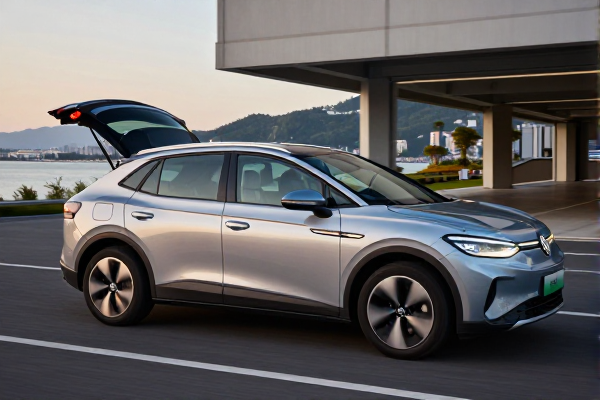
The crisis is not purely German. One of Volkswagen's most strategically important plants outside Europe sits in Chattanooga, Tennessee, where roughly 5,500 workers assemble the Atlas SUV and the ID.4 electric crossover. The factory is central to VW's hopes of offsetting its China losses, particularly as Washington's industrial policy — from Inflation Reduction Act incentives to tougher trade rules for imported EVs — increasingly rewards domestic U.S. assembly.
So far, the German turmoil has not spilled onto American showroom floors. But analysts say the financial squeeze in Wolfsburg could eventually slow new-model launches and trim the discounts and option packages that have made German badges popular in the United States. Add the possibility of fresh tariffs on vehicles imported from Mexico — where both VW and Audi build cars for the North American market — and VW's carefully constructed U.S. strategy suddenly looks more fragile.
There is a pointed contrast between the two sides of the Atlantic. Last year, Detroit's Big Three unions extracted record wage increases from General Motors, Ford and Stellantis after a dramatic six-week strike. In Germany, by contrast, unions are on the defensive, fighting to preserve jobs rather than win new gains. The divergence reflects deeper forces: a U.S. labor market that has been tight and emboldened workers, versus a German export economy that is losing market share to China and struggling with elevated energy costs.
Investors, tellingly, still do not believe the damage is contained. Volkswagen shares lost another 0.6% on Monday morning, Porsche AG — which slashed its own outlook last week — fell 2.3%, and Porsche Automobil Holding SE, the family-controlled vehicle that anchors the Volkswagen group, was down nearly 3%. The market is pricing in the real possibility of a prolonged, messy restructuring that clobbers profits for years.
The deeper problem is structural. Germany's automakers were slow to answer two challenges: Tesla in the premium EV segment, and Chinese manufacturers such as BYD in the volume market. Behind that lies a broader technological lag. European patents in battery chemistry and automotive software — fields that will define the next decade of mobility — now trail those filed in Asia. Simply waiting for demand to recover will not answer that challenge.
IG Metall knows this. That is why the union's message has been hedged with pragmatism, even as its members protest. Officials have said they are ready to discuss flexible working-time models and other labor-cost measures, but they will not accept forced redundancies or the closure of German plants. Under Germany's co-determination system, union representatives hold half the seats on Volkswagen's supervisory board, giving labor institutional power that American and British workers largely lack.
The next several months will likely determine whether the reckoning happens through negotiation or confrontation. Both sides say they want a deal. But the distance between a company that insists the survival of the entire enterprise requires unprecedented sacrifices, and a union that views the program as a pretext for cost-cutting at workers' expense, has rarely been wider in the 87-year history of Volkswagen. Whatever emerges from the struggle will decide more than the fate of Volkswagen's German workforce — counted in the tens of thousands at its plants. It will decide whether Germany's industrial model can still compete in a world that stopped waiting for it.