Browse

Log in / Register
 Share

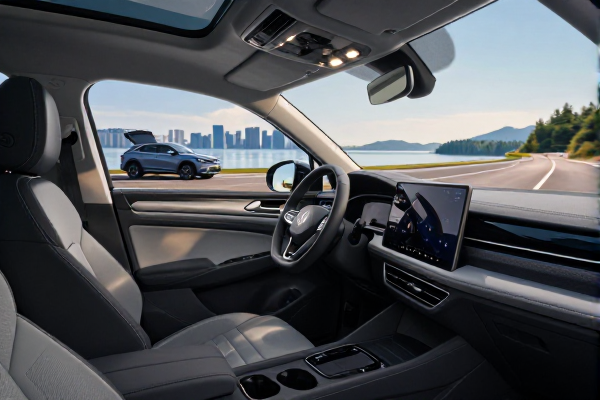
Electric vehicles have overtaken gasoline models on Volkswagen's German order books — a milestone that quickly turned into a scheduling problem for the automaker's factory network. As of November 20, 2025, Volkswagen is canceling planned extra shifts at its flagship Wolfsburg complex, which has assembled the Golf for five decades. Instead of topping 600,000 vehicles, the site will finish the year around 580,000, according to Motor1, which cited German trade publication Automobilwoche. The consumer preference shift has moved from showrooms into the factory planning system itself, testing how quickly a combustion-age company can pivot.
The pullback is not a demand failure; it's a configuration headache. Wolfsburg, an 88-year-old factory that also produces the Tiguan and Tayron, is organized around combustion-engine manufacturing: gearbox lines, exhaust welding, and heavy engine-block machining. Battery-electric cars contain far fewer parts. There's no multi-speed transmission, no exhaust system, and far fewer machined metal components in the drivetrain. An EV line consequently absorbs considerably fewer labor hours per vehicle, so a plant sized for gas-car volumes holds more capacity than an EV-heavy order book can fill. Add the fixed costs of running a giant site — energy, logistics, building maintenance — and unused assembly slots become an expensive problem rather than a margin buffer.
Wolfsburg isn't just another assembly plant. It is the symbolic and political core of Volkswagen, a site that has anchored the Golf for decades and still underpins a large share of economic life in Lower Saxony. For many employees, the cancellation of extra shifts is the clearest sign yet that electric mobility is reordering the company's geography. Shift calendars, tooling investments, and long-term model assignments all now bend toward battery-electric production, even in a factory that once defined the economies of scale behind combustion volume.
The immediate response is a reallocation of capacity. The Emden plant on Germany's North Sea coast will add at least two shifts to build the ID.7 in liftback and estate body styles, Automobilwoche reports. Zwickau, a former East German carmaker site that Volkswagen converted into a pure EV plant, is registering stronger demand for the refreshed ID.3 Neo. The entry-level ID. Polo hatchback has also surpassed 40,000 customer orders across Europe — a clear signal of where market momentum sits. The net effect is a transfer of working hours away from combustion-heavy lines and into battery-electric programs, while Wolfsburg's overtime calendar is quietly deleted.
For most of the past decade, Volkswagen and its legacy rivals struggled to persuade European drivers to give up internal combustion. Purchase prices were high, model choice was limited, and public charging felt like a gamble for apartment dwellers and long-distance commuters. That calculus has changed. Smaller, cheaper EVs introduced during the past 18 months have closed much of the affordability gap, and sustained energy prices have reinforced the lower operating cost of battery power. In Germany, where fuel carries heavy taxes and EVs enjoy registration advantages, running costs now tip many family buyers toward electric — and the order books are following.
None of this is painless. A combustion plant cannot become a battery-pack factory in a single quarter: tooling must be removed, supply chains rerouted, and thousands of employees retrained from engine work to electric drivetrain assembly or body construction. Fewer moving parts also mean fewer assembly hours, which translates into fewer jobs at legacy sites. Volkswagen has promised to avoid compulsory layoffs, and worker councils in Germany retain strong oversight of shift plans and headcount decisions. But the arithmetic is unmistakable: the industry's employment center is migrating from cold-metal machining toward battery-cell production, electronics, and software — fields where German plants currently hold far fewer jobs.
Volkswagen is not the only manufacturer recalibrating around EV demand. Renault has bet on a new generation of affordable electric city cars, while Stellantis has been adjusting plant loads across its compact-car network in Italy, Poland, and Spain. The larger shadow is cast by Chinese carmakers, which have pushed aggressively into Europe's smaller EV segments with sharp pricing. For every legacy brand, the cost of idle combustion capacity is inventory that nobody wants to buy. That shared pressure explains why factories across the continent are being repurposed at an accelerating pace — and why the planning conflict now visible in Wolfsburg is likely to repeat elsewhere.
For U.S. readers, the German order trend is an early indicator of decisions that may cross the Atlantic. Volkswagen builds the ID.4 electric SUV in Chattanooga, Tennessee, and is preparing the ID Buzz van for American showrooms, but it has been cautious about bringing the smaller, cheaper EVs now dominating German demand. Models in the ID.1/ID.2all class would need to land near $25,000 in the U.S. to gain traction, and executives have repeatedly tied that decision to battery costs, tariff policy, and charging coverage. If affordability is flipping Germany's market, the same price-sensitive logic will eventually pressure VW's North American plan, especially as the Golf's shift to Puebla changes the product mix the brand sells here.
Motor1 also reported that Golf production is scheduled to move from Wolfsburg to Puebla, Mexico, in 2027. The transfer would free German capacity for electrified programs while keeping the Golf — still a recognizable nameplate in North America — close to the region's largest market. Puebla already performs combustion assembly, so the move is a pragmatic bridge during the transition. Strategically, it marks the first time Volkswagen is willing to move even its most famous combustion model as part of a broader geographic rewrite of production.
The production reshuffle runs parallel to Volkswagen's most aggressive cost-cutting program in years. With Chinese EV makers pressuring prices in Europe, the group has accelerated work on next-generation lithium iron phosphate (LFP) batteries that avoid expensive cobalt and nickel. Lower cell costs are the precondition for the entry-level cars now at the center of demand. Volkswagen has already shown the ID 2all concept at roughly $27,000 and has stated that a below-$25,000 electric model is on the roadmap. Affordable EVs — not premium electric flagships — are now the company's competitive center of gravity, and factory planning is following.
Volkswagen is rebalancing rather than retreating: trimming overtime in Wolfsburg, adding shifts at Emden and Zwickau, and steering combustion models such as the Golf toward Mexico while European capacity shifts toward battery assembly. For consumers, the payoff is a wider field of compelling low-cost electric cars; for industrial planners, it's a decade of retraining, retooling, and rethinking what full capacity means. The order boom has delivered exactly what Volkswagen spent years campaigning for — and it has imposed what every legacy automaker fears most: a blunt rewrite of the factory map.
Related context