Browse

Log in / Register
 Share


Updated March 31, 2026 — Volvo has confirmed that its 2027 XC60 and XC90 plug-in hybrids will travel more than twice as far on battery power as the current models, resetting the benchmark for the luxury PHEV segment. The XC60 T6 leads with 200 km (124 miles) of WLTP-rated electric-only range; the seven-seat XC90 T8 manages 164 km (102 miles). Both SUVs are due in Australian showrooms in the second quarter of 2027. U.S. specifications and pricing have not been announced, and are expected to be confirmed closer to launch.
The refreshed lineup introduces two plug-in grades. The T6, new to the XC60, pairs a turbocharged 2.0-liter four-cylinder gasoline engine driving the front wheels with an electric motor on the rear axle. Total output is 262 kW (351 hp). Its 200 km (124-mile) WLTP electric range is the headline number, but the fuel-economy claim is just as striking: 1.0 L/100 km — about 235 mpg in U.S. gallons.
The T8, already familiar to Volvo buyers, uses a stronger gasoline engine to produce 339 kW (455 hp) in both SUVs. In the XC60, it covers 189 km (117 miles) on electricity alone. In the larger, heavier XC90, the same drivetrain is good for 164 km (102 miles). Volvo lists T8 consumption at 1.1 L/100 km, or roughly 214 mpg.
European range claims never map one-to-one onto U.S. ratings. The WLTP procedure is run in milder conditions, so EPA figures typically come in 20 to 30 percent lower. For reference, the outgoing XC60 T8 is rated at 19 electric miles by the EPA, and the XC90 T8 at 18.
Apply the usual discount to the new cars and the shape of the U.S. numbers becomes clear: around 80 to 100 EPA miles for the XC60, and roughly 70 to 85 miles for the XC90. Even the bottom of that range would be about four times the current XC60's EV range and outstrip every plug-in SUV sold in America today.
Plug-in hybrids have long been criticized for offering so little EV range that owners end up burning gasoline after the first few miles. A 19-mile rating is barely enough for short errands; an 80-plus-mile rating changes the ownership math completely.
A 30-mile round trip, not unusual for American commuters, would use roughly a third of the XC60's projected EPA charge. With a Level 2 home charger and a nightly top-up, the gasoline engine could sit dormant for an entire work week, waking up only for longer road trips. Cold weather, sustained highway speeds and heavy climate-control use will cut into any EV estimate, but the arithmetic has fundamentally shifted: the engine is now a backup rather than the default.
Volvo credits the improvement to a "larger-capacity, floor-integrated" battery pack. Usable capacity in the T6 is 38 kWh — well above the 14-to-26-kWh packs carried by most rivals. Mounting the cells flat in the underbody keeps the added weight low in the chassis and preserves interior and cargo space.
The electric motor has been upgraded as well. More power means the car can stay in electric mode across a wider range of situations, including sustained highway cruising, before the gasoline engine has to step in. Volvo hasn't published official charging times, but at expected plug-in hybrid charging rates, a full refill from empty should fall in the four-to-six-hour range on a 240-volt home wallbox — an easy overnight proposition.
No current U.S. plug-in SUV comes close to these claims. The Toyota RAV4 Prime, among the most popular PHEVs in the country, is rated at 42 EPA electric miles. The BMW X5 xDrive50e manages 38, the Ford Escape PHEV 37, and the Jeep Grand Cherokee 4xe 26.
Even after the WLTP-to-EPA haircut, the Volvos would lead the entire PHEV class by a margin of roughly two to one. Battery size tells the same story: most rivals carry packs half the capacity of the XC60's, which is exactly why their EV ranges top out in the 30-to-45-mile band.
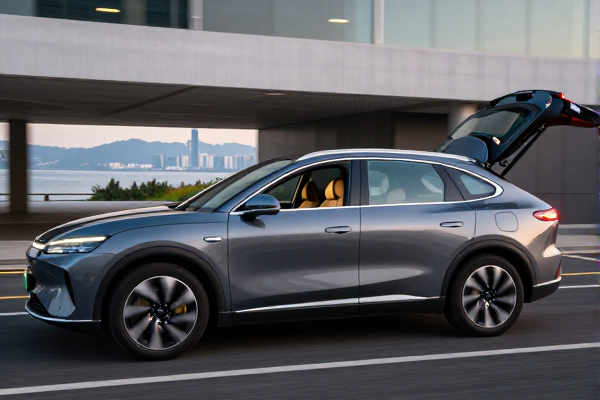
Alongside the hardware changes, the XC60 receives a thorough visual update. A new grille, front bumper, bonnet, front wings and wheel designs bring it into line with the recently refreshed XC40 and EX40. The signature "Thor's Hammer" daytime running lights survive, while the tailgate, LED brake lights and rear bumper are all reworked at the back.
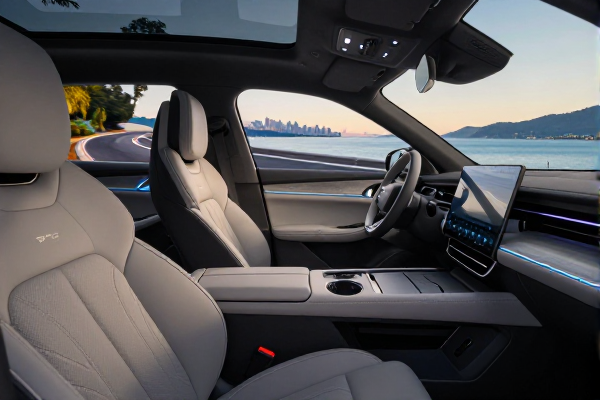
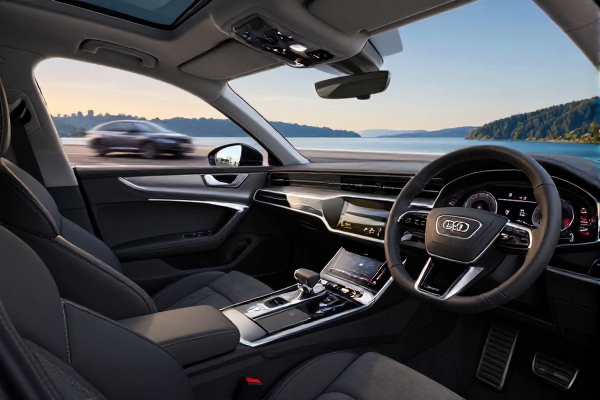
Inside, Volvo's newest infotainment system makes its XC60 debut. The marquee addition is Google Gemini, which — in theory — makes many functions usable through natural speech rather than preset voice commands. Asking for suggested destinations is the example Volvo cites, and Google's built-in ecosystem, including Maps, continues to underpin the interface.
The XC90 already received its round of styling and interior upgrades, so this update focuses mainly on the powertrain. It picks up the same Gemini-equipped infotainment system as the XC60. As before, the T8 is the only plug-in option for the seven-seater; a mild-hybrid gasoline version remains part of the range.
Volvo Australia says both model lines will continue to offer a choice between plug-in hybrid and mild-hybrid powertrains. A mild hybrid is essentially a conventional gasoline engine with light electrical assistance, offering no meaningful EV-only driving. These variants typically serve as the lower-priced entry points for buyers who don't need plug-in capability.
Australia launches first, in the second quarter of 2027. Current T8 pricing in Australia stands at A$92,683 (about US$61,000) for the XC60 and A$114,222 (about US$75,000) for the XC90, before on-road costs — a bundle of registration, stamp duty and dealer fees with no direct U.S. equivalent. Volvo warns that those starting prices may be revised before launch.
For U.S. buyers, the open questions are timing, trim structure and cost. Volvo has not said whether the T6 will join the T8 in American showrooms, and final EPA numbers are the last big variable. The XC60 and XC90 anchor Volvo's U.S. lineup, so the updated models are all but certain to reach North America; the range ratings and price tags attached to them are the details worth watching.
This is more than a mid-cycle range bump. By engineering a 38-kWh pack into a plug-in hybrid, Volvo is making a clear strategic statement. The company dropped its earlier pledge to sell only pure EVs by 2030, replacing it with a target of 90 to 100 percent "electrified" vehicles by the end of the decade — a category that lumps in mild hybrids, PHEVs and full EVs.
Big-battery PHEVs are what make that target credible in markets where charging infrastructure lags or EV adoption has cooled. If the new EPA numbers confirm the WLTP math, the 2027 XC60 and XC90 will deliver most of the daily experience of an electric vehicle without the range anxiety or charging dependency. For a segment built around compromise, that would be a genuine shift.