Browse

Log in / Register
 Share

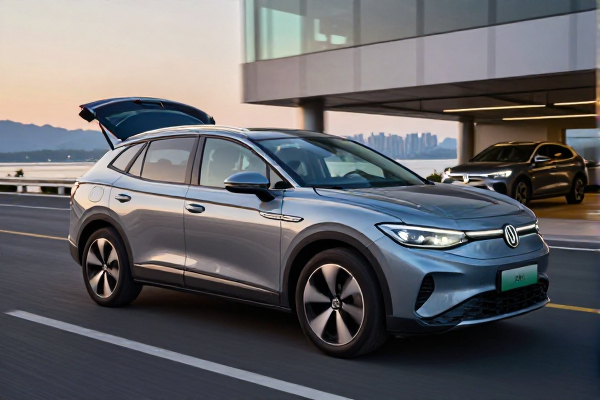
January 2025 – Volkswagen US has confirmed that the brand’s global decision to slash its model range by up to 50 percent will not immediately affect its American lineup. All current passenger and commercial vehicle lines are expected to continue as usual, at least for now.
The German automaker announced in July 2024 that it would begin trimming its model offerings across the entire Volkswagen Group – including Audi, Škoda, Cupra, and Porsche – and reduce variant complexity in trim levels, equipment packages, and drivetrain options by up to 75 percent. While the group has yet to reveal which specific models will be cut, Volkswagen US insists the plan has “absolutely no implications” for the American market.
“We are already quite selective because our main focus is delivering and catering to the different customer needs. Our portfolio is very tailored and targeted,” a Volkswagen US spokesperson told CarExpert at the recent launch of the Amarok W600. “We are in constant conversation with headquarters, but right now it has absolutely no implications for the entire Group in the US. We are in a really good spot.”
Part of the reasoning behind the Group’s decision is to reduce overlap between similar models, primarily across passenger car and SUV segments globally. The Group previously stated it would concentrate on “the most attractive market segments” in its cull. Recent reports suggest models like the Audi Q5 Sportback, Škoda Fabia, and Porsche Taycan could be on the chopping block – but none of these are core US volume sellers, further insulating the American market.
One division that has received less attention in the cull conversation is Volkswagen Commercial Vehicles, which is responsible for models like the Caddy van, Multivan people mover, and the Amarok pickup. Given that commercial lineups are generally less complex, Volkswagen Commercial Vehicles US (VCV US) says major changes are unlikely in the near future.
“There’s no immediate impact for us. We are always looking at our model complexity and variants, and that’s something our customers actually love: the ability to add the options they want, especially in our van product range,” said Michelle Rowney, head of marketing and product at VCV US. “But we always look to help customers manage that complexity. We examine the most popular options and specifications, then bring in variants that meet those needs.”
Michael Cenci, product manager at VCV US, added that there is little need to strip back the brand’s commercial range locally, as the brand is already very selective in which models it introduces. “Each one of the Commercial Vehicles products does a very different job. There’s very little overlap between them. We’re already quite lean in the way we offer our product. We have small, medium, and large vans, electric versions, and pickups – each has its own defined purpose. We are not impacted by any culling at this stage.”
The US market relies heavily on the Atlas, ID.4, and the upcoming ID.Buzz, while the Golf GTI and Jetta remain popular in the passenger segment. None of these models are seen as direct overlaps that would be targeted for elimination. Industry analysts note that Volkswagen’s US lineup is already narrower than its European offering, making the local portfolio less vulnerable to the global trim.
“The US is a different beast,” said automotive analyst Mark Fulthorpe of S&P Global Mobility. “Volkswagen has already been disciplined here, avoiding the proliferation of niche variants that plague their European range. The ID.4 and Atlas are already volume leaders, and the commercial vans have a loyal following. I’d expect the US to be one of the least affected regions.”
However, the global cull could still have indirect effects. For example, if the Group decides to phase out the Škoda Fabia in Europe, it might free up resources for the next-generation Polo or ID.2, but that is unlikely to impact the US since those subcompacts are not sold here. Similarly, the Audi Q5 Sportback’s potential axing would not affect US Audi dealers who already offer the regular Q5 and Q5 e-tron.
Volkswagen US emphasized that it remains in close dialogue with Group headquarters in Wolfsburg, monitoring developments. The company stated that it will continue to adjust its lineup based on customer demand, regulatory changes, and market trends. For now, US buyers can expect the full range of VW passenger cars, SUVs, and commercial vehicles to remain available.
As the global automotive industry moves toward electrification and cost-cutting, Volkswagen’s model rationalization is a strategic move to streamline operations and boost profitability. But for American consumers, the immediate takeaway is reassuring: the cars and vans they know and love will stay on sale for the foreseeable future.