Browse

Log in / Register
 Share

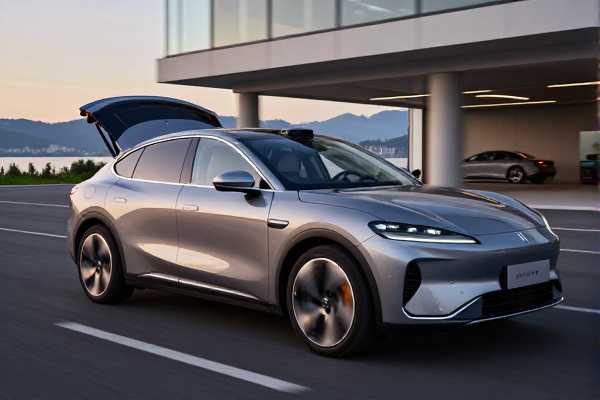
Volkswagen has officially claimed the title of building the most aerodynamic production-ready electric vehicle on Earth. On March 28, 2025, the automaker announced that its “Mission Efficiency” demonstrator completed a 1,278-kilometer journey from Wolfsburg to Vienna on a single charge, crossing Germany, Poland, Czechia, and Austria. The feat not only highlights the car’s extreme efficiency but also sets a new benchmark for drag coefficient among vehicles approved for series production.
The journey began in Wolfsburg, home to Volkswagen’s headquarters, and ended in Vienna. The EV was charged only once before departure, meaning it covered the entire multi-country route on a single battery charge. While the exact remaining charge at the destination was not disclosed, the trip proves that real-world range can far exceed current market norms when aerodynamics are optimized to the limit.
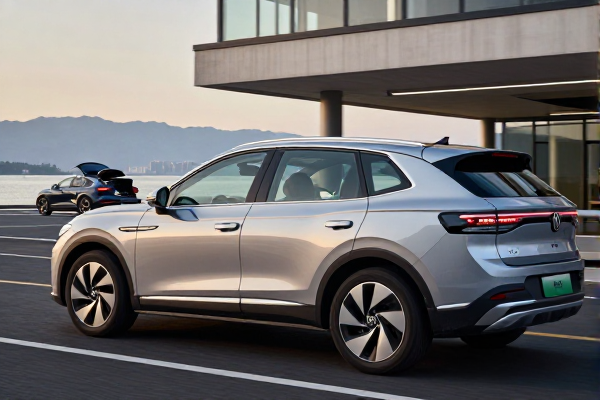
The record is significant because it validates Volkswagen’s claim that the “Mission Efficiency” vehicle achieves the lowest drag coefficient ever recorded for a production-approved car. According to the company, the design went through hundreds of hours in the wind tunnel, with every surface reshaped to minimize air resistance. Details such as flush door handles, covered wheel arches, and a tapered rear section all contribute to the car’s slippery profile.
Aerodynamic drag is the single biggest energy consumer at highway speeds for any electric vehicle. Lowering the drag coefficient by just 0.01 can add several kilometers of range per kilowatt-hour. Volkswagen’s achievement pushes the envelope beyond what was previously considered feasible for a car that can be legally driven on public roads. For context, the current production car with the lowest drag coefficient prior to this was the Mercedes-Benz EQS with a Cd of 0.20. The “Mission Efficiency” car is believed to have beaten that number, though Volkswagen has not yet released the exact Cd value.
Industry analysts point out that such a record requires trade-offs. “You have to balance aerodynamics with practicality, visibility, and safety regulations,” said Dr. Klaus Heine, a former aerodynamicist at a rival automaker, in an interview. “Volkswagen’s team clearly found ways to overcome those challenges without compromising the car’s ability to be used in everyday conditions.”
The “Mission Efficiency” vehicle is not just a one-off laboratory project; it is based on Volkswagen’s MEB platform, which underpins the ID. family of electric cars. The lessons learned from this record attempt are expected to influence future production models, particularly the upcoming ID.3 facelift and a potential successor to the ID.4.
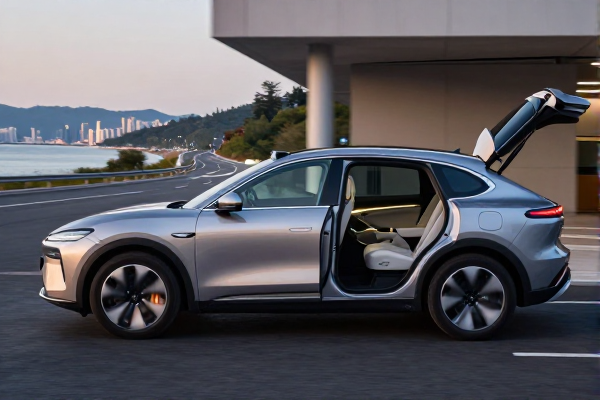
Most notably, the car features active grille shutters, fully covered underbody panels, and optimized wheel designs that reduce turbulence. The side mirrors have been replaced by discreet camera-based systems, and the rear window slopes more steeply to channel air smoothly off the trunk. These changes are both functional and aesthetic, suggesting that future Volkswagen EVs may adopt a more coupe-like silhouette.
The record also underscores a broader industry trend: automakers are shifting focus from simply increasing battery size to reducing energy consumption. A more efficient car requires fewer battery cells, which lowers cost and weight. Volkswagen’s “Mission Efficiency” proof of concept shows that with advanced aerodynamics, a 100 kWh battery could potentially deliver a real-world range of over 1,500 kilometers under optimal conditions.
“This is not just about a single car’s achievement,” said a Volkswagen spokesperson. “It demonstrates where we can take electric mobility in the coming years. The technology we tested here will find its way into series production, making every new Volkswagen EV more efficient.”
For consumers, the direct benefit is longer range without the need for heavier, more expensive battery packs. That means lower purchase prices and better residual values. Additionally, cars that cut through the air more cleanly are quieter at high speeds, improving cabin comfort.
Volkswagen has not announced whether the “Mission Efficiency” vehicle will ever be sold as a standalone model, but the design and engineering solutions are already being cataloged for use in upcoming ID. models. With stricter CO₂ regulations looming and competition from Tesla, Hyundai, and Chinese EV makers intensifying, Volkswagen’s aerodynamic breakthrough could be a key differentiator in the market.
Volkswagen’s “Mission Efficiency” record-breaking drive from Wolfsburg to Vienna is more than a publicity stunt. It is a clear signal that the future of EV design will prioritize extreme aerodynamics to maximize range without relying solely on battery capacity. As the industry pushes toward carbon neutrality, the slipperiest car on Earth may become the blueprint for the next generation of electric vehicles.