Browse

Log in / Register
 Share
Share

June 4, 2024 — Volkswagen has officially pulled the covers off the ID. Cross, a new compact electric SUV designed to bring a more premium experience and practical electric mobility to a fiercely competitive segment. The reveal, initially focused on the European market, immediately sparks questions about its potential arrival and positioning for American drivers seeking an affordable, tech-forward electric family vehicle.
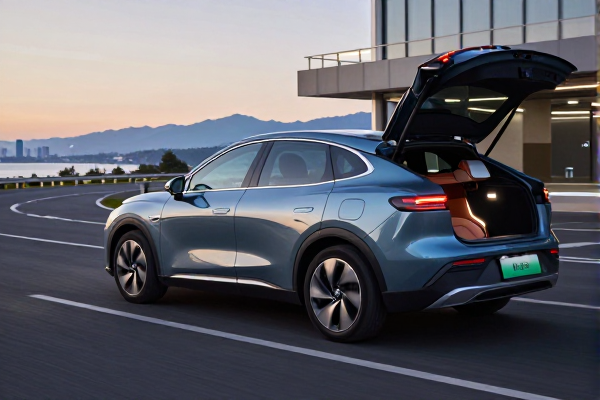
Positioned as the all-electric successor to the popular T-Cross, the ID. Cross prioritizes interior cleverness despite its subcompact footprint of just over four meters in length. Volkswagen engineers have managed to carve out 475 liters of cargo space in the boot, a notable 20-liter improvement over its gasoline-powered predecessor. An additional 25-liter "frunk" (front trunk) provides dedicated, secure storage for charging cables or smaller items, addressing a common pain point for EV owners. The driving position is slightly elevated compared to a hatchback like the ID.3, offering the commanding view SUV buyers desire.
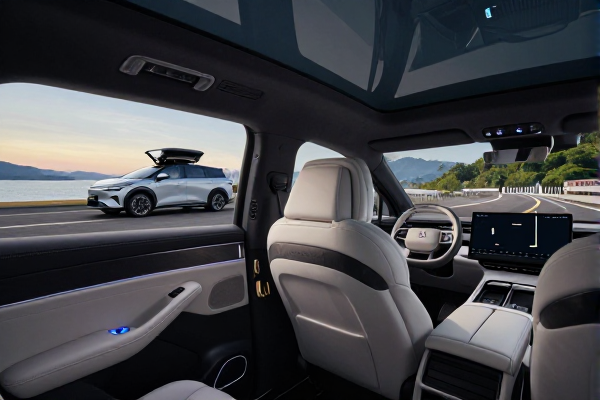
Determined to shed any perception of being a "budget" model, Volkswagen has infused the ID. Cross cabin with higher-quality materials. Soft-touch surfaces and fabric-covered dashboard panels create a more sophisticated ambiance. The digital interface is centered on a duo of screens: a 10-inch digital cockpit behind the steering wheel and a dominant 12-inch central touchscreen running the latest iteration of Volkswagen's infotainment software. In a nostalgic touch, an optional display mode can digitally recreate the classic instrument cluster from the original Mk1 Golf.
Available features aim to punch above the vehicle's class. Options and higher trims may include advanced IQ.LIGHT LED matrix headlights, heated seats and steering wheel, a premium Harman Kardon sound system, electrically adjustable seats with massage functions, and a panoramic glass roof.
Volkswagen plans to offer the ID. Cross with a choice of three power outputs and two battery sizes, though final specifications for individual markets are pending. The entry-level configuration pairs a 116-horsepower electric motor with a 37 kWh battery. For more power and range, options include 135 hp or 211 hp motors, both coupled with a larger 52 kWh battery pack. This larger battery enables a WLTP-estimated range of up to 265 miles on a single charge.
On the charging front, the smaller battery can accept DC fast charging at up to 90 kW, while the larger pack increases that capability to 105 kW. Volkswagen states this can translate to a 10-80% charge in approximately 24 minutes under ideal conditions. All variants come standard with 11 kW AC charging and a valuable vehicle-to-load (V2L) function, turning the car into a mobile power bank for electronics, tools, or camping equipment.
The ID. Cross introduces several advanced systems to Volkswagen's compact lineup. An enhanced Travel Assist with swarm data can now handle stopping and starting at traffic lights in supported areas. A robust one-pedal driving mode allows for intuitive speed control primarily using the accelerator pedal, maximizing energy recuperation. For parking, available technologies range from a surround-view camera system to Park Assist Pro, which can autonomously maneuver the car into spaces with the driver inside or even remotely via a smartphone app.
While order books are open in Germany, Volkswagen has not announced official plans, specifications, or pricing for the United States. Its European starting price just below €28,000 (roughly $30,500) suggests a compelling entry point if adapted for the US market. However, direct conversion is unlikely due to differing equipment standards and market dynamics.
Exclusive Analysis: The US Competitive Landscape Should the ID. Cross come to America, it would enter a rapidly evolving battlefield. Its most direct rivals would likely include the upcoming Chevrolet Equinox EV, the Volvo EX30, the Kia Niro EV, and the Hyundai Kona Electric. The ID. Cross's potential advantages lie in Volkswagen's established brand presence, its focus on a premium interior feel in the segment, and the standard inclusion of V2L—a feature not yet universal among competitors. Its challenge will be achieving a competitive price-to-range ratio and ensuring its charging speed keeps pace in a market where 150kW+ charging is becoming an expectation for new models.
The vehicle's success may also hinge on Volkswagen's broader EV strategy in North America, including the rollout of its Scout brand and expansions at its Chattanooga plant. The ID. Cross could serve as a crucial volume model to attract eco-conscious urban and suburban families, but it must be priced and spec'd aggressively to stand out. For now, American consumers must watch the European launch closely for hints of a future cross-Atlantic journey.