Browse

Log in / Register
 Share

Volkswagen has fired the starting gun on CMP, its first electric-car platform developed entirely in China. On Oct. 16, the first ID.ERA 5X rolled off the SAIC Volkswagen assembly line, moving the architecture from an engineering project to production reality. As of June 9, 2025, CMP sits at the center of Volkswagen's China recovery plan: six CMP-based models are due within 18 months, starting with the ID.AURA L5 from FAW-Volkswagen. The big question is whether a global automaker can match Chinese rivals on cost and software speed — and CMP is where Volkswagen intends to prove it.
CMP is the first Volkswagen architecture whose core engineering happened in China rather than Wolfsburg. The platform is deliberately flexible, supporting battery-electric and plug-in hybrid powertrains on the same bones, with enough body-style freedom to spin off sedans, SUVs and crossovers. The target is the volume part of the market that Chinese buyers actually shop: compact and midsize vehicles priced for the mainstream, not the premium space where the older MEB platform has been playing.
Cost is the reason for that flexibility. By developing the platform in China, with Chinese suppliers and Chinese price expectations, Volkswagen is trying to remove the expense that comes from adapting a European architecture to a market that has moved on. CMP also shares components aggressively across models, spreading tooling costs and giving the program enough scale to stay profitable in a market where price competition has been intense for two straight years.
Every CMP model runs the CEA electrical architecture, the digital backbone Volkswagen developed with XPeng. The cooperation dates to 2023, when Volkswagen bought a 4.99 percent stake in the Chinese EV maker, and the two companies agreed to co-develop the architecture a year later. CEA replaces the jumble of separate control units found on earlier Volkswagens with a smaller number of centralized, high-compute domains. Fewer modules means simpler wiring, lower cost, and faster logic.
That centralization makes the update promise possible: Volkswagen says each CMP model receives an over-the-air update every 100 days, with each install taking under 30 minutes. For a company whose European EVs went through well-documented software delays, this cadence is an admission that success in China means operating on Chinese startup timelines, not German model-year rhythms.
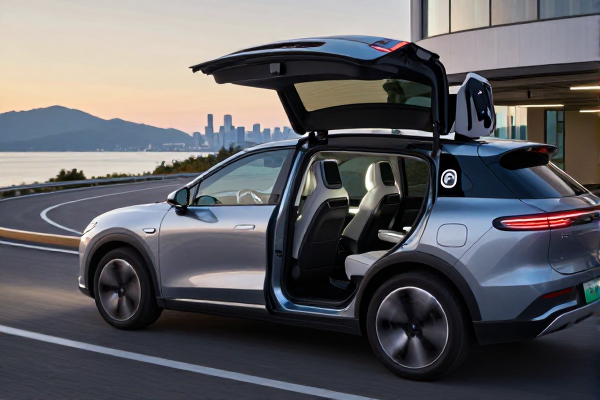
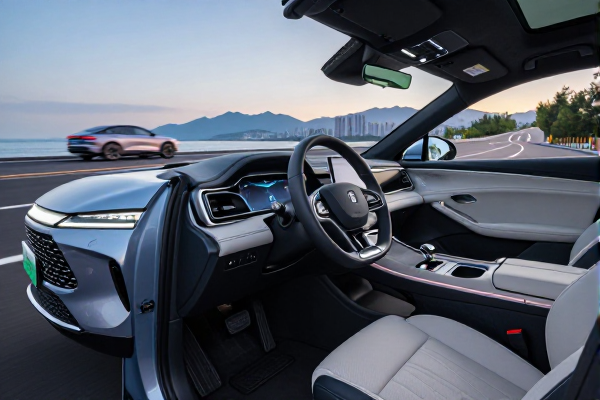
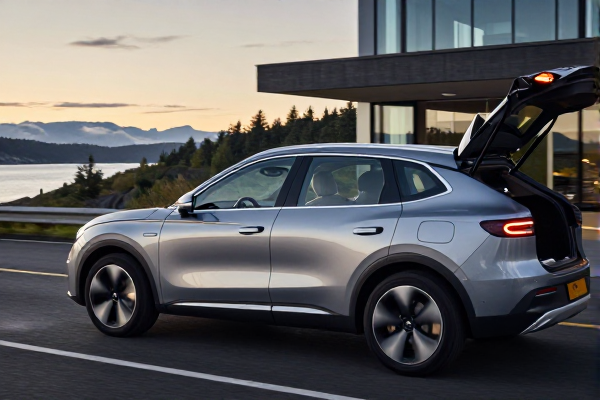
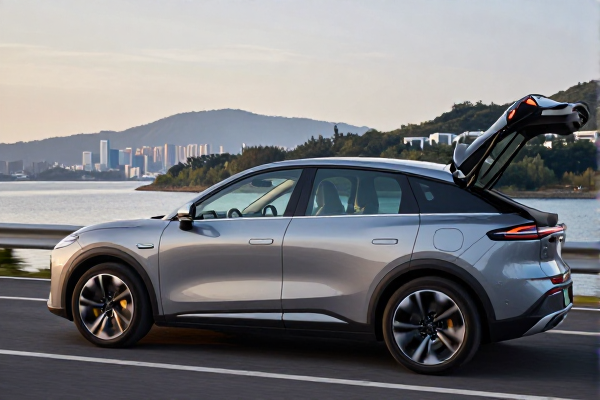
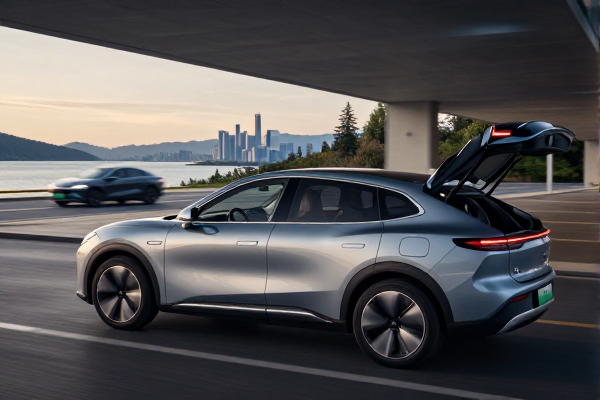
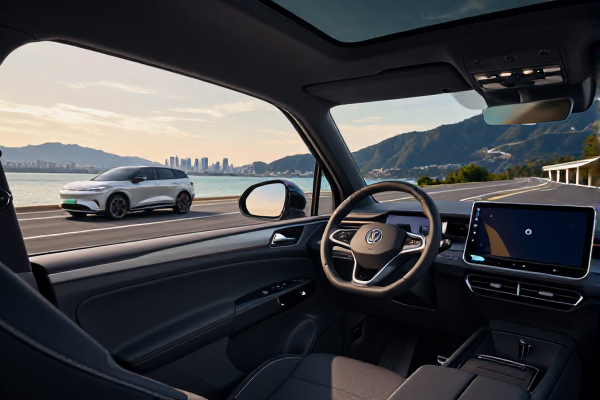
The vehicle that opens the CMP era is the ID.ERA 5X, a pure-electric SUV assembled by SAIC Volkswagen. It lands squarely in the segment where Chinese families are buying today: not oversized, not tiny, priced for the volume game. Inside, a 4-nanometer cockpit chip drives the displays, and a LiDAR unit feeds the driver-assistance system. Volkswagen calls its capability "enhanced Level 2" — all-scenario support on highways and city roads without claiming the car can drive itself. The intelligence behind it runs on the Coreix Hyper Sense 8 end-to-end large model.
Putting LiDAR on a mainstream Volkswagen is new. The choice says a lot about CMP's intent: this platform is designed for the assisted-driving era, with hardware that can handle the requirements of new Chinese safety rules and a generation of buyers that now expects advanced driver aids as standard equipment. That puts the 5X in direct competition with the BYD Yuan Plus and the GAC Aion Y, the volume nameplates of the segment.
CMP also works to correct one of the criticisms leveled at MEB: packaging efficiency. The ID.ERA 5X and the upcoming ID.AURA L5 both push cabin space utilization above 85 percent, meaning more usable interior from less exterior car. In cities where parking spaces are tight and families ride in the back, that ratio matters. Thermal management was reworked into a single direct heat-pump loop coordinating climate, battery and motor cooling. At 0 degrees Celsius, VW says, it cuts CLTC energy use by about 5 percent — the kind of winter-range gain Chinese owners feel in the cold provinces. The suspension pairs MacPherson struts up front with a multi-link rear and a near 50:50 weight split, a setup aimed at responsive, planted handling without ruining ride comfort.
Volkswagen says CMP models are engineered to its global crash and durability standards, not a lighter China spec. The architecture targets a 15-year, 300,000-kilometer service life. Validation includes back-to-back winter and summer proving-ground runs plus 24-hour continuous bench testing of key components. The program's stated performance goals are five-star C-NCAP scores and an "Excellent" grade from C-IASI, the insurance-industry crash-rating program that functions as China's answer to the IIHS.
Two safety details stand out beyond the structure. High-voltage fuses are specified to open within milliseconds to isolate the battery in a collision. And every CMP vehicle — not just high trims — comes with an emergency assist feature: if the system decides the driver is incapacitated, the car pulls itself safely to the roadside, activates the hazard lights, and calls emergency services. Certain Chinese brands reserve that kind of equipment for flagship trims; on CMP it is standard.
For context, Volkswagen has built one of the largest foreign-car franchises in China since the 1980s, but the EV transition broke the old model. Domestic brands now dominate new-energy sales, with BYD alone taking roughly one of every three NEVs sold in the country. Volkswagen still moves close to three million vehicles a year in China, although its market share has fallen from about 14 percent in 2019 to roughly 11 percent now.
CMP is the counter-punch, and it is the biggest single deliverable of the "In China, for China" strategy the Volkswagen Group has been running since 2023. Under that strategy, Chinese engineers, suppliers and software partners hold primary responsibility instead of sending designs back to Wolfsburg for approval. Dr. Robert Cisek, CEO of the Volkswagen Passenger Car Brand in China, described the start of CMP production as another milestone in the local EV push. For Volkswagen's China business, CMP has to work.
No CMP model has been confirmed for North America; this is a China program, and it appears destined to stay one. Still, the architecture — centralized software, BEV/PHEV flexibility, deep local supply-chain integration — is a template for the entry-level EVs Volkswagen will eventually build for other markets. If CMP proves the cost and software math, expect its patterns to show up in the group's global small-car family. If it fails, the failure will be measured in China first and everywhere else later.
The schedule is explicit. Six CMP-based vehicles are planned over the next 18 months. The second is the ID.AURA L5, a sedan from FAW-Volkswagen due later this year. The 5X is already in production, and the platform's real test starts now: whether a German brand, priced like a Chinese brand, updated like a Chinese brand and engineered by Chinese teams, can actually sell like one in the most competitive car market on Earth.