Browse

Log in / Register
 Share

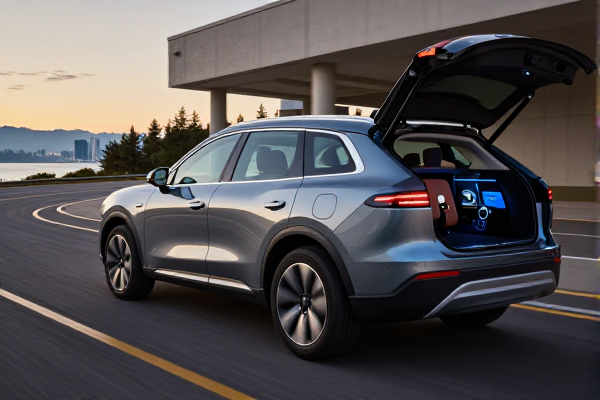
The U.S. long-term vehicle leasing market grew 2.8% in the first half of 2026, with roughly 1.36 million vehicles now under contract, according to an industry benchmark compiled by AFLA and reviewed July 14, 2026. That headline number matters less than the mix beneath it: private customers are signing leases at roughly four times the growth rate of corporate fleets, public agencies are the fastest-moving segment, and rechargeable powertrains now hold a 14% share. The old “company car only” reputation of fleet leasing is fading.
Traditional long-term leases — single customer, one vehicle, contracts running beyond 12 months — remain the structural core of the market, holding about 95% of all vehicles, or roughly 1.28 million units. That is consistent with the pattern of recent years: flexibility products are growing, but the classic model still carries the industry.
Flexible arrangements, such as small pools and 12-month-plus agile rentals, account for about 28,000 vehicles and grew 3% from end-2025. The faster-moving slice is the rent-to-rent channel, in which leased vehicles flow to daily rental operators. That segment reached roughly 45,000 vehicles, up 29% — the sharpest growth in the entire contract mix. Daily rental operators are rebuilding fleets after several quarters of tight supply, and that push is showing up in long-term leasing volumes.
Businesses remain the largest customer base, representing about 1.01 million vehicles and 75% of the total fleet. Growth was measured at 1.4%, reflecting mature corporate demand. Finance teams are sticking with monthly operating costs rather than returning to balance-sheet ownership, and that preference is keeping the segment steady even as interest rates and insurance premiums pressure budgets.
Enterprise demand is also becoming more varied. Sales forces, service fleets and last-mile delivery operators are mixing traditional closed-end leases with shorter-term flexible products. HR and procurement teams are increasingly bundling insurance, maintenance and telematics into a single monthly fee, which raises contract retention rates.
Private customers are the fastest-growing demand source, with the segment climbing 6.1% to nearly 196,000 vehicles — a 15% share of the total market. Individual consumers accounted for about 105,500 vehicles, up 6.7%, while small businesses and sole proprietors registered on EIN reached roughly 90,400, ahead 5.4%.
The consumer shift is not a blip. New-vehicle transaction prices remain elevated, and leasing offers a way to access newer, safer and more efficient vehicles without a large down payment. Subscription-style arrangements offered by automakers and independent lessors are pulling more household customers into monthly mobility contracts, a trend that is broadening the traditional customer profile.
Public-sector fleets were the standout performer of the half-year, rising 9.2% to roughly 149,000 vehicles. The public segment’s share of total long-term leasing moved from 10% to 11%.
State, county and municipal agencies are outsourcing more fleet management to specialist leasing providers. Maintenance backlogs, procurement rules and rising technician wages have made managed leases more attractive than outright ownership. Electrification mandates are also accelerating the shift: a growing number of jurisdictions are requiring that new service vehicles be rechargeable, and leasing keeps those vehicles on predictable budgets without the long depreciation exposure of ownership.
The fuel-type composition of the long-term fleet confirms a decisive turn away from internal-combustion-only vehicles. Pure petrol and diesel models now account for roughly half of the fleet, and the share is still falling.
Full hybrids have consolidated their position as the segment’s main workhorses, with about 457,000 vehicles — roughly one in three units — and growth of 4.2% during the half-year. Fleet managers see hybrids as an immediate fuel-cost win without charging infrastructure constraints. They also hold re-sale values more reliably than battery-electric models.
Plug-in hybrid numbers jumped 18.9% to roughly 116,000 vehicles, lifting their share from 7% to 9% of the fleet. Pure electrics rose 7.7% to about 66,000 vehicles, holding a 5% share. Taken together, rechargeable models now account for 14% of leased vehicles, confirming that the sector is electrifying steadily — though not at the pace some had predicted two years ago.
Looking toward the second half of 2026, three factors will shape leasing decisions. First, battery-electric residual values remain volatile, pushing lessors to price BEV contracts conservatively. Second, charging availability has become a decision criterion for field fleets, especially in California and the Northeast, where managers are adding home-charging requirements before approving EV assignments. Third, hybrid powertrains are emerging as the compromise of choice where infrastructure is still thin.
The industry expectation, according to the AFLA benchmark, is that fleet electrification will continue but alongside a pragmatic mix of hybrids and plug-ins. Private customer growth is also expected to keep climbing, regardless of powertrain trends, as vehicle affordability pushes more households toward monthly mobility models rather than outright purchase.