Browse

Log in / Register
 Share

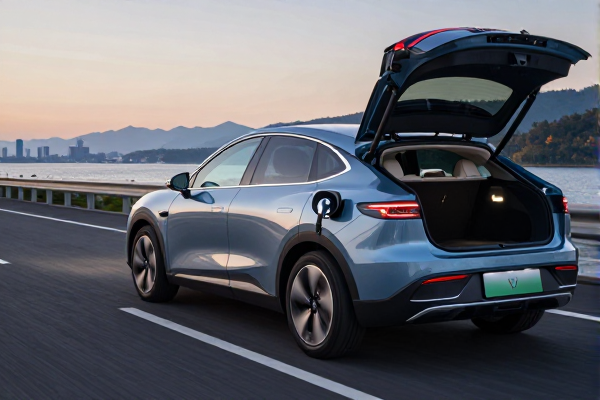
With summer temperatures soaring across the United States, electric vehicle charging network operators are rolling out new restrictions during peak electricity hours. The common goal: reduce demand on the grid between 5:00 p.m. and 10:00 p.m., when air conditioning use pushes consumption to near-record levels. As of February 15, 2025, several major networks have already implemented or announced plans to limit charging speeds or raise prices during those hours, a move that could reshape how EV owners plan their charging routines.
The U.S. power grid has faced increasing stress from the dual pressures of electrification and extreme weather. In August 2023, MOL in Hungary temporarily reduced output of its Plugee fast chargers during peak hours—a strategy now being mirrored by American operators. According to the U.S. Energy Information Administration, evening peak demand has grown by 12% over the past five years, driven largely by residential cooling and the growing EV fleet. Without intervention, uncontrolled fast charging during these hours could trigger local transformer overloads and even blackouts.
EVgo recently announced it will cap charging speeds at 50 kW between 5–9 PM on its most heavily used urban stations, except for emergency vehicles. The company says this will reduce peak load by up to 30% on those stations while still allowing drivers to gain a meaningful range boost. ChargePoint is taking a different approach: it is introducing dynamic pricing that adds $0.15–$0.25 per kWh during peak windows, matching the time-of-use rates many utilities already charge. Electrify America has begun testing a “soft cap” program that reduces charging speed by 40% for the first 15 minutes of a session if the station is over 80% utilization, with a notification sent to the driver’s app. Tesla Supercharger network, while not yet restricting output, has started to display real-time grid stress indicators and encourages off-peak charging through loyalty points.
These measures are voluntary for now, but industry insiders say they could become mandatory if the grid continues to tighten. “The infrastructure wasn’t built for this level of simultaneous demand,” said Dr. Mariana Chen, a power systems engineer at the National Renewable Energy Laboratory. “Charging networks are taking proactive steps to keep the lights on—and the wheels turning.”
For the average EV owner, peak-hour restrictions mean longer stop times if they charge during the evening. A typical 20-minute fast charge could stretch to 35–40 minutes under the reduced speeds. However, most networks have designed the restrictions to still allow a “top-up” of 50–80 miles within 30 minutes, which is sufficient for daily commuting. The real impact falls on long-distance travelers who rely on rapid charging to keep moving. Drivers are advised to check their app for station-specific peak pricing and speed alerts before departing.
Some consumer advocates worry that restrictions disproportionately affect apartment dwellers and those without home charging, who depend on public fast chargers. In response, a coalition of charging networks and state regulators is developing a “community charging fund” that would subsidize off-peak rates for low-income EV owners. Additionally, several utilities are now offering rebates for home Level 2 chargers that can be scheduled to start after 10 PM.
The peak-hour restrictions are a short-term fix, but the long-term solution involves smarter charging infrastructure. The U.S. Department of Energy has allocated $7.5 billion for a national EV charging network, part of which will fund “vehicle-to-grid” technology that lets EVs sell power back during peak hours. Tesla’s virtual power plant program in California already aggregates thousands of Powerwalls, and a similar initiative for EVs is expected to launch in 2026.
Meanwhile, EV sales continue to grow—reaching 10% of new car registrations in 2024, up from 6% in 2022. If peak-hour restrictions become widespread, they could slow the perception of convenience, but not the overall adoption curve. “Drivers will adapt, just like they did when gas stations started charging more at night,” said John Gartner, a transportation analyst at BloombergNEF. “The key is transparency and giving drivers alternatives.”
To maintain customer satisfaction, networks are also investing in battery storage at charging stations. A pilot by EVgo and Stem in New York uses a 250 kWh battery to buffer peak demand, allowing the station to deliver full power even during restricted hours. ChargePoint is testing a reservation system that guarantees a 150 kW session for a $2 fee. And Electrify America is rolling out a “night owl” loyalty program that offers 50% off charging between 11 PM and 6 AM.
As the lines between utilities, automakers, and charging networks blur, the peak‑hour restriction trend is likely to accelerate. The U.S. grid is not yet broken, but it is under pressure—and every EV plugged in during the evening hours is both a part of the solution and a potential strain. The next few years will determine whether we can charge our cars without overcharging the grid.