Browse

Log in / Register
 Share

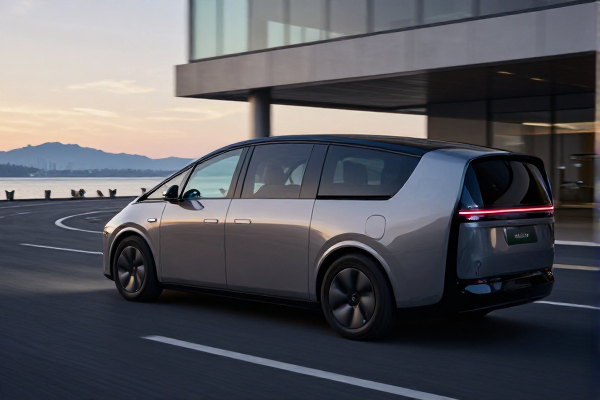
October 1, 2023 — In a move that could reshape America's transportation landscape, the U.S. Department of Transportation (DOT) has unveiled a proposal to permit autonomous vehicles, specifically robotaxis, to operate on public roads without traditional brake pedals. This regulatory shift, spearheaded by the National Highway Traffic Safety Administration (NHTSA), aims to streamline the deployment of self-driving technology, opening doors for companies like Tesla to expand their services in states such as Texas, where limited trials are already underway. The initiative reflects a broader push to modernize federal standards amid rapid technological advancements, though it sparks immediate concerns over safety oversight and public readiness for fully driverless systems.
The proposed rule, detailed in a recent NHTSA press release, would eliminate the long-standing requirement for brake pedals in vehicles "designed to be driven exclusively by automated driving systems." Currently, manufacturers must seek time-consuming exemptions from Federal Motor Vehicle Safety Standards (FMVSS) to deploy such cars, with caps on the number allowed on roads. By removing this hurdle, the DOT hopes to foster innovation, allowing purpose-built autonomous vehicles—those without steering wheels or pedals—to enter the market more swiftly. NHTSA Administrator Jonathan Morrison emphasized this as a critical step toward reimagining regulatory frameworks, stating, "We are at the cusp of the greatest technological revolution in vehicle technology since the innovation of the Model T. If we want America to lead the way, we have to tear down pointless barriers while strengthening fundamental safety requirements."
This development holds particular significance for Tesla, which has been quietly advancing its pedal-free, steering-wheel-free Cybercab prototype under Elon Musk's vision for a robotaxi network. Despite not having applied for federal exemptions yet, Tesla's ongoing unsupervised robotaxi trials in Austin, Texas, could accelerate if the rule is adopted, positioning the state as a testing ground for broader commercialization. Other players, such as Zoox and Waymo, may also benefit, though Waymo currently uses modified conventional vehicles with manual controls, making this proposal more impactful for startups designing vehicles from the ground up for autonomy. Industry analysts note that the DOT's move aligns with prior efforts, including the Biden administration's finalized rule last year to allow steering wheel-free autonomous vehicles, signaling a bipartisan trend toward deregulation in the sector.
Beyond corporate gains, the proposal promises to enhance public mobility by potentially lowering operating costs and expanding ride options, especially in urban areas already experimenting with robotaxis. Proponents argue that faster approval could lead to more convenient transportation, reduce traffic congestion, and improve access for non-drivers, such as the elderly or disabled. However, safety remains a paramount concern: removing physical controls like brake pedals eliminates a crucial in-cabin fallback during system failures. Data from recent studies indicates that autonomous vehicles are involved in more accidents per mile than human-driven cars, with instances of them blocking traffic or malfunctioning in complex scenarios. This elevates the importance of robust software performance, reliable remote assistance systems, and stringent federal enforcement to prevent mishaps.
In an exclusive perspective, recent developments suggest that Tesla's Texas operations are scaling faster than anticipated, with local reports indicating plans to remove safety drivers from all test vehicles by early 2024. This aggressive timeline underscores the urgency behind the DOT's proposal, as regulatory delays could hinder real-world validation of autonomous technologies. Additionally, authoritative sources like the Insurance Institute for Highway Safety (IIHS) have weighed in, cautioning that while innovation is vital, premature deployment without adequate safeguards might increase road risks. The public now has 30 days to submit comments on the proposal, a period likely to see heated debates between tech advocates and safety watchdogs.
The broader implications extend to economic and environmental spheres. Autonomous ride services could reduce emissions by optimizing routes and promoting electric vehicle adoption, but they also pose challenges for traditional automakers and taxi industries. As the DOT navigates this transition, experts recommend a balanced approach—incorporating feedback from stakeholders, including consumer groups and tech firms, to ensure that safety standards evolve alongside technological capabilities. Ultimately, this regulatory pivot may set a precedent for global autonomous vehicle policies, reinforcing America's competitive edge in the race toward smart transportation.
Looking ahead, the success of pedal-free robotaxis will hinge on public trust and regulatory clarity. If adopted, the rule could catalyze a new wave of mobility solutions by 2025, though it necessitates continuous monitoring and updates to address emerging risks. For now, the DOT's proposal marks a bold step into an era where human drivers may become optional, reshaping how Americans commute and interact with technology on the road.