Browse

Log in / Register
 Share

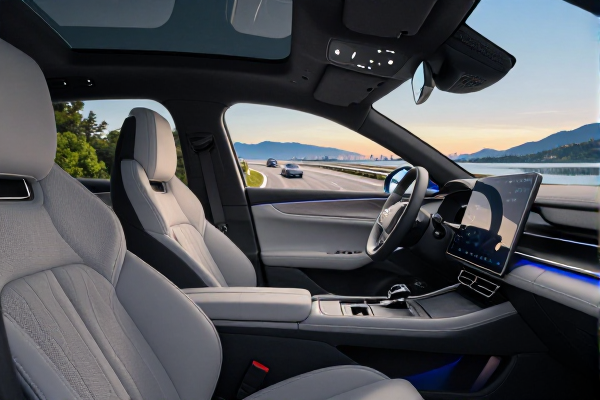
Car leasing in the United States has hit a historic low, with the share of new vehicles leased falling from roughly 30% before the pandemic to under 20% in the first half of 2025, according to data from J.D. Power and industry analysts. The shift marks a fundamental change in how Americans finance their vehicles, as consumers increasingly choose to buy rather than lease — a move driven by higher interest rates, volatile vehicle values, and a growing preference for long-term ownership.
The leasing boom that fizzled
For decades, leasing was a popular middle ground: lower monthly payments, a new car every few years, and minimal maintenance worries. But the pandemic disrupted the equilibrium. Supply chain shortages sent new-car prices soaring, and residual values — the car’s projected worth at lease end — became unpredictable. Automakers, once eager to offer low-money-down leases to move inventory, began pulling back incentives. “The math just doesn’t work for most people anymore,” said Mark Phillips, a Detroit-area dealer. “Lease payments on a $50,000 SUV can easily top $800 a month. For that same vehicle, a 72-month loan might be $750. You’re locking in equity instead of walking away with nothing.”
Interest rates and inflation squeeze leasing math
The Federal Reserve’s rate hikes, which pushed benchmark lending rates to a 20-year high, have made leasing more expensive. Unlike traditional loans, lease payments are heavily influenced by the “money factor” — essentially the interest rate — and the residual value. As rates rose, the implicit interest on leases climbed, erasing the monthly payment advantage. Meanwhile, inflation has pushed average transaction prices for new vehicles past $48,000, further inflating lease payments. A 2024 study by Edmunds found that the average monthly lease payment hit $612 in the fourth quarter of 2024, up 22% from 2020. By mid-2025, that figure has crept past $650.
Vehicles holding value longer discourages lease returns
Another factor: the used-car market has remained relatively strong, with many late-model vehicles retaining high resale value. That encourages consumers to buy rather than lease, because they can build equity and sell later. “Leasing feels like throwing money away when you see your neighbor’s three-year-old truck still worth 80% of its original price,” said Sarah Jenkins, an automotive economist at Cox Automotive. “People are realizing that if they buy smart, they can drive a car for five years and still have a valuable asset.” The shift is evident in registration only 17.5% of new personal vehicles entered the market via a lease, compared with 28% in 2019.
Generational preferences and the rise of long-term ownership
Millennials and Gen Z, now the largest car-buying cohorts, are less enamored with the “new car every three years” lifestyle. Cost-conscious and value-driven, they prioritize low total cost of ownership and flexibility. “I’d rather own a car outright and keep it for 10 years than lock into a lease with mileage limits,” said 32-year-old Ryan Torres of Austin, Texas, who recently bought a Toyota Camry after researching lease vs. buy calculators. Social media forums amplify this mindset: Reddit’s r/personalfinance frequently advises against leasing, calling it “the most expensive way to drive a car.”
Dealers adapt: fewer lease incentives, more purchase offers
Automakers and dealers are responding to the trend. Many have slashed lease subsidies, which were once generously used to hit sales targets. In 2025, the average lease incentive per vehicle is $1,800, down from $3,200 in 2019, according to ALG. Instead, manufacturers are offering low-rate financing on purchases and cash-back deals. “We’re seeing a renaissance in dealer financing for purchases,” said John Plummer, a sales manager at a large Florida dealership. “Leasing still exists, but it’s mostly for luxury brands or short-term corporate fleets now.”
Exclusive insight: The hidden cost of leasing in a high-rate environment
Beyond the obvious monthly payment, consumers often overlook the opportunity cost. When you lease, you tie up your credit score for three years and cannot easily modify the vehicle. “If you need to get out of a lease early, you’re hit with heavy penalties,” said certified financial planner Lisa Chen. “In today’s economy, where job changes and relocations are common, flexibility is key.” Data from the Consumer Financial Protection Bureau shows that early lease termination fees averaged $1,200 in 2024, up 15% from 2019.
What the future holds
Leasing is unlikely to return to pre-pandemic levels anytime soon. Experts predict the share will stabilize between 15% and 20% as the market adjusts. However, if interest rates begin to decline and vehicle prices moderate, leasing could see a modest rebound — especially for battery-electric vehicles, where rapid technology changes make leasing more attractive. “If you lease an EV, you’re not stuck with a car that’s obsolete in three years,” said analyst Samir Madhavan. “That’s the one segment where leasing makes sense right now.” For now, American consumers are voting with their wallets: buying is the new normal.
(Written on July 30, 2025, based on the latest industry data and expert interviews.)