Browse

Log in / Register
 Share

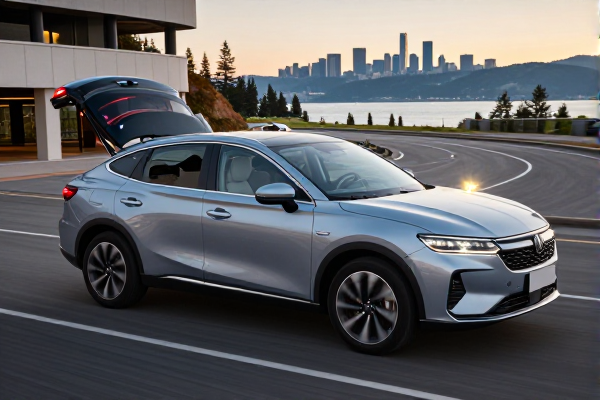
After a rough first quarter, the nation’s vehicle assembly lines are showing signs of steadiness. New data from the Alliance for Automotive Innovation (AAI) confirms that U.S. light vehicle production inched down just 0.3% in the April–June period compared to the same time last year, following a nearly 8% drop in the first three months. The stabilization is a fragile but important turning point for an industry that employs over 1.7 million Americans directly and supports millions more in parts, logistics, and retail.
These numbers are not yet a recovery—they are a pause on the slide. That pause, however, tells us something critical: if the policy environment improves, the sector can rebuild. America needs precisely this kind of high-value manufacturing—advanced supply chains, well-paying skilled jobs, strong export capacity, and deep roots in the Midwest, South, and along the I-85 corridor. The question is whether Washington and state capitals will create the conditions for that growth.
Energy costs remain the No. 1 handicap. While U.S. industrial electricity rates are historically lower than Europe’s, the gap has been narrowing. In the past two years, American automakers have faced a 15–20% jump in industrial power prices, driven by rising natural gas costs and grid congestion. The Inflation Reduction Act (IRA) offers some relief through tax credits for clean energy, but those credits are often tied to specific technologies and locations, leaving many legacy plants in the Midwest with little near-term benefit. Industry groups have called for a national “industrial electricity competitiveness program” that would give auto plants direct rate discounts or rebates—something similar to the British Industrial Competitiveness Scheme that the original SMMT report praised. Without it, building a vehicle in Ohio or Michigan will remain 10–15% more expensive than in Germany or France when all energy inputs are factored in.
Trade policy must remain open and predictable. More than 70% of U.S. vehicle production is sold domestically, but the remaining 30% is exported to Canada, Mexico, Europe, and Asia. The United States-Mexico-Canada Agreement (USMCA) requires that 75% of a vehicle’s value be made within the region to qualify for tariff-free access—and that threshold is set to tighten in 2027. Automakers warn that stricter rules of origin for electric vehicles, combined with new EU carbon border adjustments, could effectively block American-built EVs from key export markets. The Alliance for Automotive Innovation has joined with European and Asian industry groups to oppose provisions in the European Commission’s “Made in Europe” package that would exclude vehicles assembled in the U.S. from certain EU procurement programs. Such restrictions would not only hurt U.S. exports but also weaken cross-border supply chains that have been built over decades.
Regulation must align with consumer demand. Automakers have poured more than $100 billion into electrification since 2020. Yet the EPA’s proposed tailpipe emissions rules (for model years 2027–2032) effectively require that 67% of new light vehicles be sold as battery-electric or plug-in hybrid by 2032. That target is far ahead of current consumer adoption, which sits at about 8% for pure EVs. Meanwhile, the number of public charging stations grew by only 20% last year—not fast enough to ease range anxiety. These mandates are not being driven by market signals but by regulatory fiat. Dealership associations, parts suppliers, and even some EV-only startups have joined manufacturers in asking for a phased approach: lower the early-year targets, tie them to charging infrastructure milestones, and offer more flexibility—such as allowing compliance through advanced hybrids or hydrogen fuel cell vehicles. This is not a retreat from climate goals; it is a call for realism. Without reform, automakers will be forced to subsidize EV sales at unsustainable margins, choking off the investment needed to scale production.
A regional crisis requires a national rethink. The current policy mix—high energy costs, tightening trade rules, and ahead-of-market EV mandates—creates a “triple squeeze” on manufacturing investment. In the first half of 2024, announced EV battery plant projects in the U.S. fell 60% compared to the same period in 2023, according to Benchmark Mineral Intelligence. While some of that decline reflects a normalizing market, much of it is due to uncertainty: companies are reluctant to commit billions to build in America when the rules of the game could shift dramatically after the 2024 election. Both major party platforms have signaled support for domestic manufacturing, but their approaches differ sharply. Industry advocates hope the next president will work with Congress to pass a comprehensive automotive competitiveness bill that includes energy cost relief, trade stability, and regulatory flexibility.
The road ahead will be shaped by decisions made this year. The stabilization in output is real but fragile—like a patient taken off the ventilator, not yet strong enough to run. The industry has the capacity, the workforce, and the technology to grow. What it lacks is a coherent, stable policy environment that makes long-term commitments safe. The message from Detroit, Frankfurt, Tokyo, and Seoul is the same: set the conditions right, and investment will follow. Let July 2024 be the month America starts listening.