Browse

Log in / Register
 Share
Share

A new alliance between automotive manufacturing, artificial intelligence, and ride-hailing aims to accelerate the arrival of driverless taxis on city streets worldwide. Uber Technologies Inc., automaker Stellantis N.V., and AI company Wayve have entered into a strategic partnership to co-develop and deploy a global robotaxi service, marking a significant step in the commercialization of autonomous vehicle technology. Announced on May 23, 2024, the collaboration leverages each company's core strengths to tackle the complex puzzle of bringing fully driverless cars to the mainstream market.
The partnership's structure is straightforward yet powerful: Stellantis will design and build specialized vehicles engineered from the ground up for autonomous ride-hailing. Wayve will provide its proprietary "AI Driver" software, a mapless, end-to-end deep learning system that enables vehicles to navigate complex urban environments. Uber will integrate these autonomous vehicles into its existing global mobility platform, offering a direct path to millions of daily active users. This tripartite model addresses three critical barriers simultaneously—purpose-built hardware, advanced AI brains, and immediate market access.
This move is a logical progression for the involved companies. Stellantis and Wayve recently announced plans to introduce a Level 2++ advanced driver-assistance system (ADAS) for consumer vehicles by 2028. The robotaxi initiative represents a climb to the next rung on the autonomy ladder: Level 4, where the vehicle handles all driving in defined areas without human intervention. For Uber, this is its second major robotaxi deal in recent months, following an agreement with autonomous delivery vehicle maker Nuro, signaling a clear and aggressive strategy to automate its core service.
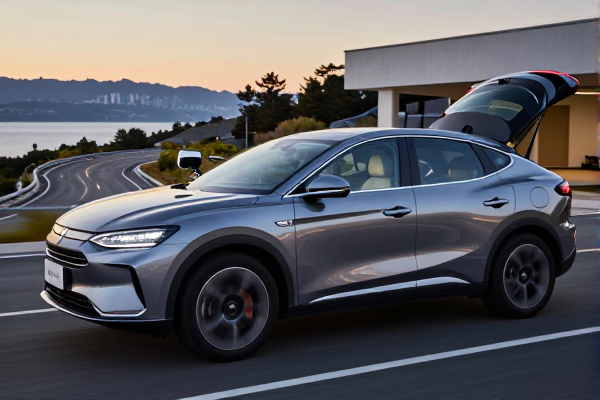
The vehicles, dubbed "L4-Ready Platforms," are being designed as clean-sheet architectures for autonomy. Unlike retrofitted models, these platforms will incorporate the necessary sensor suites, redundant safety systems, and durability for high-utilization commercial fleets. While an initial teaser image suggests a minivan-like form factor, Stellantis has not specified which of its many brands (such as Chrysler, Peugeot, or Fiat) will ultimately badge the production vehicles. This dedicated design philosophy is crucial for achieving the reliability and economies of scale required for profitable robotaxi operations.
Wayve's AI technology is a key differentiator. Its data-driven, mapless approach allows the driving system to generalize from experience and adapt to new cities and unseen scenarios more rapidly than traditional rule-based systems. This flexibility could significantly reduce the cost and time required for geographic expansion, a major hurdle for autonomous vehicle companies that often must painstakingly map each new operational area. The partnership will test and validate this technology in real-world conditions through Uber's network.
Uber's role cannot be overstated. While countless startups and tech giants have poured billions into developing self-driving cars, building a trusted consumer-facing service and a large, reliable user base is a monumental task. Uber already possesses this asset. Its app is a daily utility for tens of millions worldwide. Embedding robotaxis into this familiar interface removes a significant adoption barrier, offering users a seamless transition from human-driven to autonomous rides without needing to download a new app or learn a new service.
The competitive landscape for autonomous ride-hailing is intensifying. This partnership directly challenges other major players like Waymo (operating in multiple U.S. cities), Cruise (navigating a complex regulatory recovery), and Zoox (owned by Amazon). The Stellantis-Wayve-Uber alliance brings together established industrial scale, cutting-edge AI, and unmatched network effects, creating a formidable contender. Analysts suggest that such vertically integrated partnerships may become the dominant model, as the capital and expertise required are too vast for any single company.
The agreement is currently a non-binding memorandum of understanding (MoU), indicating that detailed technical and commercial terms are still being negotiated. The next phases will involve deep vehicle integration, extensive testing, regulatory validation, and phased deployment. The companies have stated their intent to launch services across multiple regions, including Europe and North America. The timeline for public deployment remains undisclosed, but the collaboration accelerates all parties' roadmaps considerably.
From an industry perspective, this partnership validates the growing consensus that the future of autonomy is not just about the vehicle or the software alone, but about the entire ecosystem. Success hinges on the seamless integration of hardware, AI, operations, and user experience. By combining Stellantis's manufacturing prowess, Wayve's agile AI, and Uber's vast network, this alliance is positioned to potentially deliver a commercially viable robotaxi service at a scale and speed that standalone efforts have struggled to achieve. The race to redefine urban mobility has entered a decisive new phase.