Browse

Log in / Register
 Share


A recent breakdown of an UBER vehicle on a major Florida interstate has starkly revealed what critics call systemic failures in the company's emergency response protocols, leaving a passenger dangerously stranded and reliant on a competitor for rescue. The incident, which occurred on Interstate 95, calls into question the safety promises made by the global ride-sharing giant and its decision to outsource critical emergency services. [Current Date]
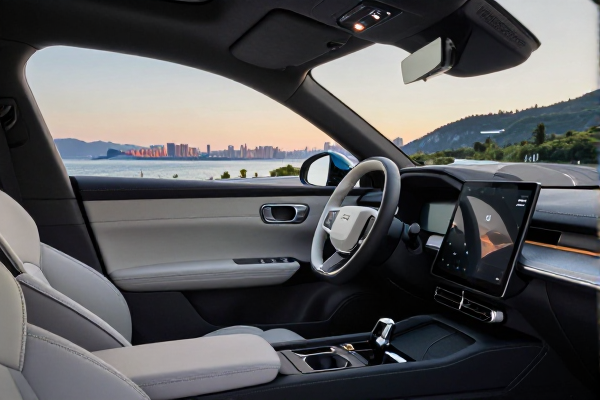
The situation began routinely for a Florida-based journalist traveling from Fort Lauderdale Airport. After pre-booking a ride in a Mustang Mach-E, the trip was abruptly interrupted by a loud thud and a flat tire shortly after entering I-95. The driver, who faced a language barrier, pulled onto the shoulder. What followed was not a swift resolution from UBER's much-touted safety apparatus, but a 90-minute ordeal highlighting a gaping hole in customer protection.
Contrary to user expectations, UBER does not operate its own emergency dispatch for in-progress rides. This function is contracted to ADT, the home security company. Pressing the "Uber Safety" button in the app connected the stranded passenger not to a dedicated UBER crisis team, but to an ADT call center agent in Dallas. The agent, identifying herself as Claudia, demonstrated a profound inability to manage the highway-side crisis, ultimately stating her only recourse was to call the police—a task the passenger could have performed independently.
The core failure lay in a paralyzing corporate loophole. The ADT agent confirmed she had no direct channel to UBER's ride dispatch to request a replacement vehicle, citing separate corporate entities. Her offered solution—a non-functional web link—was followed by the suggestion that the passenger should "ask the police for a ride." This response effectively shifted the duty of care from the multi-billion dollar transportation provider to state law enforcement, a precedent with alarming implications.
A subsequent call to UBER's "Ride in Progress" help line descended into circular logic. The UBER representative, Andrea, repeatedly stated the company could not send assistance because the passenger's location on the I-95 shoulder was "not safe." When challenged on the absurdity of refusing aid because a customer is in confirmed danger, the representative interpreted the passenger's frustrated rationale as a threat. This interaction suggests a scripted policy that prioritizes corporate liability over immediate customer safety.
The scenario poses a grave hypothetical: if a teenage passenger or any individual in a vulnerable position were stranded due to an UBER malfunction, the company's stated policy would offer no direct pathway to secure extraction. The paradox—"UBER won’t take you to safety if you’re not already safe"—creates a dangerous void of responsibility during the exact moments safety is most compromised.
Exclusive industry analysis indicates this outsourcing model is a cost-saving measure, but introduces fatal coordination delays. ADT’s infrastructure is designed for stationary home alarms, not dynamic, geo-located vehicular emergencies. Regulatory filings show UBER has faced prior scrutiny over its emergency response times, yet continues to rely on this fragmented system. A transport safety consultant noted, "This is a fundamental disconnect. When a ride-hour vehicle fails, the service provider's duty to complete the journey safely should not end because a tire is flat."
After 45 minutes exposed to high-speed traffic, rescue came not from UBER, but from a state Department of Transportation Road Ranger. Furthermore, the electric vehicle's lack of a spare tire—a common feature in many EVs—compounded the problem. The passenger's ultimate solution was ironically found through UBER's direct competitor, LYFT, whose app functionality allowed a new driver to be summoned directly to the highway shoulder for extraction.
In a critical update, follow-up inquiries to UBER regarding its contractual obligations with ADT and its policy for "hazardous location" rescues have gone unanswered. This silence is particularly notable given increasing legislative pressure in several states, including California and New York, to classify ride-share drivers as employees, a shift that could force companies to assume greater direct responsibility for passenger welfare during trips.
The incident transcends a single flat tire. It exposes a dangerous fallacy in the platform economy: the belief that safety can be successfully subcontracted. For millions of users who trust UBER with their personal security daily, the company's apparent inability to bridge the gap between its digital platform and a physical roadside emergency represents a critical vulnerability that demands immediate and transparent rectification. Until then, the safety of every passenger remains partially contingent on the hope that nothing goes wrong between point A and point B.