Browse

Log in / Register
 Share

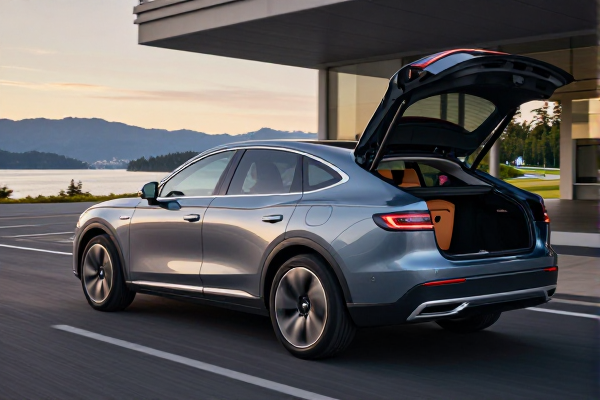
Washington, D.C. — May 8, 2025. President Donald Trump's 25% tariff on imported vehicles and auto parts has now been in effect for over a month, and the White House is calling it the boldest move to rebuild American manufacturing in decades. But on the ground, the picture is far less tidy. Major investments are being announced, yet layoffs and price warnings keep piling up. Here's a fact-focused look at where the policy actually stands.
The March 27 proclamation imposed a 25% duty on all assembled passenger vehicles and a broad list of components — engines, transmissions, powertrains, and electrical wiring among them. The vehicle tariff went live on April 3; the parts tariff followed on May 3.
Then came the adjustment. On April 29, the White House announced "compliance flexibility" for automakers that build in North America. Under the revised approach, for vehicles that qualify under the USMCA trade agreement, the duty applies only to the value of the vehicle's non-US content instead of the full vehicle price.
That single change quieted much of Detroit's initial panic. A pickup assembled in the US but sourced with 40% foreign parts, for example, no longer carries a tariff on its full sticker price — just the foreign share. Critics call it a loophole. The administration calls it "transitional flexibility" meant to keep domestic production lines running while the policy takes hold.
Ford CEO Jim Farley set the tone in early April when he called the tariff environment a "self-inflicted wound" and warned it would "blow a hole" in the industry's earnings. Ford's guidance for the year softened accordingly. General Motors cut its 2025 profit outlook, and Stellantis idled its Windsor, Ontario, assembly plant for two weeks — a direct casualty of the cross-border supply shock.
But the same month, Trump's team unveiled an investment narrative.
The 2025 numbers look grand at first glance: more than $40 billion in announced automotive investment since the tariff push began. The caveat — and it's an important one — is that several of these commitments were already in motion before the tariff took effect. Hyundai's plan, for example, was rolled out before the proclamation was even signed. The tariff accelerated the news cycle, not necessarily the factory timelines.
For readers trying to sort out what's real, the ground-level scorecard is mixed.
Confirmed momentum: The Stellantis Belvidere loan, the Hyundai steel mill in Louisiana, battery plant expansions in Kentucky and Tennessee, and a growing number of "made-in-USA" marketing campaigns from non-American brands all point to genuine reshoring energy.
Confirmed friction: Temporary layoffs and shift cuts hit plants tied to Mexican and Canadian supply chains in April. Dealerships in border states reported delivery delays for models that rely on just-in-time parts crossing the border multiple times. Auto suppliers — especially the small, independent die-casters and wiring shops — face the heaviest compliance costs.
Still unproven: Whether new assembly lines will add lasting, full-time work. As of this writing, no US automaker has announced a new permanent assembly shift whose primary stated cause is the tariff. Belvidere's reopening was part of Stellantis' earlier master plan; the federal loan accelerates it, but the heavy lifting remains on company execution.
Consensus among automotive analysts is rare, but the price outlook is about as close as it gets.
Importantly, the tariff is not "paid by" a foreign government. US importers remit the duty to Customs and Border Protection. Those companies may absorb some of it, squeeze suppliers, or pass it along — but the money lands at the Treasury, and the arithmetic trickles down to buyers.
This is where the political framing tends to drown out the paperwork. A review of the executive actions, CBP guidance, and industry filings supports five clean statements:
The next 60 days will tell a lot about whether the strategy yields more jobs than it costs.
The tariff question was never whether it could force change. It can — and it already has. The open question is whether it creates more stable manufacturing work than it removes through supply disruption. Right now, the evidence supports a measured conclusion: the policy has genuine momentum on investment, genuine pain in supply chains, and a bill that consumers are beginning to see on window stickers.
That's not the clean "America roaring back" story Trump tells at rallies, nor is it the "industry collapse" story his critics predicted. It's a real-time experiment — with the American auto industry as the laboratory.