Browse

Log in / Register
 Share

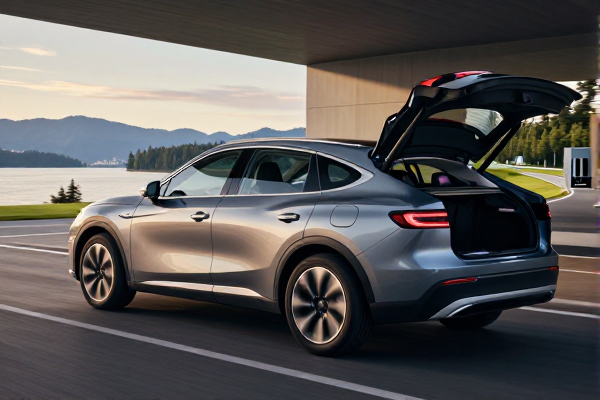
DETROIT — Toyota on March 18 confirmed it will roll its proprietary Arene software platform through roughly 50 models by the end of the decade, putting it in about 10 million new vehicles a year. Chief technology officer Hiroki Nakajima laid out the plan at an investor briefing in Brussels, confirming that the latest-generation RAV4 — already arriving in U.S. showrooms — is the production debut of the system. The world's largest automaker, long celebrated as a mechanical-engineering heavyweight, is now betting its future on software.
There's a difference between a car with software and a software-defined car. Most vehicles on the road today run dozens of microprocessors with fixed programs. A software-defined vehicle (SDV) runs on centralized computing, where core functions behave more like smartphone apps than permanent firmware.
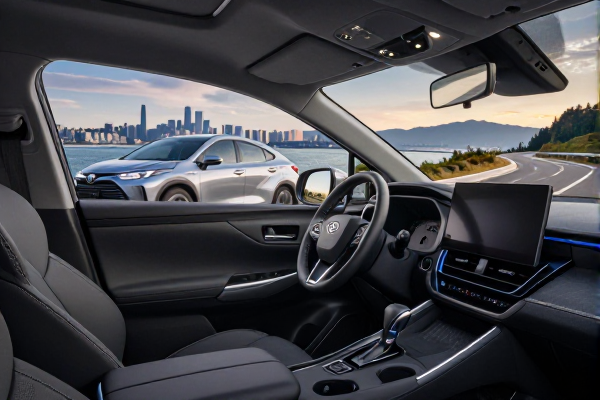
That distinction matters for ordinary buyers because of what it makes possible afterward. The camera and radar hardware stay the same, but the code controlling them can be rewritten over the air. A Toyota owner could wake up one morning to a sharper lane-keeping system, a smoother adaptive cruise control, or a redesigned infotainment layout — no dealership visit required. The same logic extends to battery management in hybrids and EVs, where software updates can improve range based on how owners actually drive.
Toyota says Arene is designed to make that kind of continuous development manageable at scale. Its virtual testing tools let engineers validate new functions without building physical prototypes, and the platform feeds anonymized usage data back into development so features are tuned against real driver behavior rather than assumptions.
Putting Arene on the RAV4 first was not a conservative move. The RAV4 has been one of America's best-selling SUVs for years and anchors Toyota's global lineup. If the platform had a rough launch, the company would hear about it quickly — and loudly.
From there, Arene moves through Toyota's passenger-car and SUV ranges as models are redesigned. Toyota hasn't published a model-by-model timeline, only the 2030 target. That points to gradual adoption riding normal product cycles: new and recently refreshed models get the platform first, and older architectures phase out with the generations they live in.
Tesla made OTA updates a signature feature more than a decade ago. Chinese brands — BYD, NIO, Xpeng among them — have built their production lines around software-centric architectures, packaging driver-assistance features into subscription bundles. By its own standards, Toyota is behind.
Scale, however, changes the math. Tesla moved roughly 1.8 million vehicles worldwide last year; Toyota's annual volume stands above 10 million. If Arene appears in even half of that output, Toyota would become the largest software-defined vehicle fleet on the planet almost immediately. The harder challenge is protecting its reputation for reliability while shipping frequent updates. A flawed patch on a niche EV is contained; a flawed patch on a Corolla becomes a national headline.
Software-defined hardware creates a stream of post-sale revenue that mechanical engineering never could: charging owners for features after they've bought the car. Toyota hasn't said which Arene features will cost extra, but the industry's direction is clear — convenience packages, advanced driver-assistance upgrades, and connected services will all carry price tags of some kind.
American customers have already shown Toyota where that line is. In 2022, owners learned that remote start from the key fob would be gated behind a paid Remote Connect subscription after a trial period. The reaction was swift and sour enough that Toyota adjusted course. The lesson sits right in front of the company as Arene arrives: if every update notification looks like an invoice, buyers will start ignoring them — and the brand pays the price.
Toyota has long shared hardware — platforms, drivetrains, hybrid systems — with partner brands including Subaru, Mazda, Suzuki, Daihatsu, and Hino. Now it plans to share software. The company says it expects to license Arene to alliance partners around 2035, potentially making Toyota a software supplier to other automakers.
That scale-up matters beyond simple revenue. Standardizing software across brands spreads development costs and pushes OTA capability into smaller, cheaper vehicles that could otherwise never justify the engineering spend. It's the classic Toyota formula — economy of scale, now applied to code.
A software-defined fleet also opens possibilities that have nothing to do with infotainment. Toyota has been exploring vehicle-to-home integration, where a car coordinates with a home energy system, charges during cheap off-peak hours, or acts as backup storage during an outage. It has also invested in V2X communication, letting vehicles exchange data with traffic infrastructure and with pedestrian-monitoring systems.
None of that can work across a broad fleet without centralized software control. Traditional vehicles run isolated modules that can't easily enter that ecosystem; an Arene-equipped car can learn a new capability at any point in its life. The platform, in other words, is not about screens. It's the foundation for everything Toyota wants to do over the next 15 years.
For American shoppers, the Arene era starts with the new RAV4 and will eventually extend to the Corolla, Camry, Highlander, Tacoma, Tundra, and Sienna. Toyota hasn't confirmed U.S.-specific rollout dates, and some features could arrive later in the U.S. than elsewhere because certification requirements are stricter here.
The infrastructure, though, is already in place. Toyota Connected North America, based in Plano, Texas, operates the cloud platform behind Toyota and Lexus connected services in the U.S. — the natural hub for Arene's data pipeline and update deliveries. Dealers, meanwhile, face a quieter upheaval: OTA updates reduce the need for customers to visit service bays for control-module programming, a revenue stream dealerships have counted on for years. Toyota will have to manage that transition carefully or create friction within its own retail network.
Industry observers generally agree that Toyota should be doing exactly this, while adding that a 2030 target gives faster-moving rivals running room. McKinsey has projected that software-enabled vehicle features and services could generate hundreds of billions of dollars in global revenue annually by the end of this decade — most of it captured by companies that are already good at shipping code and iterating quickly.
Consumer research points the same way. Software increasingly shapes purchase decisions, especially with younger buyers, and subscription fatigue is real — buyers consistently say they want transparent pricing. Toyota's conservative, trust-first reputation could help here, as long as it frames over-the-air updates as improvements rather than paywall prompts. The same caution, however, is the trait that has slowed other legacy automakers in the software race.
The biggest obstacle Toyota faces isn't technology; it's its own organizational culture. The company's legend rests on mechanical precision, lean manufacturing, and continuous physical improvement. Software development follows a completely different rhythm: iterative releases, imperfect launches, rapid patching. Those two worldviews don't naturally coexist.
Toyota has tried to bridge the gap through Woven by Toyota, its mobility software subsidiary, where Arene was incubated. The 2025 RAV4 is the first real product of that partnership. If it works, Toyota's next decade gets written in software. If it stumbles, the company will have learned that lesson in full view of its most important customers.
Come 2030, Toyota's models will still rest on excellent engines, batteries, and chassis. But what owners experience — the features a car gains, how quickly it improves, what services it offers — will increasingly come from software. Toyota isn't the first automaker to reach that conclusion, but it's the biggest one to fully commit in public. With Arene spreading through the lineup, the company is effectively saying the next great Toyota will be written in code, not just stamped in metal.