Browse

Log in / Register
 Share


July 12, 2025 — Toyota Motor Corp., the world's largest automaker, has decided that the future of the automobile belongs to software. The company plans to convert all 50 of its current nameplates into software-defined vehicles (SDVs), according to a Nikkei Asia report. The move represents a major strategic break for a manufacturer long associated with hardware reliability, hybrid powertrains, and a deliberately slow approach to digital technology.
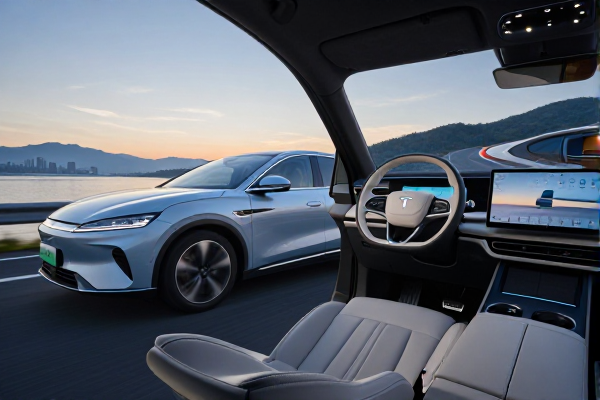
For the average driver, the easiest way to think of an SDV is a car that can change after it's been sold. Traditional vehicles are locked into whatever hardware and firmware they left the factory with; an SDV delivers many features through code that runs on central computing hardware. That code can be updated, expanded, and reconfigured — without a service bay.
This architecture also simplifies the way engineers build cars. Instead of dozens of separate electronic modules, each with its own chip, an SDV concentrates brainpower into a few powerful processors. The vehicle effectively behaves like a mobile device, with safety systems, climate functions, entertainment options, and even driving characteristics managed in software. That shift makes over-the-air updates possible and lays the foundation for more advanced autonomous-driving systems down the road.
Toyota's old stance was simple: sell cars that don't break and don't need to be rebooted. But the competitive landscape has changed faster than the company expected. Tesla has spent 15 years proving that buyers will accept — and even expect — continuous software improvements. Meanwhile, Chinese automakers like BYD, XPeng, NIO, and Zeekr have built digital experiences, OTA updates, and smartphone-grade interfaces into their standard equipment from the start.
In China, the world's biggest and most intense car market, those features have become table stakes. Toyota has watched its share there shrink as local software-first brands dominate new-car sales. Its own first full EV, the bZ4X, was a disappointment, and the company's hybrid dominance has not translated into digital credibility. The SDV strategy is, at its core, an admission that hardware excellence alone no longer wins markets.
The entire program stands on a single in-house platform: Arene. Toyota has been developing this operating system for years, and it's already running in the redesigned RAV4 — which happens to be one of the best-selling vehicles in the United States. That makes the RAV4 the beachhead for Toyota's digital future in North America.
Arene acts like an automotive operating system. It manages the vehicle's core functions, connects the car to mobile networks, and gives engineers a uniform way to write software that works across Toyota's global lineup. For a company whose models were historically engineered in relative isolation, that standardization is a quiet revolution in itself.
Overnight, the car can absorb fixes and features exactly the way a phone does. Toyota's scale makes this powerful: with group sales of roughly 10.8 million vehicles in 2024 across Toyota, Lexus, Daihatsu, and Hino, a single software release could touch more cars in one quarter than most EV start-ups have built in a decade.
The software isn't staying in the vehicle. Nikkei Asia's report indicates Arene will be embedded in robots, home systems, utility infrastructure, and public equipment. The logic is straightforward: a vehicle that can talk to its surroundings becomes more useful, whether that means opening a garage door, pre-cooling a house, or communicating with roadside charging hardware.
Toyota's ambitions here aren't entirely new. The company owns stakes in housing and urban development in Japan, and executives have long talked about moving people more efficiently, not just selling vehicles. The SDV architecture finally gives Toyota the common technical language to connect cars to that broader vision.
Of course, none of this comes free. The report says Toyota is targeting a 40% increase in profit from non-new-vehicle businesses, including software subscriptions, genuine parts, and used-car operations. All told, the company expects those services to bring in more than $26 billion a year — a number that implies it will charge for digital features that Tesla, Ford, and GM often provide at no cost.
There are precedents, and they're controversial. BMW tested subscription-based features in markets like the UK and Korea before public backlash forced a retreat. Consumers generally dislike the idea of paying repeatedly for hardware that was already installed. But automakers persist because subscription revenue is stable, high-margin, and far less cyclical than manufacturing.
Toyota's size gives it a unique advantage: even a modest monthly digital service fee applied across a ten-million-vehicle annual install base becomes enormous. Its dealer network, meanwhile, could both sell and service these digital products — though that same network has traditionally depended on physical maintenance, creating an internal conflict as software updates replace service visits.
For American buyers, the RAV4 is the clearest early example. Model refreshes will presumably carry Arene first, and Toyota's design centers have been reoriented to treat software as a first-class component rather than a late-stage add-on.
The practical benefits are real: better safety features over time, navigation updates, improved battery management in hybrids as algorithms are refined, and fewer reasons to visit a dealership. But there will also be a harder sales pitch, as Toyota attempts to convince customers to pay for things its competitors give away.
The transition is a serious engineering and corporate challenge. Toyota's development process has historically been decentralized; imposing one software platform forces engineers across the world to work in new ways. That kind of cultural change is at least as difficult as the technical work.
Cybersecurity is another pressure point. A fleet of continuously updated vehicles is a large attack surface, and Toyota's earlier cloud-related issues have shown how a single bug can cascade across customer vehicles. Regulators are also watching: when a car's features can change remotely after certification, safety regulators have to rethink what a recall even means.
Toyota's pivot won't just affect its own showrooms. Component suppliers will need new business models, insurance companies will need to price software risk, and independent repair shops — which cannot access proprietary update tooling — may discover a shrinking slice of maintenance work.
The broader meaning is simple: the world's largest carmaker has given up resisting the software era. For decades Toyota marketed itself as the brand that would never turn the car into a computer. Now it's preparing to make every one of its cars update itself overnight. The Japanese automaker still wants to be the most reliable vehicle on the road; it just believes being the most technological is the only way to get there.