Browse

Log in / Register
 Share

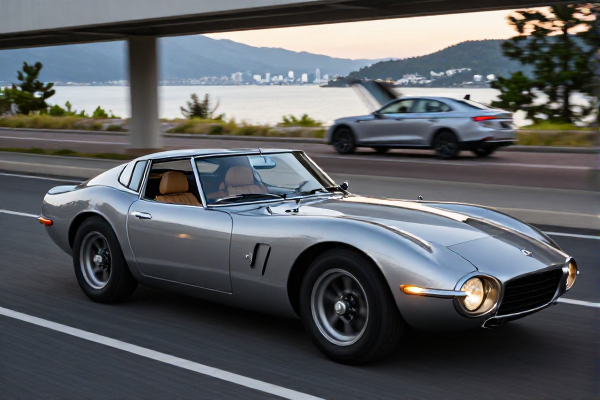
As of May 9, 2026, there is a simple rule for anyone shopping for a Japanese icon: if a Toyota 2000GT has no roof, stop treating it as a factory car. Toyota offered the 2000GT only as a fixed-roof coupe. The automaker says 337 examples were built from 1967 through 1970. The only open-roof cars the factory made were two movie vehicles built for the James Bond film You Only Live Twice. For a buyer, the open body is a red flag until the story is proven.
The 2000GT was Toyota's attempt to prove it could build a world-class sports car. The car was shown at the 1965 Tokyo Motor Show and went on sale in 1967. It was developed with Yamaha, and the attention to detail impressed the press. The long, low body was designed for top speed, not for open-air cruising. Toyota never listed a roadster version, never promised one, and never built one for sale. Every factory 2000GT had a fixed steel roof.
Toyota's total production figure matters because small numbers force buyers to rely on documentation. With 337 coupes and two experimental open cars, the population is small enough that a careful owner should know exactly which chassis is which. When a car appears with a missing roof, the numbers need to line up.
The open 2000GTs were built for cinema, not for the showroom. Toyota built two roadster prototypes for You Only Live Twice, which was released in 1967. They appeared as Sean Connery's Bond car during the film's Japanese sequences. The cars were factory-backed, which gives them a connection to Toyota that no private conversion can copy. But they are not proof that Toyota made other convertibles. They are proof that Toyota made two open cars for one film.
Collectors often call these cars "Bond 2000GTs," and they have earned their own following. That does not make "2000GT convertible" a production model. If someone says their car is one of those two, the seller must be able to show a history that matches the known Bond cars. Any other open car is either a custom build or a coupe that had its roof removed after delivery.
Body style is the first filter in vintage-car authenticity. A 2000GT with a removed roof is not an unusual variant. It is more likely the result of a previous owner who wanted a roadster look. Some conversions are professional; some are aggressive. Both are aftermarket changes.
Once the roof is gone, the car's structural story has been changed. Doors, chassis, and original panels may have been altered. That is why an auction house, a restorer, or an insurer will ask a difficult question: can you show the car before and after? Provenance is not a half-page story. It is a chain of ownership that can connect a specific VIN to the day the car left the factory and explain every change made since.
When confronted with a topless 2000GT, three documents matter most.
First, the chassis number. A car built from a production coupe will trace to Toyota's build records. The Bond cars have their own place in history, and a buyer should not accept a vague claim.
Second, period photographs. A credible owner can show pictures of the car before the roof was cut away. If those photos do not exist, the transformation cannot be dated or attributed.
Third, restoration records. A custom conversion from a respected shop can still be a good car, but it is a custom car. Buyers pay for honesty, so the paper trail decides the negotiation.
None of this is meant to call every convertible a fake. It is an instruction manual for informed skepticism.
For the past decade, the 2000GT has been among the most valued Japanese collectibles in the United States. Original coupes with documented ownership and matching numbers have reached seven figures in some private and public sales. The appeal is the same: scarce production numbers, memorable design, and a connection to a defining moment in Toyota's history.
A coupe that survives in unmodified condition carries the strongest investment case. A converted car can be appealing, but it starts with a handicap. Even a beautiful open-roof build has to compete against the factory coupe benchmark. The market asks a simple question: is this what Toyota sent out the door? If the answer is no, the price follows that answer.
An open Toyota 2000GT will always attract attention. The two Bond prototypes are important pieces of automotive and film history. But for every genuine example, there are custom cars, modified chassis, and wishful descriptions. A buyer in 2026 cannot trust the roofline by itself. The body is the clue, the paperwork is the verdict, and the red flag is the missing roof.