Browse

Log in / Register
 Share


If you’ve driven a new car recently, you’ve probably noticed that automakers are obsessed with reinventing the wheel—sometimes literally. Tech advances, new EV brands, and a drive to stand out have led to features that sound cool on paper but can drive you crazy in real life.
We’ve been testing dozens of 2025 models, from mainstream crossovers to luxury EVs, and the same complaints keep popping up. Here’s our list of the seven most annoying new car features right now, plus what’s changed (and what hasn’t) since last year.
1. Overbearing advanced driver assist systems (ADAS)
Many drivers would agree: lane-keeping assist that tugs the wheel when you’re just avoiding a pothole is beyond irritating. The good news is that some brands, like Hyundai and Ford, have improved calibration in 2025 models, making systems less intrusive. But others—especially certain Chinese EVs—still jerk the car at the slightest hint of a lane line. Worse, driver monitoring cameras some brands insist on using can’t be disabled without a trip to the dealer. A 2024 J.D. Power study found that ADAS annoyance is the top reason new car owners disable safety features, which defeats the purpose.
2. Gear selectors that make you think
The traditional PRND lever is nearly extinct. In its place: dials, push buttons, touchscreen swipes, and even column-mounted stalks that require manual reading. The 2025 Tesla Model 3 still uses a screen swipe for reverse—try doing that during a three-point turn. Jeep’s new Avenger uses dashboard buttons; Volvo’s EX30 has a rather proud stalk. The worst offender? Some Chinese brands hide the gear selector in a submenu. When you’re parking in a hurry, fumbling for a virtual button is a safety hazard.
3. Weird door handles (inside and out)
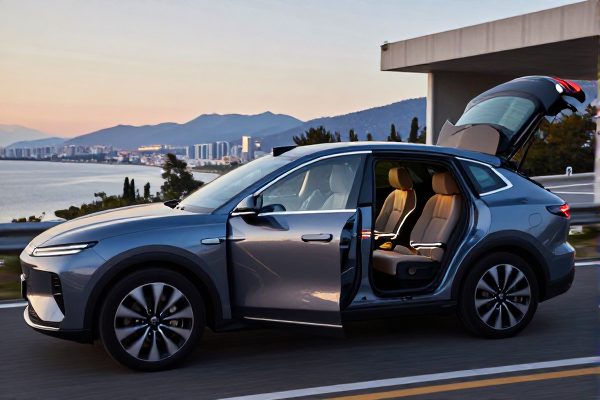
Tesla remains the king of confusion. The Model 3/Y door handle still requires a precise thumb press to pop out, and passengers often yank the wrong part. Inside, the Ford Ranger and Everest’s “squeeze” handle is unintuitive for many. Newer EVs like the Zeekr 7X have exterior B-pillar buttons that open the door electrically—but only if you know where to tap. In an emergency, that extra second could matter. Ford has acknowledged the issue and is redesigning interior handles for the 2026 Ranger.
4. RFID/NFC cards for unlock and start
Volvo EX30 and Leapmotor B10 rely on a credit-card-sized NFC card to unlock and start the car. Tap the card on the B-pillar or mirror, then place it in a slot to drive. No fob, no keyless entry. While it’s minimalist, it’s also inconvenient: you can’t unlock the car from a distance, and if you lose the card, you’re stuck. Worse, the card slot is often in the center console, so you have to dig for it. Volvo says it’s exploring a digital key app, but that’s not available in all markets.
5. Screen controls for seat, steering wheel, and mirror adjustments
Volvo’s EX90 and EX30 have moved seat adjustment, mirror controls, and steering column controls to the touchscreen. You have to dive into a menu to change lumbar support or tilt the mirror. While the screen is snappy, it’s still distracting to look away from the road. Some Chinese brands like NIO have followed suit. The irony: Volvo made the three-point seatbelt patent free for safety. Now they’re forcing drivers to tap a screen for basic adjustments. A 2025 Consumer Reports survey found that 68% of drivers prefer physical buttons for seat and mirror controls.
6. Lock/unlock sounds that are more sociable than functional
Cars that play a chime, jingle, or even a synthesized melody when you lock/unlock are becoming common. Zeekr and GWM (Great Wall Motors) models are notorious for loud, quirky sounds that attract attention in a parking lot. Some can be turned off, but many require a deep menu dive. “It’s like your car is announcing itself to the world,” one owner told us. “I just want to lock it silently.” The trend seems to be a way to evoke a futuristic feel, but most drivers find it embarrassing.
7. Hidden touch buttons for climate and volume
While not new, the persistent removal of physical knobs for volume and temperature adjustment is still a pain. In 2025, many new models—including the Honda Prologue and Chevrolet Blazer EV—have sliders on the screen that are hard to use without looking. The EU is now considering regulations that would require physical controls for core functions, but in the US, it’s still up to automakers.
The bottom line
Automakers are racing to differentiate, but they often forget that convenience and safety should come first. Some of these features are minor annoyances; others could be dangerous. If you’re shopping for a new car in 2025, test-drive with these in mind. And if you already own a car with a frustrating feature, you’re not alone—the comments section is ready for you.
This article was updated on April 11, 2025, to reflect the latest 2025 models and industry trends.