Browse

Log in / Register
 Share

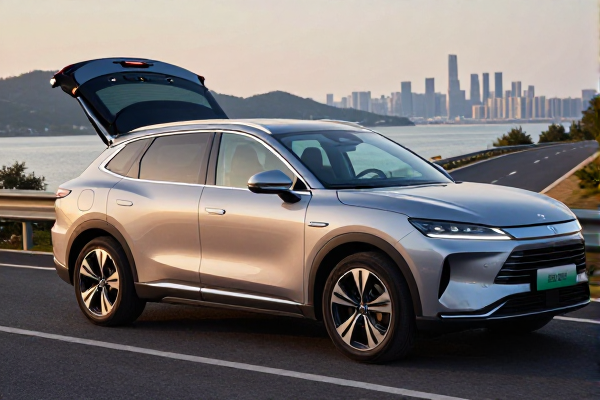
In a move sparking debate on privilege and public safety, Pakistan's Interior Ministry has unveiled significant amendments to its policy governing tinted windows on private vehicles. The revised Tinted Glass Permit Policy for 2025 introduces a standardized annual fee structure for citizens, while simultaneously carving out a complete exemption for the nation's parliamentarians. This development, recorded on October 27, 2023, places a new financial and regulatory burden on ordinary car owners, raising immediate questions about equity in the application of the law.
The cornerstone of the updated policy is the introduction of a mandatory annual permit. Vehicle owners across Pakistan must now pay a fee of 15,000 Pakistani Rupees (approximately $54 USD) for the legal authorization to use tinted film on their car windows. This permit is not a one-time purchase but a recurring yearly obligation. Officials indicate that the fee applies uniformly to most private passenger vehicles, with potential separate brackets for commercial transports still under review. The application process is expected to migrate to a more centralized digital portal managed by the Interior Ministry, aiming to streamline what was previously a more fragmented system handled by regional traffic police authorities.
This regulatory push for permits is fundamentally rooted in longstanding concerns over road safety and law enforcement efficacy. Excessively dark tinting severely limits visibility for both drivers and, crucially, for police officers conducting traffic stops or routine checks. Authorities argue that unregulated tint poses a security risk, as it can conceal the identity and number of occupants within a vehicle, potentially hindering criminal investigations or allowing for unlawful activity to go unnoticed. The permit system, in theory, establishes a controlled standard for permissible tint levels (measured by Visible Light Transmission percentage) that balances personal privacy and climate control desires with the state's security and safety imperatives.
The most contentious element of the new policy is the explicit exemption granted to all members of the National Assembly and the Senate. This means sitting parliamentarians will not be required to obtain the permit or pay the associated fee for their personal vehicles. Proponents of the exemption likely frame it within the framework of parliamentary privilege—a set of immunities designed to protect legislators from legal obstruction in the course of their duties. However, critics are quick to highlight that this privilege is being extended to a personal amenity (tinted windows) rather than a core function of legislative work, drawing a stark line between the ruling class and the electorate.
From an exclusive perspective, this exemption is not an isolated incident but fits a pattern of special provisions for Pakistan's political and bureaucratic elite. Previous governments have also extended similar courtesies, such as exemptions from toll taxes on motorways or preferential treatment in utility bill payments. This latest move reinforces a perceived culture of entitlement, where laws are designed to regulate the public while the architects of those laws place themselves above them. The debate, therefore, transcends car windows and touches on deeper issues of accountability and egalitarian application of state regulations.
The public and legal reaction has been pointed. Many citizens view the exemption as a blatant case of one rule for the powerful and another for the common person. Social media platforms and talk shows are filled with discussions questioning the necessity of such a carve-out. Legal experts are divided; some cite constitutional provisions for parliamentary privilege as a valid basis, while others argue that such privileges must be narrowly construed and should not apply to uniform traffic and public safety regulations that govern all citizens equally.
Comparatively, while many countries regulate window tinting for safety reasons, few are known to embed explicit occupational exemptions within their legislation. The focus internationally is typically on setting universal standards for tint darkness (measured by VLT%) and enforcing them across all vehicle categories without distinction to the owner's profession or status. Pakistan's approach, by creating a special class, stands out and may attract further scrutiny from international observers monitoring governance and transparency indices.
Looking ahead, the implementation of this policy will be a key test. Will traffic police be empowered or willing to stop and fine vehicles with illegal tint, regardless of whose car it might be? The exemption clause could create practical enforcement ambiguities and potential for abuse. Furthermore, the annual fee, while a new revenue stream for the government, may be seen as an additional tax burden on the middle class amid high inflation. The policy's success or failure will ultimately be judged not just by compliance rates, but by whether it genuinely enhances road safety for all, without perpetuating a two-tiered system of citizenship.