Browse

Log in / Register
 Share
Share
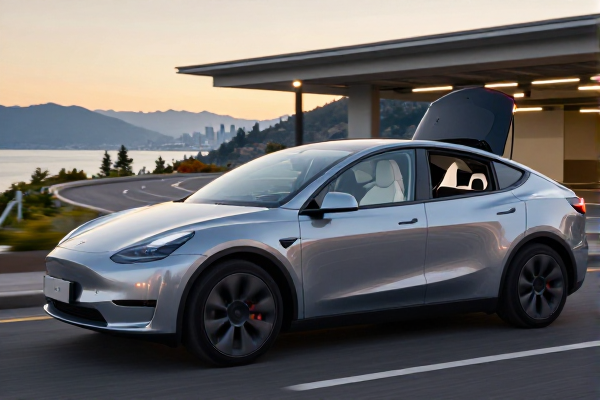
Tesla finally rolled out its long-awaited Vehicle-to-Load (V2L) outlet adapter on March 24, 2025, allowing owners to power appliances, laptops, and even camping gear directly from their car’s battery. The $80 accessory seemed like a dream come true for road trippers and tailgaters — until many Model Y drivers discovered their cars simply can’t use it.
The issue stems from the Power Conversion System (PCS) installed in the vehicle. Some of the newest Model Y builds, including those delivered as recently as August 2024, are equipped with an older 48A single‑phase PCS. Only vehicles with the newer, two‑piece PCS can support V2L. Tesla’s own compatibility checker on the website instantly blocks orders for those with the older hardware, showing a “This product is not compatible with your 2026 Model Y” message.
One owner, who took delivery of a 2026 Model Y in late August 2024, reported the same red flag. “I tried to order anyway, but the system wouldn’t let me proceed,” he said in a Tesla owners forum. “I called the service center, and they confirmed the car lacks the new PCS.” This is not a simple error — Tesla has intentionally prevented the adapter from working with older PCS units, and there is no software patch or workaround.
The only solution is to retroactively upgrade the PCS. The necessary parts alone cost $1,750, and that’s before labor charges that can push the total over $2,000. For comparison, a high‑quality portable power station with 1,000+ Wh capacity (like a Jackery or EcoFlow) costs $600–$1,200 and can be used with any vehicle. “It’s honestly more logical to buy a stand‑alone power station,” one Reddit user commented. “You’d have more flexibility and still save money.”
Tesla’s decision to launch V2L without a clearer compatibility notice has sparked frustration among early adopters. Many argue that a car less than a year old should not already be blocked from a core feature. “I love my Model Y, but this feels like a bait‑and‑switch,” said another owner on Twitter. “They advertise ‘V2L capable’ on the 2026 model, but only if you have the right hardware.”
It’s worth noting that the V2L adapter itself is a simple 120V outlet that plugs into the vehicle’s charge port. Tesla’s own documentation indicates that the adapter is compatible only with Model Y, Model 3, and Cybertruck vehicles that have the updated PCS. As of now, Tesla has not issued a formal statement about the compatibility gap, nor has it offered a trade‑in or discount for owners seeking the upgrade.
For those still in the market for a new Model Y, the takeaway is clear: verify your vehicle’s build date and PCS version before ordering the adapter. The V2L feature is a great addition, but it’s also a reminder that “new” doesn’t always mean “future‑proof.” As one forum member put it, “This is a first‑world problem, yes — but it’s also a valid complaint when you’ve spent $50,000+ on a car you expect to stay current.”