Browse

Log in / Register
 Share

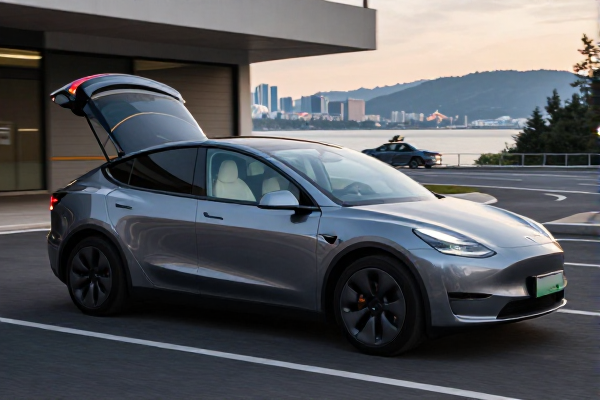
Tesla (NASDAQ:TSLA) enters the current market cycle with far more on its plate than electric-vehicle deliveries. The Roadster program is back in the spotlight, the Full Self-Driving system is getting wider regulatory attention in Europe, and the energy-storage business is proving useful to grid operators in California. Those parallel tracks, combined with mixed quarterly signals and an ongoing legal case, define Tesla’s next chapter as of April 27, 2026.
Tesla no longer operates as a single-product automotive company. The business now spans manufacturing, battery chemistry, energy generation, storage, and software-defined vehicle features. Vehicle deliveries may serve as the headline metric, but the company’s strategic direction is increasingly tied to energy infrastructure and software.
That broad structure has a practical consequence: each development touches a different audience. A battery-storage deployment speaks to utilities, while a vehicle milestone speaks to consumers and investors following consumer-discretionary stocks. Tesla’s position in the Nasdaq Composite also keeps the company inside a widely watched U.S. equity benchmark, which magnifies the market relevance of even smaller product updates.
One of the more visible product events in the near term is the Roadster. Tesla has reopened reservations ahead of a planned unveiling, a signal that the sports car remains an active part of the product lineup. The Roadster is not the volume driver that the Model 3 or Model Y is, so its direct impact on deliveries will likely be limited.
Its value is more about brand positioning and demonstrating engineering capacity. A flagship vehicle can reinforce Tesla’s performance credentials while the more affordable lineup handles the bulk of sales. The upcoming presentation will show whether Tesla can translate its software and battery experience into a high-performance halo vehicle.
For investors, the timing and execution of the Roadster program matter even if the expected production numbers are small. A successful unveiling could reignite product excitement, while a delayed or underwhelming debut could add to concerns about Tesla’s ability to stick to timelines.
The autonomous-driving debate has shifted from pure capability to regulatory acceptance. Tesla has received growing approval momentum in Europe, with the Czech Republic granting provisional approval for the Full Self-Driving system. That development matters because regulatory authorization is not a single global event.
Each country sets its own requirements, testing standards, and launch conditions. The Czech approval, while preliminary, adds shape to a broader European pathway. If Tesla can demonstrate safety and reliability in one jurisdiction, other markets may become easier to enter over time.
What this means for Tesla: the company’s software technology no longer depends solely on U.S. policy. A successful European rollout could validate the approach and potentially unlock additional approvals. The counterweight is that each jurisdiction will take its own time, and safety assessments will remain under heavy scrutiny. Regulatory progress, in other words, is a slow-building advantage rather than an overnight catalyst.
Tesla’s energy division is increasingly becoming a strategic pillar rather than a side business. The company’s work with Sunrun illustrates the shift: home-battery fleets were dispatched to support California’s electrical grid during a period of high demand.
This is the kind of application that changes the way outside observers measure Tesla. Instead of viewing batteries as costly accessories, grid operators and utilities can treat distributed storage as an operational resource. Software makes that possible, allowing individual Powerwall units to act as a virtual power plant.
For Tesla, the financial impact comes from hardware sales plus the recurring value of software-enabled energy services. The arrangement with Sunrun shows how residential storage can connect to the broader electricity infrastructure. It also gives Tesla a way to participate in grid management without needing to own every piece of the system.
That connection gives the energy business a different growth profile from the automotive segment. Vehicle sales are cyclical and pricing-sensitive; energy storage is supported by longer-term electricity demand, renewable integration, and grid reliability needs.
The common thread across Tesla’s vehicle, energy, and autonomy efforts is software. Vehicle software improves over time without requiring a completely new model. Energy software can turn distributed batteries into a reliable grid resource. Autonomy software could eventually create a new mobility business model.
That integrated view is genuinely different from the traditional automotive investor’s playbook. Since Tesla trades as a technology company, its stock may reflect expectations about software, energy, and autonomy just as much as vehicle deliveries.
The key analytical question is not whether each product line works in isolation. It is whether Tesla can keep all of them moving in the same direction while managing the cost and complexity of doing so. That is a harder test than simply delivering more cars in a quarter.
The latest quarterly report gave investors a useful snapshot of the company’s momentum and its limits. Adjusted per-unit financial performance came in ahead of published estimates, and total sales expanded substantially from the prior-year period.
The beat is meaningful because it suggests operational stability across several lines. But Tesla’s quarterly picture is rarely uniform. Production efficiency, pricing, energy deployment, and development spending all influence the final numbers in different directions.
The bigger caveat remains cash flow. Spending on vehicle programs, battery capacity, and autonomy continues to absorb resources, making cash generation uneven even when revenue grows. As a result, any single quarter can be interpreted multiple ways depending on which part of the business is being prioritized.
Tesla’s next chapter will also be shaped by elements outside the product roadmap. The company faces a California lawsuit alleging racial discrimination, a case that adds legal and reputational friction to the corporate narrative.
Legal matters create uncertainty, and the financial cost is not always predictable. Shareholders may focus more on operational numbers, but for a company with Tesla’s public profile, the legal environment is part of the investment equation.
Execution is the broader challenge. Tesla is simultaneously building vehicles, expanding energy storage, refining software, and preparing for the Roadster’s launch. Each project carries its own timelines and costs. Success in one area does not guarantee progress in another, and resource allocation will test management discipline.
Where Tesla goes from here depends less on any single product launch and more on whether the company can integrate its businesses effectively. The next milestones to watch include the Roadster unveiling, any additional European FSD approvals, and new energy-storage deployments, particularly in California and other high-demand markets.
Quarterly cash-flow trends will also be a key gauge of whether Tesla can manage its expansion without diluting the balance sheet. If the energy business keeps proving its value to grid operators, and if software updates continue to enhance vehicle performance, Tesla has a plausible path to broadening its economic moat.
If those pieces move at different speeds, however, the story becomes more fragmented. A delayed vehicle program or a regulatory setback in autonomy can offset the positive signal from another division. Tesla’s situation on April 27, 2026, is therefore not defined by a single headline.
The company is operating a multi-industry strategy that generates both opportunities and friction. That complexity is likely to remain the central feature of the TSLA story for the rest of the year.