Browse

Log in / Register
 Share

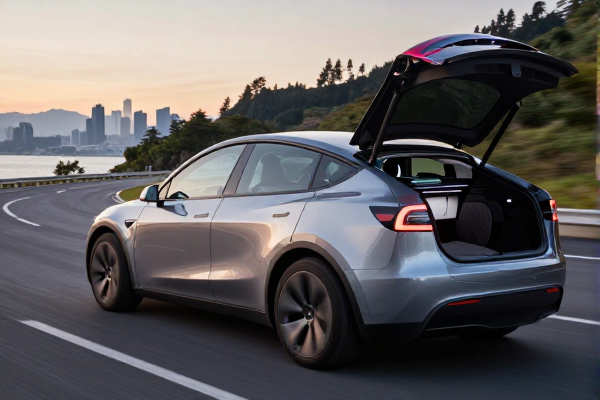
DUBAI — May 7, 2026 — Dubai opened the doors to its Dubai Mobility Labs today, and Tesla didn't wait for a stage ceremony. The American automaker already has vehicles running autonomous test drives inside the new 248-scenario proving ground, becoming the first company to use the facility. The move marks an early, visible test of Dubai's plan to make 25% of city trips autonomous by 2030.
The new site is not another test track with a few cones. Dubai's transport planners built it to stress-test vehicle software inside controlled versions of the messy situations that cars face every day on U.A.E. roads. Instead of waiting for a rare crash, a pedestrian who darts into traffic, or a delivery van blocking a lane to appear by chance, engineers can replay those moments in minutes. That kind of repeatability is why similar facilities have become central to autonomous-vehicle development from California to China.
The 248-scenario rulebook covers the normal and the nasty. It includes protected left turns, multi-lane merges, pedestrian crossings, emergency vehicles approaching from behind, construction detours, and vehicles that refuse to stay in their lane. It also includes low-light conditions, rain effects, and heat-heavy weather. The facility is designed to fail a car before the public does. On the closed course, a mistake is a data point, not an accident.
For Tesla, this trial is about more than confirming what works in North America. The company's driver-assist and self-driving software depends on cameras and neural networks. Models trained on California freeways or Texas highways can struggle with visual inputs they have not seen often: heat shimmer rolling off the asphalt, sand haze turning distant cars into vague shapes, sunlight reflecting off glass office towers, and road paint that fades quickly under desert wear. Dubai gives Tesla a chance to train and retrain on those exact inputs.
Tesla's regional footprint makes the trial practical, not just symbolic. The company has expanded sales and service operations across the Emirates, so engineering crews can work on-site, swap test vehicles, and handle software updates without relying on long-distance logistics. That setup matters when a testing cycle runs for weeks rather than days.
Tesla has not revealed which models are involved or how many test cars are on-site. It also has not said whether the system is running without a safety operator behind the wheel. What is clear is that Dubai's process puts the lab first: test behind barriers, collect data, then move toward public-street permits.
Dubai launched its Autonomous Transportation Strategy in 2016, aiming for autonomous vehicles to handle 25% of all trips in the emirate by 2030. That number is not limited to personal cars. It includes taxis, shared ride services, and eventually buses, with the broader goal of cutting congestion, emissions, and traffic deaths. The Mobility Labs are meant to give regulators and automakers a shared evidence base before vehicles reach public streets.
Dubai is not starting from zero. Its Metro is one of the world's longest automated rail systems, and the emirate has hosted autonomous shuttle pilots in recent years. But those are controlled vehicles moving on fixed routes or low-speed zones. A Tesla running through mixed urban scenarios is a different category, and that category is exactly what the Mobility Labs was built for.
The Roads and Transport Authority, which oversees Dubai's roads, taxis, and transit, has long described autonomous mobility as a way to remove human error from the most repetitive trips. It also sees an economic benefit. If autonomous shuttles on fixed routes can run with fewer staff, or if robotaxis replace some private-car trips, the city can use its road network more efficiently. None of that happens overnight, which is why the 248-scenario lab matters as an intermediate step.
The first phase inside Mobility Labs will be less glamorous than the marketing suggests. Safety operators will sit in the cars and monitor every intervention. A remote control room will watch the same displays, tracking why the software hesitates or why a human has to take over. In public demonstrations, autonomous vehicles can look effortless; in the lab, the goal is to find the moments when the system needs help. That data is what separates a functioning product from a showpiece.
Automakers have learned not to rely on splashy commitments. Some earlier autonomous projects in the Gulf started with grand ceremonies and quietly disappeared. The Mobility Labs approach is different because it gives everyone a repeatable process. Every test run is recorded, every handover logged, and the facility operator maintains a record of the results. That is why the opening feels more like engineering than spectacle.
Heat and air quality are the local wildcards. U.A.E. summer temperatures regularly pass 110°F, and cooler months bring fog and dust storms. For an electric vehicle, thermal management shapes reliability and charging behavior. For an autonomous system, blowing dust and fog can degrade the camera feed. A system that works at 75°F in California must prove it can make safe decisions when the air is thick with sand and the windshield is covered with a film of grit.
The trial also highlights a regulatory contrast. In the United States, automated-driving rules remain patchwork, with different requirements in California, Texas, Nevada, and a handful of other states. Dubai offers the opposite: one regulator, one test center, and a clear scenario list. That structure makes it easier for a software team to design validation and compare results across companies. If the Dubai model generates strong safety data, it could become a reference point for other Gulf cities working on similar 2030 timelines.
Beyond Tesla, the facility is a signal to other automakers and mobility providers. Chinese and European companies have shown serious interest in Gulf markets, and a local scenario library lowers the cost of adapting software trained elsewhere. When a city builds the right infrastructure, AV suppliers tend to respond. The open question is whether regulation, insurance, and grid capacity keep pace.
Every closed course has limits. Dubai has a dense, international mix of driving styles: taxi drivers hunting for passengers, delivery riders moving between lanes, and pedestrians crossing where there is no crosswalk. A car can clear all 248 scenarios and still meet a situation no one put in the library. The responsible next step is limited public-road testing under supervision, and that is likely to come after the first round of lab results.
For now, Dubai is using the opening to make its 2030 goal feel real. Tesla's early presence gives the lab momentum, but no single company can carry the whole strategy. The story to watch is the system: a city with a deadline, a facility built for harsh tests, and a self-driving software stack that now has to handle sand, heat, traffic, and unpredictability at the same time.