Browse

Log in / Register
 Share
Share
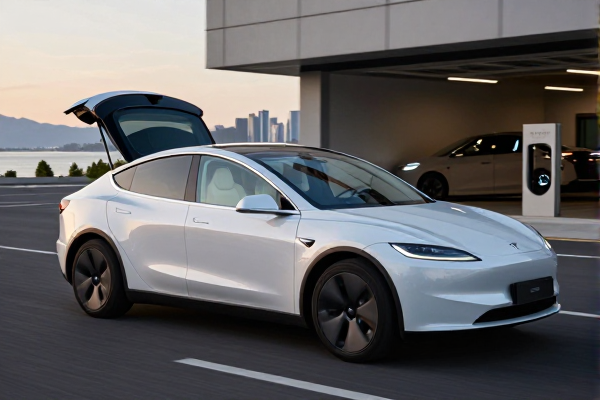
As Tesla gears up for the public rollout of its driverless ride-hailing service, the company is deploying the critical support infrastructure needed to operate a fleet without drivers. A key piece of this puzzle—automated cleaning robots—is now being installed and activated at Tesla’s Robotaxi hub in Austin, Texas, according to recent observations and regulatory filings. This move signals a significant step beyond merely developing the vehicles themselves and focuses on the practical, daily operations of an autonomous fleet. May 16, 2024
The installation of these specialized cleaning units addresses a fundamental challenge for any high-volume, driverless transportation network: maintaining consistent vehicle cleanliness and hygiene between passenger trips. While Tesla unveiled a prototype of this robot last year, its operational deployment at a key hub marks a transition from concept to core utility. The robot, identified simply as “Cleaning Robot” in state documents, utilizes a multi-functional robotic arm capable of switching attachments to perform various tasks essential for vehicle turnover.
This automated system is designed to handle the complete interior reset required after each ride. Its primary functions include vacuuming debris from floors and seats, contact-cleaning high-touch surfaces with specialized microfiber tools, and physically retrieving larger items like forgotten bottles, food wrappers, or personal belongings left behind by passengers. A particular module is engineered to safely clean sensitive components such as the large central touchscreen without causing scratches, a detail crucial for preserving the customer experience and vehicle longevity.
The operational logic extends beyond simple tidiness. Tesla has previously indicated that passengers who leave excessive messes could face automated fines. This cleaning robot likely serves as the first line of enforcement for that policy, cataloging the condition of the cabin. The retrieved items can then be sorted, potentially into a lost-and-found system, creating a closed-loop process that minimizes manual handling and speeds up vehicle readiness for the next fare.
Building a Self-Sustaining Maintenance Ecosystem The cleaning robot is not a standalone solution but a critical node within a larger, nearly human-free maintenance web Tesla is weaving. The company’s vision includes automated car washes that the Robotaxi vehicles, like the upcoming steering-wheel-less Cybercab, can navigate into autonomously for exterior cleaning. When combined with the interior robots at hubs, this creates a seamless cycle for comprehensive vehicle upkeep.
Furthermore, Tesla has patented sanitization systems using UV light to eliminate germs between rides. This layered approach—mechanical cleaning, washing, and UV sanitization—aims to deliver a reliably pristine passenger environment that matches the premium, tech-forward branding of the Tesla ecosystem. Industry analysts note that this holistic focus on operational infrastructure is what often separates successful pilot programs from scalable commercial services in the autonomous vehicle sector.
Exclusive Analysis: The Strategic Timing and Location The activation in Austin is strategically significant. The facility, which finished construction earlier, is situated near Tesla’s Gigafactory Texas. The company has confirmed plans to use the Cybercab to autonomously transport employees around the sprawling factory campus as an internal pilot. This provides a controlled, high-frequency testing ground for both the vehicles and the support infrastructure, including these cleaning robots, before a public launch.
This “internal ride-hailing” phase allows Tesla to stress-test the entire operational chain—from ride summoning and navigation to post-trip cleaning and charging—in a real-world but private environment. Data gathered here on cleaning cycles, robot reliability, and fleet coordination will be invaluable for optimizing the system for public use. It represents a pragmatic, iterative approach to deploying autonomy that moves beyond road testing to encompass the entire service logistics model.
Recent footage from the Austin hub shows boundary fences coming down, offering a clear view of parked Cybercab and Model Y robotaxi vehicles. This suggests the site is transitioning from a secured development zone to a more operational state. The public testing of the purpose-built Cybercab has also begun in Austin, tying the vehicle’s debut directly to the location where its supporting maintenance infrastructure is being proven.
Tesla’s methodical assembly of this infrastructure underscores a broader industry realization: the success of autonomous ride-hailing depends as much on the behind-the-scenes logistics as on the driving software. By investing in automated cleaning, charging, and servicing, Tesla is building a foundation aimed at achieving the low operating costs and high vehicle utilization necessary for a profitable, driverless service. The installation of these robots in Austin is a tangible sign that Tesla is preparing not just to launch a car service, but to operate a full-scale, automated transportation network.