Browse

Log in / Register
 Share

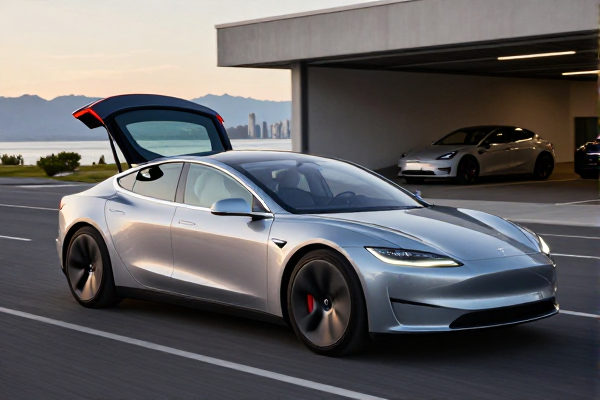
On April 27, 2026, Tesla finally pulled the covers off the long-awaited Roadster — and then lifted it off the ground. The reveal took place at SpaceX's rocket-testing facility in Texas, where Elon Musk opened with a simple warning: "We need an audience here to prove it's not AI." Moments later, the prototype was airborne, flying over parked cars and performing barrel rolls while cameras caught every second.
The Roadster has been teased since 2017, when Tesla first showed a sleek concept and started holding deposits. Nine years later, this is the first time we've seen a version that actually looks like a running machine. The car on stage is angular, aggressive, and packed with hardware no current production car offers. Musk said it will beat any track record on Earth — but production doesn't start until 2028, so we'll have to wait to see him back that up.
The numbers that matter
Tesla didn't quote a total power figure or give a motor count. It didn't need to. The four rocket thrusters sitting in the rear diffuser produce 8,000 newton-meters of thrust on their own. Tesla says that's enough for a 0-60 mph time of under one second. For reference, the quickest production EVs on sale today are roughly in the 1.5-second range, so this would be a massive step forward. Whether that's realistic on normal tires is something engineers will be arguing about for months.
There's also a fan system under the floor that sucks the car down onto the road — the same trick used by the McMurtry Speirling, which stunned the Goodwood hill climb a few years ago. Tesla showed it off by driving the Roadster up a vertical wall and holding it upside down. That's an extreme demonstration of downforce, not something you'll do on the way to the grocery store, but it proves the idea works.
The flying question
Yes, it flew. The prototype carries a 600-litre air tank and ten nozzles around the body, feeding cold-gas thrusters strong enough to lift the car. In the live demonstration, it took off, cleared rows of vehicles, and pulled barrel rolls with nobody behind the wheel. That detail matters. Looking at the underside, this is clearly an engineering mule, not a production-ready machine. The metal frame chassis doesn't look anywhere close to final, and there doesn't appear to be any suspension underneath either. It's a brilliant proof of concept, but it's not a finished road car.
Design and interior
Visually, the new Roadster shares almost nothing with the 2017 concept. The nose is lower and much sharper, with triangular headlights that give it a slightly Lamborghini Aventador look — if that Lamborghini had been rendered in 8-bit graphics. The rear is where all the drama lives: four thrusters poking out of a massive diffuser, a full-width light bar, and a large deployable spoiler that rises when you need extra aero.
Inside, it's classic Tesla. There's a big central touchscreen, a steering yoke, and almost no physical buttons. The yoke is connected to a steer-by-wire system similar to what you get in the Cybertruck. It's minimalist, familiar, and not especially surprising. But given the exterior, the cabin is almost secondary.
Price and production
Tesla has been holding deposits of roughly $50,000 for the Roadster since 2017. The final price is still unannounced, but with hypercar-level performance claimed, don't expect a bargain. We'd be surprised if you get much change from $130,000.
Series production is scheduled to start in 2028. That's two years away, and Tesla has missed deadlines before, so it's fair to keep expectations in check. Still, the fact that we're seeing a running prototype with actual flight capability is further than anyone expected to get back in 2017.
Why this reveal matters
The Roadster isn't just another car. It's a counter-punch to the growing question of whether Tesla has lost its daring. Recent years have been about volume manufacturing, price cuts, and autonomy — not wow moments. The Roadster brings that wow back, and it deliberately borrows SpaceX's engineering culture. The thrusters are similar to the cold-gas systems used to position satellites, and the event was staged at a rocket-testing facility for a reason.
Musk also said the Roadster will be the only long-term Tesla model that remains manually driven once the rest of the lineup goes fully autonomous. That's a big hint about where Tesla sees its future — and it makes the Roadster something of a farewell to the steering wheel.
There are also obvious regulatory questions. How do you certify a car with rocket thrusters for street use? How do you make a fan-assisted downforce system legal? Tesla didn't offer answers, and regulators will likely need years to catch up. The Roadster might end up being legal on track days more than public roads, at least in its wildest form.
This is the most memorable car reveal Tesla has ever done. It's fast, outrageous, and honestly a little insane. The real test isn't today's stunt — it's whether Tesla can turn this flying, fan-assisted monster into a real production car by 2028. After nine years of waiting, skepticism is allowed. But you can't say Tesla didn't give us a show.