Browse

Log in / Register
 Share

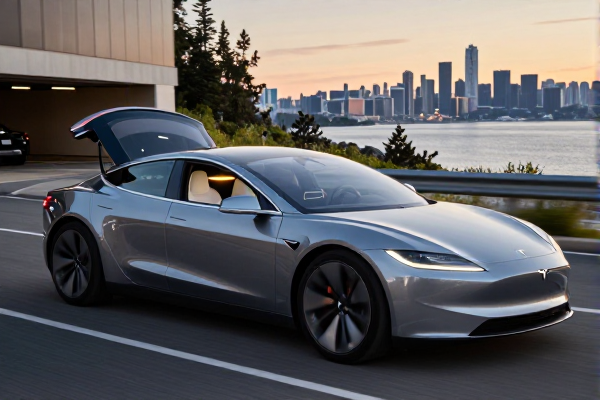
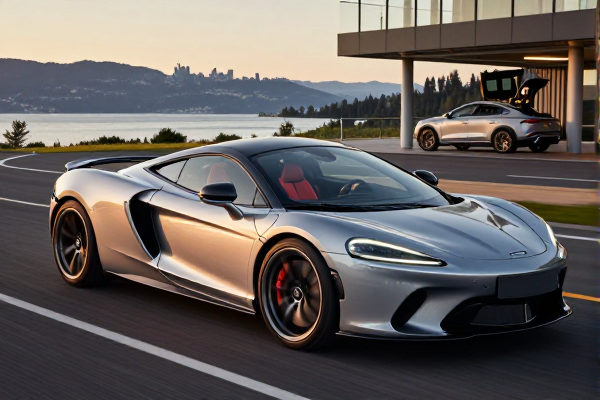
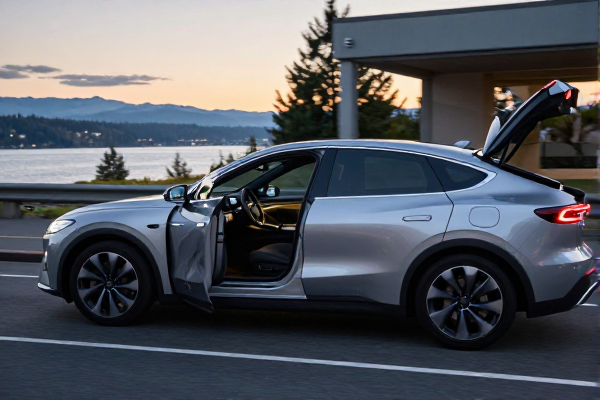
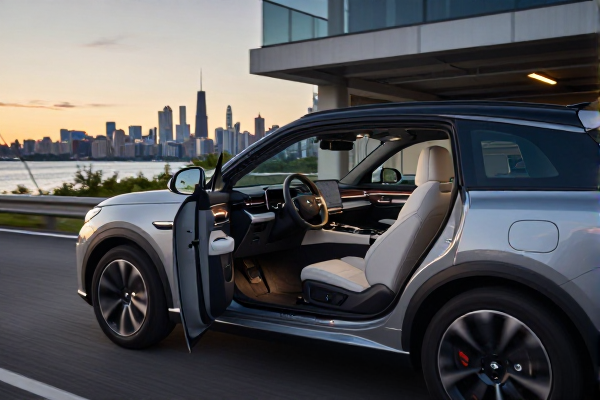
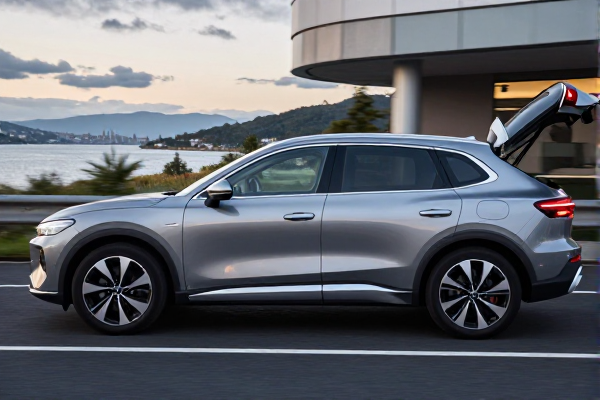
Tesla finally pulled the cover off the long-delayed Roadster last Thursday, and the headline trick was the one Elon Musk has promised for years. The electric sports car is equipped with cold gas thrusters that can briefly push it off the pavement. Musk showed the system on X and said the Roadster can now hop short distances and even rotate in midair. As of this update on May 10, 2026, that is the official line. The less flashy official line is just as important: customer cars will not arrive before 2028, and the “rocket” mode has no approval for public streets yet.
The Roadster that Tesla demonstrated on Thursday is not a jet-powered stunt machine. It is an electric car with a very unusual control system. Cold gas thrusters work by pushing stored gas out of a nozzle under high pressure. There is no fire, no explosion, and no continuous burn. The car gets a short, sharp shove from the reaction force. Aerospace engineers have used the same idea for decades to control satellites and spacecraft docking.
What makes the Roadster version interesting is the way the thrusters can combine with vehicle dynamics. Musk said the car can use the system for short airborne spurts, and he shared video of the car spinning while off the ground. Those are not sustained flights. They sound more like controlled hops. But for a road car, even a controlled hop is a massive technical risk.
Musk also described a “multi-mode” suction system. That phrase is doing a lot of work in the announcement. Cold gas thrusters can provide quick pulses of force, but a suction system can work the other way: pulling the car toward the road, adding stability at high speed, or preparing airflow before a jump. Tesla has not released technical drawings or test data for either mode, so it is hard to tell how much is production engineering and how much is showmanship.
The company did not update the usual performance numbers, either. The original 2017 Roadster was supposed to do 0-60 mph in 1.9 seconds, run the quarter-mile in 8.8 seconds and travel 620 miles on a single charge. Those figures were staggering then, and they would still be impressive in 2026. Tesla did not use this week’s event to refresh them. That silence is a signal: the company is framing the Roadster as a technology showcase first, a sports car second.
The Roadster was first shown in 2017. Musk said it would enter production in 2020. That date slipped. Then it slipped again. Now the company says customer production begins in 2028. That is eleven years after the original reveal, and it means many people who parked a refundable reservation years ago are still waiting. Tesla has not said what the final configuration costs, nor whether original reservation holders will get first priority.
The 2028 target also gives Tesla time to deal with a very real problem: how to sell a car with rocket-style hardware in a market built around cars that stay on the ground. The company’s track record with production deadlines is not reassuring. The Cybertruck, the Semi, and the original Roadster all missed their initial dates. Musk tends to set ambitious goals and then let engineering, regulation, and supply chains pull them back. The difference here is that the Roadster does not need to sell in large numbers. It needs to sell in enough numbers to justify the engineering.
The bigger obstacle is not engineering. It is law. Every car sold in the U.S. has to meet Federal Motor Vehicle Safety Standards enforced by the National Highway Traffic Safety Administration. There are standards for braking, steering, tires, high-voltage systems, and crash protection. There is no standard for cold gas thrusters. That means the “rocket” feature is not simply illegal; it is in a regulatory no-man’s land.
NHTSA can create a new rule for thrusters, or it can grant an exemption, but the process moves slowly and requires proof that the technology is safe. A feature that can push a vehicle sideways or upward complicates every test the agency runs. High-pressure tanks add crash risk. Pedestrians and cyclists would be exposed to a car that is, for a few seconds, not fully under normal tire control. It is easy to sell that vision in a video. It is much harder to certify it on a test track.
Even if U.S. regulators sign off, other markets will need their own decisions. The European Union’s type-approval system has no obvious category for thrusters, and countries like Japan and China would likely demand separate validation. A car like the Roadster can be a global halo model only if it is legal outside the U.S. as well. Right now, there is no evidence that any government is ready to approve a production car that can jump.
Still, the Roadster should not be confused with Tesla’s mainstream business. The company’s revenue comes from Model Y, Model 3, and energy storage, not from a supercar with a six-figure price tag. The Roadster is a halo car. It gives Tesla a reason to appear in comparisons with electric hypercars and heritage performance brands. The thruster feature creates free marketing that no Super Bowl ad could buy.
Musk now talks more about Optimus robots, robotaxis, and artificial intelligence than he does about new car launches. That suggests the Roadster is not strategic to Tesla’s quarterly results. If it slips past 2028, investors are unlikely to punish the company. If it arrives on time, it gives the Tesla brand a technical prestige that the mainstream models cannot provide. That is the real calculation behind the reveal.
The “short spurts” wording in Musk’s posts matters too. Cold gas systems use stored pressure, and that pressure runs out. A car cannot keep firing thrusters without recharging its tanks or re-pressurizing its system. The Roadster will need time to reset after every hop or spin. That is not a flying car in the science-fiction sense. It is a demonstration of very precise, very high-pressure venting wrapped in a very fast electric car.
Before 2028, Tesla will need to show the hardware works outside a controlled demo. The public does not know what happens if a filled thruster tank is involved in a rear-end collision. The public does not know how the software decides when to fire, and what keeps it from firing on a busy highway. Those details are not cosmetic. They are the difference between a headline-grabbing prototype and a road-legal production vehicle.
The bottom line is simple: the new Roadster exists, it looks intense, and the video is impressive. But if you are waiting to drive one with rocket help on a public road, keep waiting. The first challenge is not even the 2028 production date. It is the legal pathway, and that pathway could take years. The 2028 date is, at best, the beginning of a very long road.