Browse

Log in / Register
 Share

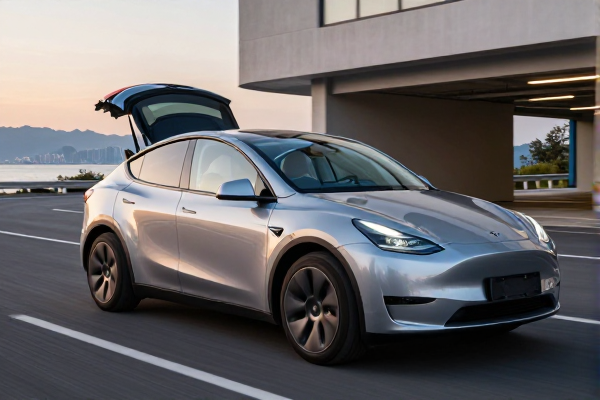
October 1, 2026 — Australia's electric-vehicle market is still running hot, and Tesla is doing most of the heavy lifting. New data from the Electric Vehicle Council (EVC) shows Tesla and Polestar delivered 5,854 battery-electric vehicles in September 2026, up 19.5 percent from the same month last year. The Tesla Model Y alone accounted for roughly 76 percent of that two-brand total, cementing its position as the country's most popular EV.
The EVC's monthly series is a tracking tool for just two brands rather than a census of the entire Australian market. Still, because Tesla and Polestar are among the biggest battery-electric players in the country, the figures are a useful early indicator for overall EV adoption.
Year to date, the duo has recorded 43,386 deliveries across the first nine months of 2026 — up 76.9 percent from 24,521 in the same stretch of 2025. The September-quarter three-month average came to 6,199 vehicles.
Tesla delivered 5,654 vehicles in September, a 21.3 percent year-on-year improvement. Polestar, by contrast, saw deliveries fall 15.3 percent to 200 for the month.
The Model Y was, once again, the engine of Tesla's Australian volume. September deliveries hit 4,476, up 14.0 percent from 3,927 in September 2025, while year-to-date volume surged 108.4 percent to 35,930. That means the Model Y has represented more than eight out of ten Tesla deliveries in Australia so far this year.
The Model 3 also contributed meaningfully, with 1,178 September deliveries — a 60.1 percent increase year over year. Tesla said this week it would add a new base-model Model 3 priced from under A$46,000 (roughly US$31,000) before on-road costs, a move that could widen interest in the sedan in a market sensitive to price. It could also signal that Tesla is willing to extend aggressive base-pricing to other export markets, though no U.S. plans have been confirmed.
For Polestar, 200 September deliveries marked a soft performance relative to last year. The Polestar 4 was its best-seller with 114 units, followed by the Polestar 2 on 76, the Polestar 3 on six and the Polestar 5 on four.
The model-level picture for the EVC dataset:
| Model | Sept 2026 | Sept 2025 | Change | YTD 2026 | YTD change |
|---|---|---|---|---|---|
| Tesla Model Y | 4,476 | 3,927 | +14.0% | 35,930 | +108.4% |
| Tesla Model 3 | 1,178 | 736 | +60.1% | 5,775 | +6.6% |
| Polestar 4 | 114 | 151 | -24.5% | 1,136 | +10.0% |
| Polestar 2 | 76 | 33 | +130.3% | 484 | -26.9% |
| Polestar 3 | 6 | 52 | -88.5% | 57 | -67.1% |
| Polestar 5 | 4 | 0 | — | 4 | — |
| Total | 5,854 | 4,899 | +19.5% | 43,386 | +76.9% |
Polestar's year-to-date story is mixed: the Polestar 4 is up 10.0 percent, but the aging Polestar 2 and the Polestar 3 have dragged overall figures down. The Polestar 5, a four-seat grand tourer, is only just beginning deliveries in Australia, and a refreshed product cadence could help the brand's curve flatten or turn upward later this year.
New South Wales topped September volume with 2,021 deliveries, followed by Victoria on 1,481 and Queensland on 1,083. Western Australia recorded 698, South Australia 354, the ACT 150, Tasmania 45 and the Northern Territory 22.
On a year-to-date basis, every state and territory is in positive territory. The Northern Territory posted the biggest percentage gain at 113.3 percent — though the base is small — while Western Australia was the slowest grower at 45.7 percent. The data is recorded at the point of delivery, so tallies reflect vehicles handed to customers rather than orders taken.
For U.S. readers, the Australian numbers are more than a curiosity. Australia has no significant domestic auto manufacturing, so every Tesla and Polestar sold there is imported. Its EV uptake is therefore a clean read on how compelling global EV products are in right-hand-drive markets — and the trends echo what U.S. dealers are seeing.
The Model Y's endurance is the headline. The crossover was the world's best-selling vehicle of any kind in 2023, and it continues to dominate carbon-free sales charts from North America to the Asia-Pacific. Tesla's ability to push Australian volume nearly 85 percent higher year to date suggests that, in markets outside the U.S., EV demand is expanding rather than cooling.
There is also a policy angle. Australia's New Vehicle Efficiency Standard, first enforced from January 2025, has pushed automakers to prioritize low-emission models in their Australian lineups. That regulatory nudge helps explain why battery-electric imports are climbing so quickly. In the U.S., federal EV policy has shifted in a less supportive direction, yet EV registrations are still growing at a meaningful clip — evidence that regulation is a helpful tailwind but not the sole driver.
Notably, the EVC's monthly tracker omits BYD, MG and Hyundai, all of which sell EVs in Australia. The two-brand dataset can therefore overstate Tesla's dominance of the wider Australian EV market. Still, the consistency of the monthly series makes it the closest thing to a real-time EV gauge in the country.
Even before other automakers are added, the cumulative 76.9 percent YTD gain implies battery-electric volume is growing several times faster than Australia's broader new-car market. If EVC coverage widens in future months, the picture will become even clearer.
The EVC also used this week to launch its 10th State of EVs report alongside federal Climate Change and Energy Minister Chris Bowen. The report covers BEV sales by vehicle segment, charging infrastructure, government policy and industry progress — a mix similar to the data snapshot U.S. agencies publish in quarterly light-vehicle assessments.
The September data underline a straightforward point: even when viewed through a narrow two-brand lens, the Australian EV market is accelerating — and the Model Y remains the face of that growth.