Browse

Log in / Register
 Share

Updated May 9, 2026
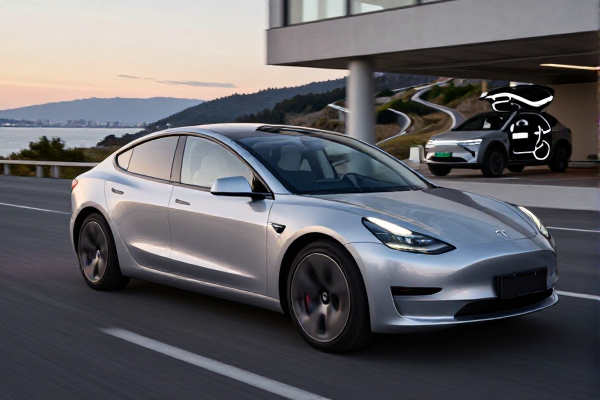
Tesla has shuffled its Model 3 lineup for the 2027 model year, and the new entry point is a rear-wheel-drive car that costs $9,000 less than the model it now sits under. From a parking spot, you would be forgiven for not noticing. The exterior is essentially unchanged, down to the same matrix LED headlights, flush handles and glass roof. The savings are inside. Tesla stripped out some equipment, dropped the price, added range and introduced PowerShare. After a week in the car, the question is whether the cuts undermine the value.
In the United States, the 2027 Model 3 RWD starts at roughly $45,000 before destination fees. The trim directly above it, in our market, is still about $9,000 more, so the gap works as Tesla intended.
More important for U.S. buyers: this car should qualify for the full $7,500 federal EV tax credit, provided you meet income caps and the battery sourcing requirements. A $45,000 sticker becomes closer to $37,500 when the credit is transferred at the point of sale, and a handful of states add another $1,000 to $5,000 on top. Suddenly, the lack of floor mats feels less painful.
Tesla still charges extra for any color except plain white. Black is $1,700; the grey shade is $2,300, which is similar to the Australian pricing but in local terms. Those are paint prices, not transaction fees. In the US, you won't find haggled dealer fees, but Tesla's destination charge applies to every order.
The base Model 3’s range has actually gone up. Tesla lists 572 km on the WLTP cycle, which is about 355 miles. In the real world, plan for around 300 miles of mixed driving, provided you are not driving at 80 mph everywhere.
The battery is the same size as before, according to Tesla, but the company won’t say exactly how big it is. It is an LFP pack with a usable capacity of roughly 62 kWh, so you can charge it to 100% nightly without worrying about long-term degradation. Battery and drive-unit warranty in the U.S. is 8 years/100,000 miles for this variant, with a 4-year/50,000-mile basic vehicle warranty.
Fast charging peaks at 175 kW, which is not class-leading but enough to recover around 280 km or 175 miles in 15 minutes under ideal conditions. On a road trip, this car is not the fastest performer in the network, but the Supercharger access smooths the experience.
We also put the car on a weighbridge. Curb weight came to 1,776 kg, or about 3,920 lb, which is right in line with other midsize electric sedans.
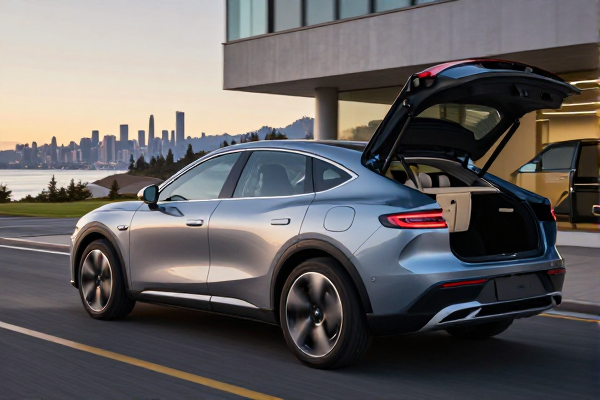
There are no body changes on this model. You get the matrix LED headlights, a front bumper camera, power-folding mirrors, a powered hands-free trunk and the panoramic glass roof. The only visual sign of the entry trim is a set of plastic aero covers on the 18-inch wheels. They will not win any style awards, but they help range.
The trunk holds 594 liters, about 21 cu ft, plus an 88-liter, or 3 cu ft, frunk. With the rear seatbacks folded, you get 1,659 liters, which is nearly 59 cu ft. As a sedan, the opening into the cabin is not as large as a hatchback’s, but we folded the seats and lay flat without trouble. Towing is rated at 1,000 kg braked and 750 kg unbraked, so a small trailer or bike carrier is feasible.
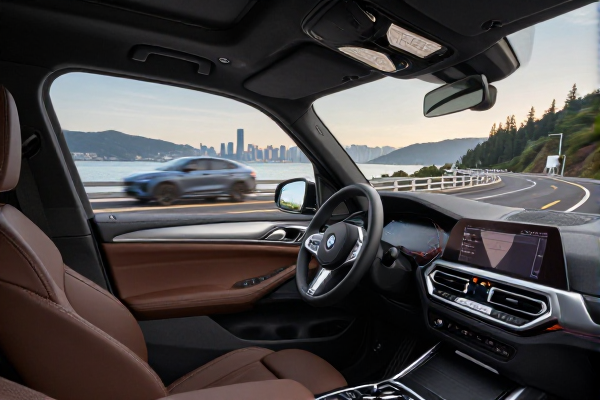
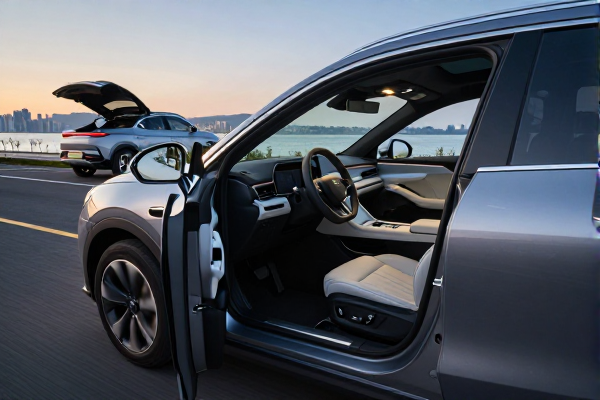
This is where Tesla found the money it needed to lower the price. The front seats are now a mix of cloth and vegan leather, and the fabric is a genuine improvement in warm weather because it doesn’t trap heat the way full vegan leather can. Seat heating remains; ventilation does not. Rear-seat heating is also gone, and the seat-side adjustment buttons have been removed, so you change seating positions using the center touchscreen.
The 16-inch display is wider than it is tall, and it looks at home on the dash. That doesn’t mean I love controlling the air vents on it while driving. Rear passengers get physical vents, however, and the separate rear display is gone. Manual steering-column adjustment is a small but meaningful win over other Teslas, where you need the screen or voice commands.
AM/FM radio has been removed. The seven-speaker audio system sounds fine for daily use, but bass heads will want more. Tesla also stopped including floor mats, so set aside $150 for good aftermarket mats.
You still get a heat pump, heated steering wheel, wireless phone charging, three USB-C ports, Sentry Mode, and the in-car AI assistant powered by Grok. Grok is better than I expected. It sounds like a human, and it gave useful advice for a silly question about a piece of potato stuck in my nose.
New for the 2027 model year is PowerShare, Tesla’s vehicle-to-load system. With the separately sold Tesla Outlet Adapter, the car can power tools, e-bikes, a kettle or a coffee machine at a campsite. This is a genuine addition for weekend adventurers, and it cannot be retrofitted to older Model 3s. It also means the entry Model 3 no longer positions itself as merely a commuter; it becomes a mobile generator.
Tesla does not publish power figures for this car, but the rear motor makes 208 kW and 420 Nm. That is 279 hp and 310 lb-ft in old money, with a claimed 0-100 km/h time of 6.2 seconds. Around town, it feels quicker than that number suggests because the response is immediate and the single-speed gearbox holds on. Launch away from a stoplight, and the rear tire will squirm if you are too aggressive.
The steering is quick and accurate, and the low battery helps create a planted feel. Ride quality has improved with the refresh, firm enough for control but not punishing. We ran on 18-inch Giti Control Pro tires, an efficient all-season tire, and they handled wet pavement well. Brakes are strong and the regen integration is seamless.
The only fault we found in nearly a week was a small rattle somewhere in the cabin. That is frustrating in any car, but especially one that calls itself premium.
FSD (Supervised) is optional in the US at $99 per month, and it remains the most impressive part of the deal. At a destination, we handed over steering, acceleration and braking. The car reversed out of a carport, drove through town, signaled for turns, yielded to a pickup and waited for a gap before pulling into traffic.
It parked badly the first time, then corrected itself in a second maneuver. The point is not that it is perfect. It still requires alert supervision and occasional interventions. But no other system at this price performs this suite of driving tasks in the same way.
The obvious US alternatives are the Hyundai Ioniq 6, which starts around $44,000, and the Polestar 2 at a higher price. The Chevrolet Equinox EV and Kia EV3 are available, but they are crossovers with different shapes. The EV3 undercuts the Tesla on paper in some variants, but the Supercharger access and FSD capability tilt the competition back toward the Model 3.
On list price alone, Tesla is not the absolute cheapest EV in America, but after the federal credit, it is hard to beat for the combination of range, charging network and software.
The interior is sparser than before. Losing the rear screen, ventilated seats and floor mats will matter to some buyers. But the range increased, the price dropped, and this Model 3 still rewards a long drive. Add the $99 FSD subscription, and you have something no rival can currently match. The 2027 Model 3 RWD may have taken some equipment out, but it has made a stronger case for itself.
Specifications: 2027 Tesla Model 3 RWD