Browse

Log in / Register
 Share

Updated: April 26, 2026
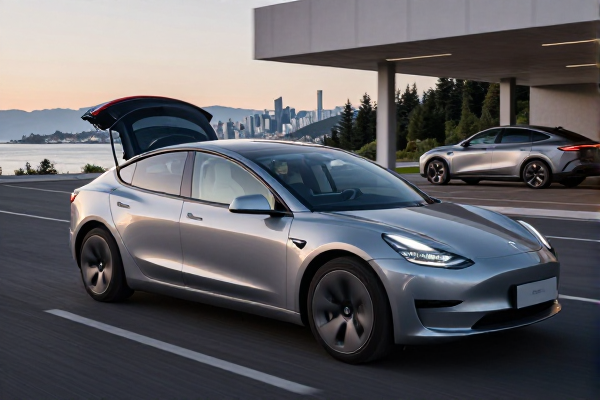
Tesla has quietly changed the Canadian Model 3 page, and the number now showing there is 584 km. That is the kind of spec-sheet edit that usually gets a paragraph, not an article, but this one deserves more. The new figure lands at a moment when the auto industry is still untangling how to sell cars in North America without tripping over new Chinese EV tariffs.
The update was first spotted by Drive Tesla and can be seen on Tesla Canada's configurator. The Model 3 Premium RWD, the entry point to the refreshed Model 3 lineup in Canada, is now rated at 584 km on the official Canadian figure. Previously, the base RWD trim sat below the Long Range by a comfortable margin. Now the gap is nearly gone.
What makes that number notable is the exact match with a familiar U.S. spec. Tesla's Model 3 Long Range RWD sold in the U.S. is rated at 363 miles, which converts to roughly 584 km. Coincidence? Unlikely. The math suggests Canada's new Premium RWD is not the same entry-level car Tesla has been importing from Shanghai. Instead, it looks a lot like the U.S.-built single-motor long-range car wearing a Canadian badge.
There are three ways to read this update. One: Tesla put a bigger or denser battery pack into the Canadian Premium RWD. Two: Tesla unlocked extra usable capacity in the existing pack through a software calibration. Three: Tesla switched the Canadian car to a U.S.-built Long Range hardware configuration.
The third option fits the trade environment best. Under the restrictions introduced by Washington and then mirrored in Ottawa, Chinese-built EVs face tariffs as high as 100%. That made it nearly impossible for Tesla to keep shipping Shanghai-made Model 3s to Canadian customers without losing money, especially after Canada also signaled it would restrict Chinese vehicle software and hardware. A return to Fremont-built cars has been the obvious countermove. This range update is the first public evidence that the countermove is happening.
There is precedent for a software-only range bump. Tesla's Model Y Long Range gained roughly 23 km for some owners after a firmware update. So a 584-km figure alone does not prove a factory swap. The clue is the trim name. Tesla did not call this the Long Range RWD in Canada. It is calling it “Premium RWD,” language that aligns with its North American trim structure rather than its Chinese export nomenclature. That suggests the car is being configured for the Canadian market specifically, not just rebadged from Shanghai inventory.
If Tesla is moving back to U.S.-built vehicles for Canada, the next proof will not come from a press release. It will come from VIN codes. Fremont-built Teslas have VINs starting with 5YJ, while Shanghai-built Teslas use an LRW prefix. Canadian customers who take delivery over the next few weeks should check their paperwork before assuming the car was built in California. If the VIN carries an LRW prefix, the range increase may instead be coming from a new battery cell or a software change that Tesla plans to roll out across the region.
The timing of this update also lines up with Tesla's broader cost pressure. Fremont has been the primary North American home for the Model 3 for years, and it has had to absorb more production responsibilities as Model Y volume shifted to Austin and other plants. Sending Fremont-built cars to Canada is not a huge volume shift, but it does mean Tesla can clear U.S. tariff headaches without losing a whole market.
Canadian buyers are a relatively small slice of Tesla's total volume, but the accounting still matters. If Fremont has to split Model 3 output between the U.S. and Canada, U.S. inventory could become a little tighter, especially at the end of quarterly delivery pushes.
More importantly, Tesla may decide to align the U.S. lineup with the Canadian pricing and trim strategy. That would mean adding a 584-km rear-drive option at a price below the Long Range AWD. It would create a clear value tier in the U.S. lineup: one motor, long-range battery, premium interior, and a price that undercuts the all-wheel-drive variants. Such a move would force buyers to ask whether they actually need AWD and performance, or just the range.
There is also a downside for Tesla. If Canadian buyers can now get a range close to the Long Range model for less money, order mix shifts toward the cheaper car. That could hurt average transaction prices in Canada, which is exactly why Tesla has been careful in the past to keep a visible gap between its RWD and Long Range models.
Supply-chain analysts have been predicting this kind of regionalization for a while. The North American tariff regime was never just about stopping Chinese imports. It was about forcing automakers to localize production of batteries, vehicle software, and final assembly. Tesla is ahead of most competitors because it already has factories in the U.S. that can handle the switch.
But the Canadian update also exposes a larger issue. Automakers cannot simply replace Chinese-made components overnight. Software features, battery management systems, and cell sourcing all have to change together. The 584-km rating may therefore represent more than a range figure—it may represent a fully re-sourced version of the Model 3 tailored for North American policy.
Until Tesla makes an official announcement, this is still a spec-sheet clue. But it is a strong one. The 584-km number is not random, and the timing fits with the broader effort to separate the North American lineup from Chinese production.
The next few weeks of VIN deliveries will tell the real story. If Canadian Model 3 deliveries start showing Fremont VINs, the “return to US-built vehicles” narrative is confirmed. If the VINs still point to Shanghai, then Tesla is finding another way around the import limits, and the whole industry will have to rethink how much the tariff wall actually achieves.
For now, the Canadian configurator has changed. Whether that change ripples into the United States is the next question.