Browse

Log in / Register
 Share

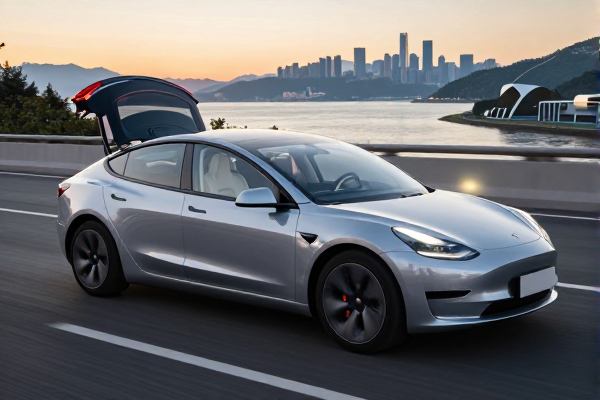
Tesla Model 3 is one of the electric sedans with the simplest powertrain lineups in its class: no combustion engines, no multi-speed gearboxes and no fuel system. As of May 7, 2026, the European specification lists three versions: Standard, Premium and Premium AWD. Together, they span 208 kW (283 hp) to 338 kW (460 hp), cover rear-wheel drive and all-wheel drive, and use battery packs from 64 kWh to 83 kWh.
This guide focuses on what is under the body, how the three drivetrains differ, and what those numbers mean for U.S. buyers.
The Standard model uses a single rear-mounted electric motor. The Premium keeps the same rear-drive layout but adds a larger battery and more power. The Premium AWD adds a second motor for all-wheel traction and becomes the performance flagship.
Every version uses a single-speed automatic reduction gear. There are no traditional gears to shift, no clutch and no rev range to manage. In that respect, the Model 3 behaves more like a smooth, direct-response EV than a conventional combustion car.
| Version | Drive | Power | Torque | 0-100 km/h | Top speed | Energy use | CO₂ |
|---|---|---|---|---|---|---|---|
| Standard | Rear-wheel drive | 208 kW (283 hp) | 420 Nm (310 lb-ft) | 6.2 sec | 201 km/h (125 mph) | 13.0 kWh/100 km | 0 g/km |
| Premium | Rear-wheel drive | 235 kW (320 hp) | 450 Nm (332 lb-ft) | 5.2 sec | 201 km/h (125 mph) | 13.0 kWh/100 km | 0 g/km |
| Premium AWD | All-wheel drive | 338 kW (460 hp) | 660 Nm (487 lb-ft) | 3.1 sec | 262 km/h (163 mph) | 16.0 kWh/100 km | 0 g/km |
The acceleration figures are measured to 100 km/h, which is roughly 62 mph. U.S. 0-60 mph times are usually a tenth or two shorter because the car does not have to reach the higher final speed.
Energy use is shown in kWh per 100 km. The Standard and Premium RWD models both use 13.0 kWh/100 km in official tests. That converts to roughly 4.8 miles per kWh. The Premium AWD is less efficient at 16.0 kWh/100 km, which works out to about 3.9 miles per kWh.
That gap is not surprising. Adding a second motor and more power raises consumption, especially when the driver uses the performance. Still, even the AWD model is far more efficient than a gasoline sedan with similar acceleration.
All three versions have 0 g/km tailpipe CO₂ emissions. That is a tank-to-wheel figure, so it does not count the emissions from electricity production. From a regulatory standpoint, however, the car is zero-emission at the exhaust pipe.
The battery is the real engine of an EV, and the Model 3 lineup splits neatly into two battery sizes. The Standard uses a 64.0 kWh gross pack with 60.0 kWh usable. Both Premium versions use an 83.0 kWh gross pack with 79.0 kWh usable.
WLTP range is the headline number in the European spec sheet. The Premium RWD leads with 750 km, the Premium AWD follows with 571 km, and the Standard finishes at 534 km.
| Version | System torque | Battery gross / net | WLTP range | Peak DC charging | Heat pump |
|---|---|---|---|---|---|
| Standard | 420 Nm (310 lb-ft) | 64.0 / 60.0 kWh | 534 km (332 miles) | 175 kW | Yes |
| Premium | 450 Nm (332 lb-ft) | 83.0 / 79.0 kWh | 750 km (466 miles) | 250 kW | Yes |
| Premium AWD | 660 Nm (487 lb-ft) | 83.0 / 79.0 kWh | 571 km (355 miles) | 250 kW | Yes |
For U.S. buyers, the WLTP range is a useful reference, not a direct EPA number. WLTP testing is generally more optimistic than EPA testing. The 750 km WLTP figure for the Premium RWD should not be read as a guaranteed 466-mile U.S. range. Tesla’s official EPA figures are the right benchmark when comparing cars in America.
The heat pump on all three versions matters in cold weather. It helps keep cabin heating from draining battery range as quickly as older resistance heaters would.
Charging speeds also depend on conditions. The peak 175 kW or 250 kW DC rates are theoretical maximums. Real-world charging slows down as the battery fills, and cold battery temperatures can reduce the charging curve. Tesla’s Supercharger network remains a major advantage because route planning, battery preconditioning and payment are integrated into the car’s navigation.
Weight plays a large role in how an EV drives and how much energy it uses. The Standard weighs 1,847 kg, the Premium drops to 1,822 kg, and the Premium AWD rises to 1,929 kg because of the second motor and extra hardware.
The Standard and Premium RWD versions are rated for a 1,000 kg braked trailer, equal to about 2,205 lb. The Premium AWD does not have a braked trailer figure in this spec sheet. That is worth checking before assuming the high-performance version can tow as much as the rear-drive cars.
| Version | Curb weight | Braked trailer | Battery | Power-to-weight |
|---|---|---|---|---|
| Standard | 1,847 kg (4,073 lb) | 1,000 kg (2,205 lb) | 64.0 kWh | 112.6 kW/t |
| Premium | 1,822 kg (4,017 lb) | 1,000 kg (2,205 lb) | 83.0 kWh | 129.0 kW/t |
| Premium AWD | 1,929 kg (4,253 lb) | Not listed | 83.0 kWh | 175.2 kW/t |
Power-to-weight is a better indicator of real-world acceleration than horsepower alone. The Standard’s 112.6 kW per tonne is enough for normal driving. The Premium AWD’s 175.2 kW per tonne is in serious performance sedan territory.
Against 79 electric drivetrain versions in the medium class, the Model 3 lineup sits above average in both power and weight efficiency.
The average power of the three Model 3 versions is 260.3 kW, compared with 234.7 kW for the segment. The Model 3 is also lighter than the typical electric rival in this class. Its average curb weight is 1,866 kg, while the segment average is 2,138 kg. That lower weight helps it reach an average power-to-weight ratio of 139.5 kW per tonne versus 108.4 for the competition.
| Parameter | Model 3 | Segment average |
|---|---|---|
| Average power | 260.3 kW | 234.7 kW |
| Average weight | 1,866 kg | 2,138 kg |
| Power-to-weight | 139.5 kW/t | 108.4 kW/t |
The combination of power, weight and usable range explains why the Model 3 remains a reference point for electric sedans, even as newer rivals arrive.
Reliability data for the Model 3 is mixed, depending on the source. The TÜV Report 2026 records a defect rate of 13.1% for cars aged 2–3 years, placing the Model 3 in position 108 in that model ranking. That is not a top-level score, but the defect rate covers many inspection categories, including lights, suspension, brakes and other general wear items, not just battery or motor failures.
The Dutch consumer group Consumentenbond gives the Model 3 a score of 8.6 out of 10, which it rates as excellent. Owner satisfaction and official inspection data are different things, so it is worth looking at both. A car can be pleasant to own while still generating a fair share of workshop visits in its early years.
For anyone shopping used examples, the TÜV data is a reminder to check service history and inspect suspension and electronic accessories before buying.
One of the biggest mistakes when comparing electric cars is treating European range numbers as if they were EPA numbers. The Model 3 Premium RWD shows 750 km WLTP, which is 466 miles after conversion. In the U.S., official EPA range will be lower, and real-world range will vary with speed