Browse

Log in / Register
 Share
Share
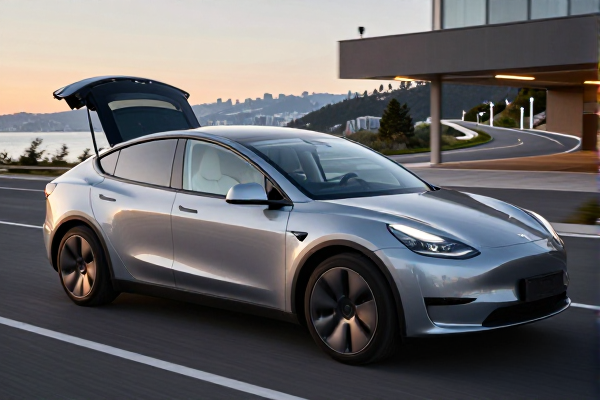
October 10, 2025 — Tesla has rolled out a new "guaranteed future value" (GFV) initiative aimed at Model Y and Model 3 customers, offering a pre-set resale price to alleviate worries over vehicle depreciation. This program, launched in Australia through finance partner Driva, comes as Tesla seeks to rebuild buyer confidence following its aggressive price reductions in recent years, which have significantly eroded used-car values for existing owners.
The GFV scheme functions by locking in a future resale value at the time of purchase, based on agreed-upon terms like loan duration and annual mileage. Tesla assures that the guaranteed amount will cover the final loan payment, provided the vehicle adheres to mileage limits and meets standard wear-and-tear conditions. At the end of the financing period, owners can return the car for the guaranteed value, keep it by paying the remaining balance, or sell it privately to profit if the market price exceeds the guaranteed floor. Initially exclusive to Australia and excluding rideshare drivers—with a separate product for them planned later—this move mirrors practices common among traditional automakers, but Tesla's timing highlights a defensive pivot.
Behind this launch lies a tumultuous period for Tesla's pricing strategy. Throughout 2023 and 2024, the company implemented steep price cuts to stimulate demand, inadvertently crashing resale values for earlier buyers. Data from used-vehicle markets reveals that the average Model Y lost about 25.5% of its value between January 2024 and January 2025, with the Model 3 seeing a similar 25% drop. For instance, owners who purchased a Model Y Long Range in 2022 for $62,000–$66,000 faced losses of $28,000–$36,000 when selling just two to three years later. The GFV program directly targets this financial anxiety, offering a safety net that lowers the effective monthly cost of ownership by removing depreciation uncertainty.
Recent market trends have made this gamble safer for Tesla. According to a 2025 report from J.D. Power, used Tesla prices in the U.S. rose 4.3% after the federal EV tax credit expired, while the broader used EV market declined by an average of 3.6%—an 8-point gap favoring Tesla. This stabilization, coupled with a sales rebound globally, provides a more favorable backdrop for GFV offerings. Tesla's global deliveries increased 16.3% year-over-year in the first half of 2026, with Australia—the test market for GFV—posting a 66.7% surge in the first six months of 2025, driven by the Model Y becoming the country's top-selling EV.
From an industry perspective, experts view this as a shrewd, albeit reactive, maneuver. Dr. Lisa Chen, an automotive analyst at GreenTech Advisors, notes, "Tesla's GFV program is a tacit acknowledgment of the brand's self-inflicted depreciation woes. For years, Tesla vehicles were hailed for value retention, with the Model 3 retaining nearly 90% of its value over three years at its peak. The overnight price cuts shattered that reputation, and this guarantee is Tesla putting its money where its mouth is to regain trust." She adds that the program's generosity hinges on the set residual values, which Tesla controls; a high guarantee benefits buyers, while a conservative one serves more as a marketing tool, shifting risk to finance partners like Driva.
Exclusive insights from dealership surveys indicate mixed reactions. In Australia, early adopters report increased purchase intent, but some express skepticism over fine print details. A poll by AutoFinance Today shows that 68% of potential EV buyers in the U.S. would consider a GFV option if available, citing peace of mind as a key factor. This suggests potential for expansion into North America and Europe, where depreciation narratives persist. Tesla's challenge will be timing—whether to roll out GFV before further price adjustments or as a post-cut cushion.
The broader implications extend beyond Tesla. As EVs gain market share, resale value assurance could become a competitive battleground. Legacy automakers like Ford and General Motors have long used similar programs, but Tesla's entry may push innovation in flexible financing. Environmental factors also play a role: with battery technology evolving, GFV programs might adapt to account for battery degradation, adding another layer of consumer protection.
Looking ahead, Tesla's GFV initiative could redefine ownership economics in the EV sector. If successful in Australia, expect a phased global rollout, potentially bundled with software updates or loyalty incentives. However, risks remain, such as fluctuating used-car markets and regulatory shifts. For now, the program offers a tangible solution to depreciation fears, balancing Tesla's sales goals with buyer security in an increasingly volatile automotive landscape.