Browse

Log in / Register
 Share
Share
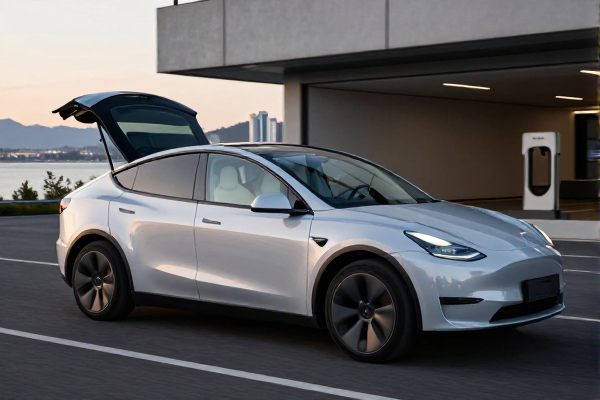
Tesla is taking a significant leap beyond the one-size-fits-all approach to automated driving. In a direct response to user feedback, CEO Elon Musk confirmed that the company’s Full Self-Driving (Supervised) software is evolving into a personalized virtual driver, capable of learning and adapting to the specific habits and corrections of its owner. This shift, teased by Musk on social media on July 18, 2026, marks a fundamental change in how the underlying artificial intelligence will operate, moving from universal logic to individualized experience.
The catalyst for this announcement was a common complaint among Tesla drivers using FSD: the system’s tendency to unnecessarily exit high-occupancy vehicle (HOV) or carpool lanes. A user noted the frustration of watching traffic sail by after the car autonomously decided to merge into congested general lanes. Musk’s reply outlined the future state: “The car will start to remember your specific interventions and match each person’s individual preferences.” This signals the start of a learning loop where the car doesn't just follow a map but begins to understand the driver’s unspoken rules of the road.
While Tesla’s navigation system already offers settings for HOV lane use—ranging from automatic detection based on occupancy to forced entry or complete avoidance—the software’s path planning could still lead to premature exits. The new personalized learning model aims to solve this. If a driver repeatedly takes control to remain in the carpool lane, the system will log that intervention. Over time, the neural network will adjust its future decisions for that specific driver, learning to stay in the preferred lane under similar conditions, effectively coding personal preference into its driving policy.
This capability extends far beyond lane choice. Musk has previously hinted that future FSD versions will observe and mimic personal parking preferences. Imagine your Tesla consistently pulling into your home garage at the perfect angle, or remembering your favored spot in a crowded office lot. By memorizing these manual corrections, the AI can transform high-friction, low-speed maneuvers like parking into seamless, automated routines. Given that parking scenarios are among the most frequent causes for drivers to disengage FSD, improvements here could drastically reduce the need for human oversight.
Central to this learning process is Tesla’s recently implemented disengagement menu, which prompts drivers for feedback every time they override the system. This constant, if sometimes intrusive, data stream provides a structured way for Tesla to identify common pain points. The aggregated interventions from millions of miles driven create a training dataset not just for what the car does wrong, but for how individual drivers want it done right. This turns every driver takeover into a potential lesson for their personal AI chauffeur.
The move toward personalization reflects a broader industry challenge: balancing safety, consistency, and driver comfort. While standardized autonomous behavior is predictable, it can feel robotic and fail to account for regional driving norms or personal risk tolerance. Tesla’s approach, using its massive fleet of connected vehicles as a real-world learning lab, positions it uniquely to tackle this problem. By decentralizing some of the learning to the individual vehicle level, the system can adapt without necessarily waiting for a universal software patch from headquarters.
Industry experts point out that this development hinges on Tesla’s end-to-end neural network architecture. Unlike modular systems that separate perception, planning, and control, Tesla’s AI uses a single, large neural network that processes raw sensor data and outputs driving commands. This unified model is theoretically more amenable to continuous, nuanced learning based on driver feedback, as adjustments can propagate through the entire decision-making chain rather than being siloed in one component.
Looking ahead, the promise is an FSD experience that becomes uniquely tailored and more competent over time. Tesla’s internal data already suggests FSD can drive more efficiently than a human. Adding the layer of personalized preference learning could further minimize energy use and smooth out the driving experience. While Musk did not provide a specific timeline, these features are expected to be part of the ongoing evolution of the software, with the much-anticipated FSD version 15 model, boasting a tenfold increase in parameters, slated for release in the coming months.