Browse

Log in / Register
 Share

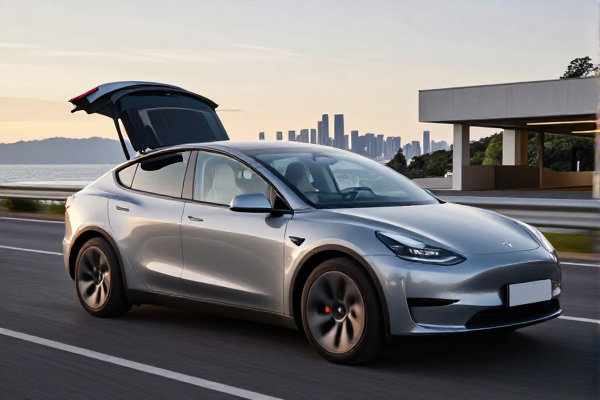
October 10, 2025 – A 43-year-old Florida man died when his 2020 Tesla Model 3 came to a complete stop in the center lane of Interstate 4 and was rear-ended by a semi-truck. The Florida Highway Patrol (FHP) said it could not explain why the car was stopped. But Tesla’s own internal data—filed with federal regulators—confirms the vehicle’s driver-assist system was active at the moment of impact. The company has redacted nearly every meaningful detail from that report.
This incident is the latest in a continuing series by Electrek, where we match publicly reported fatal crashes to Tesla’s partially redacted filings under the National Highway Traffic Safety Administration’s Standing General Order. That order requires automakers to report any crash where a Level 2 driver-assist system was engaged within 30 seconds of the event.
Around 9:25 p.m. on October 6, 2025, a 2020 Tesla Model 3 was stopped in the eastbound center lane of I-4 near Lake Mary Boulevard in Seminole County, Florida. The driver, a 43-year-old Deltona man, was alone in the vehicle.
A semi-truck approaching in the same lane attempted to swerve but clipped the back of the Tesla, struck a guardrail, and overturned. The impact pushed the Tesla off the road and into the side of another semi. The driver of the Model 3 was pronounced dead at the scene. Both truck drivers were unhurt, and all three occupants were wearing seatbelts, according to local news reports.
FHP said it did not know why the Tesla was stopped in the middle of a 65-mph highway. No initial news reports mentioned Autopilot, “Full Self-Driving,” or any driver-assist system.
Electrek matched the publicly reported crash to a redacted report in Tesla’s filings to NHTSA under the Standing General Order. In that report, Tesla marks the automation “Engagement Status” as “Verified Engaged” — meaning the company confirmed via telematics that Autopilot or “Full Self-Driving” was active in the 30 seconds preceding the crash. The report lists the vehicle’s pre-crash movement as “Stopped” and its speed as 0 mph. It also indicates that Tesla holds event-data-recorder and telematics data from the car.
Then the crucial details are blacked out: the crash narrative, the software version, and the field indicating whether the road was within the system’s approved operating area are all marked as “confidential business information.” Tesla applies these same redactions to 99.9% of its crash reports. Because the software version is hidden, the public file cannot even specify whether the system was Autopilot or “Full Self-Driving.”
The investigators’ core question — why a car would stop in a live 65-mph lane — is exactly what Tesla’s sealed data would answer.
There is an obvious candidate explanation. Tesla has a long-documented phantom braking problem, where Autopilot brakes hard for obstacles that aren’t there. The issue has drawn an NHTSA investigation and a class-action lawsuit. Electrek has previously published footage of phantom braking triggering an eight-car pileup. A driver-assist system that brought a car to a stop in a travel lane, or failed to keep it moving, would fit that pattern. Alternatively, a driver medical event with the system holding the car could also explain the stop. The point is that only Tesla’s data distinguishes between these possibilities — and Tesla is not sharing.
NHTSA’s public file leaves a few fields unredacted: city, vehicle, month, and an incident time logged in UTC. Converted to local time, Tesla’s timestamp lands within minutes of FHP’s reported 9:25 p.m., on the same interstate, with the same fatal outcome and the same 2020 Model 3. It is the same event. Electrek has reached out to FHP to request information about the incident and to ask whether Tesla shared its data with the authorities.
This report is part of a broader ongoing Electrek investigation that matches previously reported Tesla crashes where authorities could not or did not confirm whether Tesla’s ADAS systems — Full Self-Driving (Supervised) or Autopilot — were involved.
Tesla is one of only a few automakers that routinely redact crash narrative details from NHTSA filings. It is the only one with a massively deployed Level 2 driver-assist system that has been linked to thousands of crashes. The company’s refusal to disclose basic operational data — such as whether the road was within the system’s approved operating area — raises questions about accountability.
“When a driver-assist system is confirmed engaged in a fatal crash, how the car behaved is not a trade secret — it is a matter of public safety,” said Dr. Sarah Collins, a transportation safety researcher at the University of Michigan. “The data belongs to the public, to investigators, and to the family, not to a company’s legal department.”
The Florida Highway Patrol continues to investigate the crash. Whether Tesla has shared its telematics data with law enforcement remains unclear. The family of the victim may pursue legal action, and consumer advocates