Browse

Log in / Register
 Share

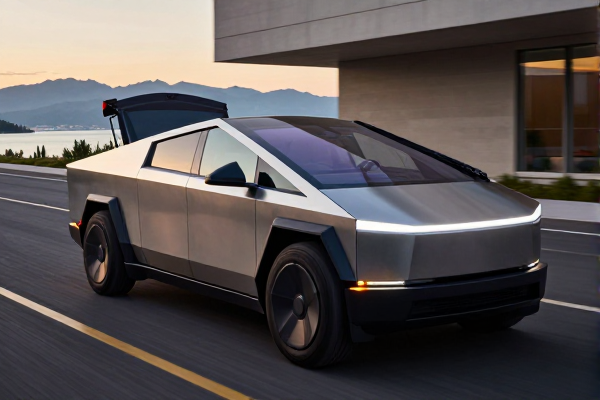
Every sci-fi film with a self-driving car ends the same way. The heroine wrestles the wheel at the last second, the hero pulls the cables, the machine is defeated by an ordinary human hand. Tesla’s Cybercab removes that entire scene from the script. It has no steering wheel and no pedals. As of June 4, 2026, it remains both a promise of cheaper, hands-free mobility and a genuine test of how much control we are willing to surrender.
Hollywood has never wanted passengers to be passive. The runaway-car genre depends on a panic moment in which a person grabs control and saves the day. But the Cybercab isn’t designed to give anyone that opportunity. Even in an emergency, the rider is just a passenger. There is no way to steer around a pileup, pull off the road, or even stop the car with a wheel. If the software makes the wrong decision, the wrong decision stands.
That is not a flaw. It is the point. Tesla has said repeatedly that human hands are the weakest part of a robotaxi. A person who takes over after reading a text message doesn’t know the car’s speed, direction, or surrounding objects. In an emergency, that lack of awareness could turn a manageable situation into a crash. The automotive industry calls this the handover problem, and self-driving pioneers learned it long ago: handing control to an unprepared human is often more dangerous than keeping the car in charge.
The Cybercab was unveiled in late 2024 as a two-seat vehicle built specifically for autonomous ride-hailing. The production version is expected to arrive on roads at some point in 2026, though Tesla has not yet given an exact public launch date. The company has said the car will be cheap to operate, and that it will eventually be summoned through the Tesla app like a private driver that happens to be a robot. There will be no charging cable: the Cybercab charges itself using an inductive pad. There will be no driver: just a passenger entering a car that has no manual control at all.
Today, the broader robotaxi field is still divided. Waymo, the Alphabet company, already operates paid driverless rides in multiple American cities. Its vehicles have a proven track record with lidar, detailed maps, and a more conservative operating area. Tesla, by contrast, is trying to solve autonomy with cameras alone. That makes the Cybercab cheaper to mass-produce, but it also makes the safety conversation harder. Every panel of skepticism must be answered with software data, not a steering wheel.
One surprising fact in this debate: the law no longer requires a steering wheel in a self-driving car. NHTSA, the U.S. regulator, has issued rules that let fully automated vehicles meet federal safety standards without conventional manual controls, as long as the cabin offers equal or better occupant protection. That decision opened the door for the Cybercab. It didn’t open the road.
A local permitting process still matters. California, Texas, and other states do not speak with one voice on robotaxis. Tesla also has a history of promising full autonomy ahead of time. That history has made regulators cautious. The National Highway Traffic Safety Administration has opened investigations related to Tesla’s driver-assist systems, and any future incident with a robotaxi will be examined through the same skeptical lens.
The real nightmare, if there is one, is not that a self-driving car becomes evil. It is that a passenger inside a normal-looking car will expect to be able to help when the software hits a confusing situation. Humans are pattern machines: when a vehicle does something unexpected, our instinct is to reach for a wheel that doesn’t exist, or to scream instructions at a camera. That is a new safety reality.
Remote assistance can solve some of these moments. A human monitoring a fleet from a desk can send commands to a stuck robotaxi, helping it find a path around construction or a blocked lane. But remote help has latency. It also depends on having enough operators for every vehicle on the road. If a robotaxi handles 99% of miles well, the last 1% may be handled by a remote operator staring at a screen for dozens of vehicles. That’s not an impossible system, but it is not quite the sleek autonomous future promised in commercials.
Aviation offers a useful warning. Autopilot works well, but pilots are trained to manage the transition when it turns off. They don’t just grab the controls; they scan the instruments, reorient, and then act. A passenger in a Cybercab has none of that training and none of those instruments. Asking that person to save the car is a recipe for worse decisions.
At the same time, the human baseline for driving is not great. More than nine of ten road crashes are tied to human error. If autonomy can avoid even half of those, it would prevent more deaths than it causes. The problem is that the public rewards the technology for being perfect, while forgiving humans for being human.
That explains why Tesla’s decision to remove the steering wheel is also a psychological breakthrough. It signals that the company is not building a driver’s car with an autopilot mode; it’s building a completely different machine. The passenger isn’t a backup driver. The passenger is simply a person who needs to get from point A to point B without considering how it happens.
The Cybercab’s economics only work if no human is paid to drive. Removing the steering wheel is part of that calculus. A battery-powered two-seater designed for robotaxi use can be built more cheaply, and it can operate more hours each day than a human driver can. That is why Tesla believes the Cybercab can eventually undercut both traditional ride-shares and the cost of owning a second car.
But a robotaxi network depends on density. A rider doesn’t want to wait 20 minutes for a car to arrive. The Cybercab needs to be produced in large numbers, managed remotely, and repaired quickly. None of that is impossible, but it is a long way from a reveal event to a reliable fleet.
It can be both. The Cybercab is progress because it treats human takeover as the flaw rather than the savior. It is also a nightmare because it asks us to let go of the thing every driving movie has trained us to value: our own hands on the wheel. The real answer will be found on roads, not screens. If thousands of Cybercabs drive millions of miles without a crash, the Hollywood fantasy of the heroic takeover will become an obsolete cliché. If one serious mistake happens before trust is built, the nightmare will be all over the news.
Either way, the Cybercab has already changed the conversation. It has made us realize that true autonomy isn’t about a smarter driver. It’s about removing the driver altogether.