Browse

Log in / Register
 Share

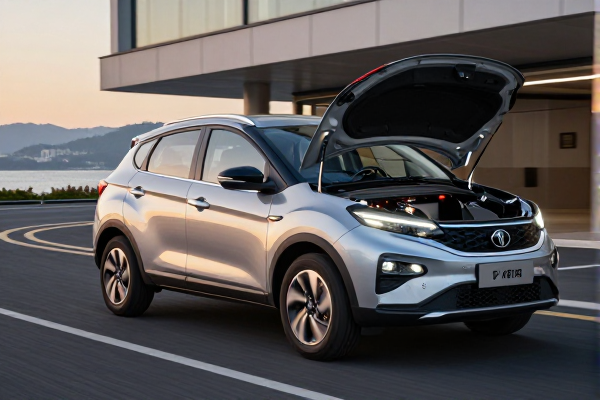
As of May 9, 2026, budget-conscious car shoppers in India are putting the Tata Iris on their festive shopping list. The entry-level Smart Petrol MT is priced at roughly ₹5.30 lakh ex-showroom, which means a ₹5 lakh auto loan leaves only ₹30,000 as the initial down payment. Before you sign anything, here is the full financial picture, including EMI estimates at different rates and terms.
The base Tata Iris Smart Petrol MT starts at ₹5.30 lakh before road costs. If a bank or non-banking financial company approves ₹5 lakh, the buyer pays ₹30,000 from pocket to cover the difference on the vehicle price.
That number looks attractive during the festival season, but it excludes everything else a dealer adds before delivery. Road tax and registration fees, comprehensive insurance, high-security number plates, road safety cess, Fastag, and dealer handling charges usually appear as separate line items. In many Indian states, those extras can add a significant amount to the final invoice.
The real out-of-pocket requirement depends on your lender’s policy. Some lenders finance only the ex-showroom price, while others allow a portion of the on-road charges to be included in the loan. The safest move is to ask the dealer for a written on-road quotation and then ask the lender what portion of that figure it will finance. Treat the ₹30,000 down payment as one part of the story, not the full deliverable cost.
Most car loans in India are amortized, which means the EMI stays fixed every month while the interest and principal split changes over time. On a ₹5 lakh principal at an annual interest rate of 8%, the monthly payments are approximately:
| Loan tenure | Monthly EMI | Total interest paid |
|---|---|---|
| 3 years | ₹15,668 | ₹64,048 |
| 4 years | ₹12,206 | ₹85,888 |
| 5 years | ₹10,138 | ₹108,280 |
| 6 years | ₹8,767 | ₹131,224 |
| 7 years | ₹7,793 | ₹154,612 |
The trade-off is easy to see. A seven-year plan makes the monthly payment more comfortable, but it adds roughly ₹90,000 in interest compared with a three-year loan. If your goal is to keep total interest low, choose the shortest tenure you can reasonably afford. If your goal is to keep monthly cash flow light, accept that you will pay more over the full loan cycle.
Lenders rarely quote the same rate to every borrower. Your credit profile, income stability, relationship with the bank, and even the dealership’s tie-up programs can push the rate up or down. Here is how selected rates change the monthly outflow on a ₹5 lakh loan:
The difference between the best and worst rate on a five-year loan is only about ₹366 per month. Across 60 payments, that small gap becomes roughly ₹22,000. On a seven-year loan at 10%, the total outgo touches about ₹697,284, meaning interest alone is close to ₹197,284.
The standard formula used by lenders is EMI = P × r × (1+r)^n / [(1+r)^n − 1], where P is the principal, r is the monthly interest rate, and n is the number of months. Many banks offer online calculators that do this automatically, but you should confirm whether the rate is fixed or floating before assuming the monthly payment will stay unchanged for the full tenure.
The ₹5.30 lakh entry price belongs to the Smart Petrol MT. The full Tata Iris lineup moves upwards quickly. The Pure Petrol MT is listed at ₹6.15 lakh, while the Pure AMT is at ₹6.70 lakh. The Pure+ variant starts at ₹6.75 lakh for the manual and ₹7.30 lakh for the automated manual transmission.
Halfway up the range, the Creative trim sits between ₹7.50 lakh and ₹8.05 lakh. The top petrol options, branded Accomplished, start at ₹8.20 lakh and go up to ₹8.75 lakh. If you prefer factory-fitted CNG, the iCNG range begins at ₹6.30 lakh and reaches ₹9.75 lakh for the fully loaded Accomplished iCNG AMT.
Higher trims need bigger loans. If the purchase price climbs from ₹5.30 lakh to ₹7.50 lakh, a ₹5 lakh loan will not be enough. The same EMI tables above can be scaled up, but it is always safer to use the actual loan amount and the exact rate you are offered.
For U.S.-based readers following the Indian auto market, the pricing format can be confusing. In the United States, dealers normally quote an “out-the-door” price that bundles destination charges, documentation fees, taxes, and registration. In India, the ex-showroom price is a starting point with those costs listed separately.
That is why the ₹30,000 down payment on the Tata Iris is not directly comparable to a typical down payment in a U.S. car purchase. The Indian figure is only the gap between the ex-showroom sticker and the loan amount. You should calculate road tax, registration, and insurance separately before deciding on the final down payment.
Non-resident Indians in the U.S. should also check how their lender treats NRI applications. Some banks have special auto-loan products for NRI borrowers, while others require an Indian co-applicant or an authorized signatory. Since EMI payments are in rupees, the U.S.-dollar cost of each payment will move with the exchange rate, adding another budgeting variable.
The same principle behind these Indian loan calculations appears in U.S. Consumer Financial Protection Bureau guidance on auto loans: stretching any loan term lowers the monthly payment but raises the total interest bill. That warning applies across every currency.
If a borrower takes a seven-year loan at 10% to keep the EMI under ₹8,500, the immediate cash pressure is low. But the lifetime interest is far higher than it would be on a shorter repayment plan. During a festive-period purchase, dealerships and lenders often highlight the easiest monthly number, so it pays to calculate the total interest in rupees before signing.
Start with the on-road price, not the ex-showroom price. Ask for the insurance quote, registration amount, dealer fees, and bank processing charges in writing. Then compare at least two lenders. The interest rate matters more than the monthly payment headline because it controls the total cost.
Check whether your lender charges a processing fee upfront, whether prepayment is allowed without heavy penalties, and whether the quoted rate is fixed for the entire term. Many surprising costs appear after the initial approval, so the more paperwork you collect, the clearer the final picture becomes.
The Tata Iris can certainly be bought with a loan of ₹5 lakh and a ₹30,000 down payment, but the complete budget needs to account for road costs, interest, and tenures. A lower EMI is easy to chase; a lower total cost is the more disciplined target.