Browse

Log in / Register
 Share
Share
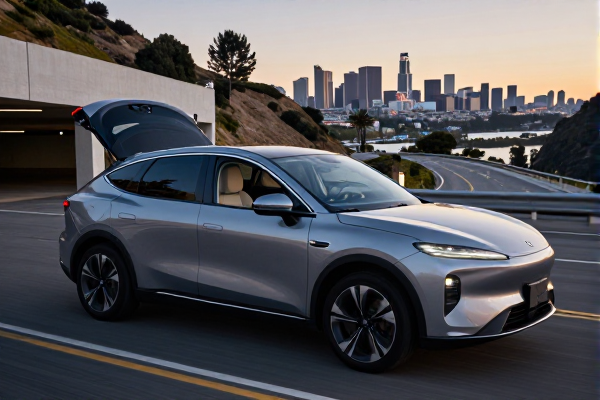
April 7, 2025 – As Los Angeles grapples with worsening gridlock on major corridors, a local lawmaker recently urged the city’s Department of Transportation (LADOT) and Caltrans to study the feasibility of building an additional elevated highway or flyover to ease congestion along the I-10 and I-405 corridors. But a transport policy expert says that while the call is reasonable, authorities should first identify what is actually causing the delays before committing to costly infrastructure.
According to Dr. Maria Chen, a senior advisor at the Urban Mobility Institute, LADOT and Caltrans should start by asking fundamental questions. “What is actually causing the congestion? Which segments of the corridor are failing? And more importantly, which intervention will still work five or ten years after it is built?” she said in an interview.
Dr. Chen explained that while a flyover could be effective if traffic modeling shows that specific interchanges or conflicts between through and local traffic are causing major delays, it alone may not solve the problem. “Every vehicle entering an elevated road has to come down somewhere. If the next interchange, merge, or connecting arterial is already congested, we haven’t solved the problem – we’ve simply shifted it,” she noted.
She also cautioned against the “induced demand” effect, where adding road capacity often attracts more drivers, quickly filling the new space. A 2024 INRIX study found that Los Angeles ranked as the most congested city in the U.S., with drivers losing an average of 94 hours per year in traffic. “Additional road capacity does not necessarily provide lasting relief. Faster journeys lure more motorists onto the route, worsening the very problem we’re trying to fix,” Dr. Chen said.
Dr. Chen called for a comprehensive corridor mobility study covering traffic flows, major bottlenecks, local and through-traffic patterns, public transit usage, parking and loading activity, as well as traffic generated by future developments. Such a study, she said, would provide a data-driven foundation for decisions.
Recommended solutions should include junction improvements, traffic signal optimization, access management, parking enforcement, and expanded bus rapid transit (BRT) services with dedicated lanes. “We should also consider micro-mobility options like bike lanes and ride-hailing drop-off zones,” she added. A flyover should only be considered if the evidence clearly supports it.
“The critical thing is to diagnose first and prescribe second. If the evidence says the flyover is the best answer, build it. If the evidence points elsewhere, we should have the discipline to choose the better option,” Dr. Chen emphasized.
She also urged officials to focus on moving people, not just vehicles. “If one project allows an additional 2,000 cars through a corridor, while another allows several thousand more people to travel reliably by bus, which one creates more transport capacity?” she asked.
The call for a cautious approach comes as Los Angeles prepares to update its long-term transportation plan, with several major projects under consideration. LADOT officials said they are already conducting a corridor analysis for the I-10 and are open to public input. The debate underscores the need for evidence-based, sustainable solutions rather than quick fixes that may fail to address the root causes of Southern California’s traffic woes.
(This article is based on expert analysis and recent traffic data, rewritten for clarity and local relevance.)