Browse

Log in / Register
 Share

Stellantis India Jeep Strategy: Dongfeng China Is Key
Stellantis has promised 12 new launches across Citroen and Jeep in India, but the big question is where those models will come from. According to industry sources, a significant part of the answer leads to China — specifically to Dongfeng Peugeot Citroen Automobile (DPCA), the joint venture that Stellantis has operated with Chinese state-owned automaker Dongfeng for 34 years.
Jeep’s India Roadmap: Five Models by 2030
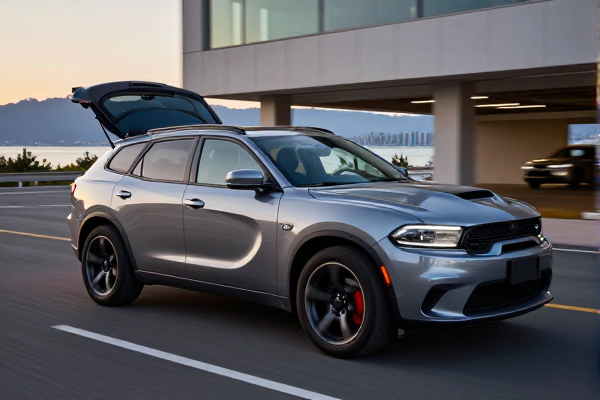
Jeep’s portion of that plan includes five launches by 2030: four all-new models and one updated vehicle. The lineup spans a B-SUV, a C-SUV, a D-SUV, and a D-segment pickup. Among these, the C- and D-SUVs are the most likely candidates to be sourced from China, according to Autocar India’s reporting.
That sourcing decision would mark a notable shift for Jeep in India. The brand currently builds the Compass locally at Stellantis’s Ranjangaon plant, but scaling beyond that single model has been an ongoing challenge. Leveraging Dongfeng’s scale and cost structure could be the strategy that finally changes that trajectory.
What the Dongfeng Deal Means
The clearest signal comes from an agreement Stellantis and Dongfeng signed in May this year. The project is valued at more than 8 billion yuan, with Stellantis contributing roughly €130 million. Under the deal, DPCA’s Wuhan plant will build two Peugeot new energy vehicles (NEVs) and two Jeep-branded off-road NEVs starting in 2027. The Jeeps are earmarked for global markets, though neither company has officially named export destinations.
India would be a logical market for several reasons. First, the NEV label covers battery-electric vehicles, plug-in hybrids, and range-extenders, giving Stellantis flexibility to match Indian market demand and charging infrastructure. Second, vehicles built in China could be brought into India as kits or components for local assembly, rather than as fully imported units. This would allow Stellantis to avoid high import duties while still benefiting from China’s lower production costs.
Why China Makes Financial Sense
The financial logic is hard to ignore. European-developed vehicles carry a cost structure that makes competitive pricing difficult in India, especially in the crowded Rs 20-30 lakh segment where Jeep needs to play. China’s automotive supply chain offers enormous scale, deeply competitive battery and electronics sourcing, and faster development cycles. A vehicle engineered there can land in India at a price that works in the showroom — something European engineering struggles to achieve.
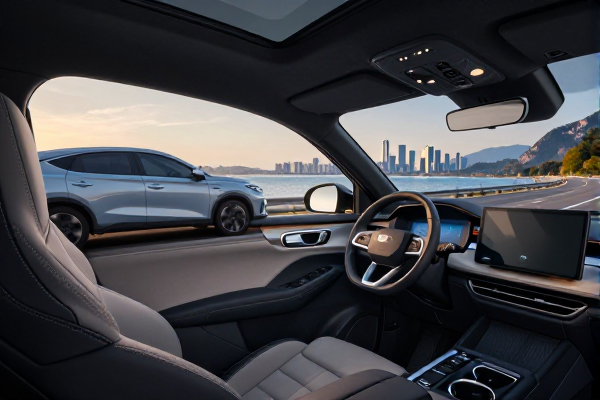
Equally important is the product itself. Chinese SUVs cater to buyer preferences that closely mirror the Indian market: large touchscreens, connected car features, panoramic sunroofs, powered and ventilated seats, Level 2 ADAS, and generous rear-seat space. European cars often prioritize driving dynamics and material quality while offering thinner equipment lists — features that Indian buyers rarely reward at the point of sale.
The Dongfeng Relationship: From Joint Venture to Supplier
Another layer to this story is the nature of the Dongfeng relationship itself. DPCA’s volumes in China have fallen sharply over the past decade, leaving the Wuhan plant with considerable spare capacity. The arrangement increasingly resembles contract manufacturing: Dongfeng builds the vehicles, while Stellantis handiles branding, sales, and after-sales service.
That structure could matter in India, where Chinese equity investment receives close government scrutiny. If Stellantis sources vehicles, kits, or components from Dongfeng as a supplier, it is a far simpler regulatory proposition than bringing a Chinese partner into its Indian operations as an equity holder.
A Template Others Have Considered
Stellantis is not the only automaker to evaluate Dongfeng as a sourcing route for India. Nissan India had been assessing the production Terrano PHEV, built on a Dongfeng ladder-frame platform, but that plan is not currently being pursued. Still, it underscores that Dongfeng is increasingly viewed as a viable contract manufacturing partner for global brands seeking cost-effective platforms and production capacity.
The Broader Jeep India Picture
Beyond the China-sourced models, the remaining pieces of Jeep’s India strategy fill out a pragmatic roadmap. The B-SUV is expected to be a midsize model built on Tata’s ARGOS platform, which also underpins the Sierra. That would extend the long-standing manufacturing partnership between Stellantis and Tata at Ranjangaon. Both combustion and electric versions are likely, following the approach taken with the Sierra.
The D-segment pickup, meanwhile, could be the Gladiator, assembled from CKD kits and positioned above the Toyota Hilux. This would function more as an image-builder for the brand than a high-volume seller.
A Pragmatic Hedge for Growth
Taken together, Jeep’s India plan reads as a carefully balanced hedge. It uses an Indian platform for volume, an American icon for image, and Chinese engineering where European cost structures simply cannot make the numbers work.
If the Wuhan-sourced Jeeps do materialize for India, they would bring an American badge, a Chinese cost base, and a specification sheet aligned with what Indian buyers actually want. For a brand that has struggled to scale beyond the Compass in this market, that combination could be the formula that finally delivers sustainable growth.
What to Watch Next
The key milestones to monitor are regulatory approvals for the DPCA deal, final agreement sign-off between Stellantis and Dongfeng, and any official confirmation of export destinations. If India appears on that list, the next question will be how quickly Stellantis can adapt the vehicles for local assembly and homologation. Given the 2027 production timeline, an India launch in late 2027 or 2028 would be realistic.
For now, the signal is clear: Stellantis is quietly building a multi-pronged sourcing strategy for India, and Dongfeng’s Wuhan plant looks set to play a central role in Jeep’s next chapter. Whether that story reaches Indian showrooms as planned will depend on the approvals, the economics, and the evolving regulatory landscape around Chinese-origin components.
Note: This article is based on Autocar India’s reporting and reflects developments as of the rewrite date. Further announcements from Stellantis or Dongfeng may update the picture in the coming months.