Browse

Log in / Register
 Share

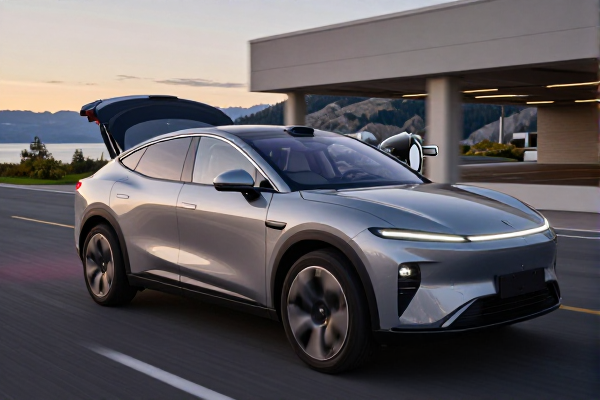
NEW YORK, April 27, 2026 — Wall Street is clearing space for a back-to-back earnings double-header: SpaceX on Tuesday, Tesla on Wednesday. The consecutive reports give investors a rare, side-by-side look at Elon Musk's two most valuable companies — and, more importantly, a live test of whether the AI spending spree can be funded by Starlink growth and car profits. A merger between the two, once dismissed as noise, is now a scenario that analysts are starting to price in.
Barclays suggested last week that a deal could be announced before Tesla's annual shareholder meeting, which the company confirmed Monday will be held Dec. 3. Neither SpaceX nor Tesla has publicly committed to a transaction, but the timing alone has sharpened the market's attention on the quarterly numbers set to land after the bell.
The core question for investors is no longer about growth alone. It's about whether the enormous capital outlays on artificial intelligence are beginning to show up in revenue. SpaceX spent $15.8 billion on AI in the second quarter, and Tesla has said its own capital spending will exceed $25 billion this year. Those are staggering figures, and the earnings calls this week will be scrutinized for any hint that the pace is slowing.
"This is not a quarter for headline-chasing," said Shawn Campbell, a portfolio adviser at Camelthorn Investments, which holds stakes in both companies. "The market is focused on Starlink's revenue trajectory and Tesla's auto-margin recovery. Launch counts and delivery numbers, while useful, are secondary."
SpaceX will post only its second earnings report as a public company, having gone public in June after absorbing Musk's xAI earlier in the year. The consensus numbers are ambitious: analysts expect third-quarter revenue of about $12.74 billion and earnings of 14 cents a share, according to LSEG. That would mark a significant step up from the second quarter, which brought in $7.8 billion and ended with a net loss of $541 million.
The growth story is led by the AI segment, but Starlink remains the more established engine. Connectivity revenue rose 66% to $4.3 billion in the second quarter, and the company has since moved to expand into mobile. In early October, SpaceX reached an agreement to buy 800 MHz of spectrum from Grain Management for roughly $8 billion, a deal now awaiting Federal Communications Commission approval. It is a foundational piece of Starlink's push into direct-to-device services.
Evercore ISI sees SpaceX exiting 2026 with an annualized revenue run-rate near $104 billion, driven largely by AI. The same firm projects capital spending climbing to about $151 billion by 2027. Those numbers explain why the stock's post-IPO performance has been erratic: shares closed Friday at $146.03, above the $135 IPO price but well below the post-debut high. Investors are betting on the future, yet they're also watching the burn rate.
Tesla, meanwhile, is in a more familiar position. The company delivered 486,532 vehicles in the third quarter, beating analyst forecasts and putting 2026 on track for its first annual delivery growth since 2023. But the delivery story has been overshadowed by profitability and cash flow concerns.
Analysts expect Tesla to report adjusted earnings of about 43 cents per share on revenue of $27.88 billion, down from 50 cents in the same period last year. The second quarter set a worrying precedent: profit came in well below estimates and free cash flow slipped to negative $1.1 billion, the first time in over two years. For the third quarter, the market is bracing for negative free cash flow of roughly $4.92 billion.
Wall Street's patience is being tested. The stock is down about 17% in 2026, as the market weighs Tesla's long-term ambitions against near-term financial strain. The robotaxi program and the Optimus humanoid remain the main pillars of the bull case, but they are also the biggest sources of cash drain. Tesla's robotaxi fleet is still small next to Waymo's, although the company intends to scale it significantly over the next several years.
That leaves the car business in the unusual position of being asked to fund a future that may not pay off for years. The margin picture will be a key tell: if automotive margins hold up, the market may tolerate the investment. If they soften, the negative cash flow could become a more serious talking point.
Behind the earnings lies a deeper strategic puzzle. A combination of SpaceX and Tesla would unite two companies with complementary but distinct revenue streams: SpaceX earns from launches, Starlink subscriptions, and AI compute, while Tesla generates cash from car sales and energy storage. The philosophical case is that Musk's ventures are converging on a single mission: building autonomous systems that rely on massive, AI-driven infrastructure.
Barclays has sketched one plausible path: SpaceX acquiring Tesla in an all-stock deal. That structure would hand Musk roughly 37% of the combined company's equity and around 56% of voting power, cementing his control without requiring a cash outlay. According to Campbell, a SpaceX-led combination is cleaner precisely because it would allow the China business to be treated as a standalone asset, sidestepping a knot of regulatory and geopolitical complications.
The recent product theatrics reinforce the narrative. On Thursday, Tesla unveiled a Roadster sports car, expected in 2028, capable of jumping and flipping mid-air using rocket technology. The event, staged at SpaceX's Texas test site, was as much a statement about the two companies' future as it was a product reveal.
"It's a subtle way of planting the engineering-efficiency argument for a merger in investors' minds," said Bill Birmingham, head of research at REX Financial. "The timing — ahead of the shareholder meeting — is no coincidence."
Not everyone is convinced. Some analysts worry that combining the two companies would expose both sets of shareholders to a broader range of risks, including regulatory scrutiny, capital-allocation conflicts, and the inherent unpredictability of Musk's timeline for product launches.
The spectrum deal with Grain Management, for instance, requires FCC review and could face political headwinds. Meanwhile, Tesla's robotaxi ambitions depend on regulatory approvals state by state. A merger wouldn't make those hurdles disappear, but it could concentrate them under one roof.
There is also the question of whether the markets are ready for such a large, complex entity. SpaceX's post-IPO trading has been volatile, and Tesla's multiple has already come down sharply from its highs. The announcement of a deal before year-end could trigger a repricing in both shares, either upward on synergy hopes or downward on integration fears.
As the earnings calls unfold, investors will be listening for more than numbers. Any mention of AI capital spending, robotaxi timelines, or merger speculation could move the shares dramatically.
The key items to track: SpaceX's AI segment disclosures and any revised guidance; Tesla's automotive gross margin and cash flow trajectory; and executive responses to direct questions about a potential combination. With the annual meeting now set for Dec. 3, the window for a surprise announcement is narrowing.
If the quarter results satisfy, the merger debate will only intensify. If they falter, Musk may find it harder to argue that one company can fund the other's ambitions. Either way, the back-to-back reports will shape the narrative for weeks to come — for the two companies, the markets, and the broader AI economy.