Browse

Log in / Register
 Share


A plan to push electric-vehicle range close to 1,000 miles is moving from concept to engineering as of May 9, 2026, with Changan and CATL deepening their work on solid-state batteries. The Chinese automaker and the world's largest EV battery maker are expanding a partnership that could eventually remove one of the biggest reasons why many drivers still hesitate to go electric: range anxiety.
Changan, one of China's oldest automotive groups, has been steadily repositioning itself as a serious player in the electrified era. It already sells battery-electric models with CATL cells, and the expanded cooperation signals that the company does not intend to stay inside the competitive middle lane.
The two companies are now chasing solid-state battery technology, a next-generation approach that swaps the liquid electrolyte found in today's lithium-ion packs for a solid material. That may sound like a small technical detail, but it has major implications. Solid-state cells can store more energy in the same amount of space, charge faster, and are generally considered safer because they are less likely to catch fire after impact or during thermal runaway.
A battery pack using such cells could, in theory, deliver nearly 1,000 miles of real-world driving range — roughly 1,600 kilometers. That exceeds the one-tank range of most gasoline vehicles on the road today. For comparison, many mainstream EVs currently offer somewhere between 250 and 350 miles of range, with only a few models crossing the 400-mile mark.
CATL's role is straightforward: it is the dominant force in EV battery manufacturing. Its cells power everything from entry-level city cars to premium electric sedans, and it has spent heavily on materials research, production capacity, and supply-chain control. That gives it the scale and financial muscle needed to push solid-state chemistry out of the lab and into a factory.
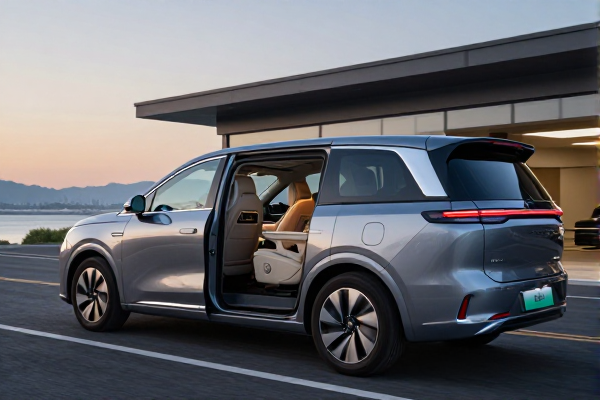
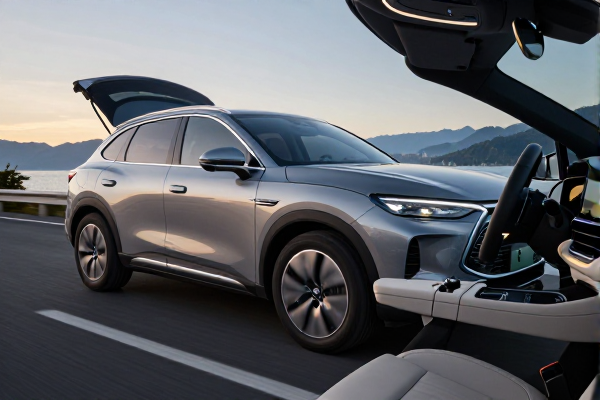
Changan brings a different kind of strength. It understands vehicle packaging, thermal management, battery safety, and how to integrate a new cell format into real car platforms without waiting years to redesign the chassis. The company is also the parent of multiple EV-focused brands, including Deepal and Avatr, which gives the battery project a clear landing spot once the technology is ready.
The partnership is not starting from scratch. The two sides have worked together on earlier battery programs, so the new solid-state initiative can draw on existing engineers, testing infrastructure, and supply relationships. That is a meaningful advantage in a technology race where many players are still at the research stage.
Range has always been a key battleground for electric vehicles. Even after charging networks improve, many consumers still worry about being stranded on a long trip. A battery that can handle close to 1,000 miles changes that calculation in a fundamental way.
It would not simply be an upgrade to an already good EV. It would give drivers the ability to travel from New York to Chicago on a single charge without stopping, or cross huge stretches of the American Midwest in one go. For commercial use, the impact could be even bigger: delivery vans, long-haul trucks, and ride-share vehicles could spend far less time sitting at charging stations.
There is also a psychological effect. When an electric car can out-range a gasoline car, the "range anxiety" argument largely disappears. Consumers would no longer have to choose between convenience and clean transportation. That makes this battery project strategically important, not just technologically ambitious.
Solid-state batteries are widely seen as the next big leap in EV energy storage, but they have spent years promising more than they have delivered. The chemistry is difficult to manufacture at scale. Getting lithium ions through a solid material is not as easy as pushing them through a liquid, and the materials involved can be expensive. Durability over thousands of charge cycles is also still being tested.
CATL has previously acknowledged that all-solid-state batteries face serious engineering problems and that full commercialization will not happen soon. Industry expectations generally point to the second half of this decade for the first limited production runs, with broader vehicle adoption coming later.
Changan has not claimed that a production-ready 1,000-mile battery is right around the corner. The announcement is better seen as a commitment to a development path. It tells investors, suppliers, and competitors where the company is heading. It also helps secure early access to CATL's technology pipeline, which could be a decisive advantage in the late 2020s.
Changan and CATL are not alone in this race. Toyota, Nissan, Honda, Samsung SDI, and a range of U.S. startups like QuantumScape have all made solid-state research a priority. Several European automakers are funding their own development projects, while Chinese battery producers are pushing ahead on multiple chemistry fronts at the same time.
What makes the Changan-CATL pairing different is the combination of a huge battery supplier and a high-volume automaker. Many development deals happen between a smaller startup and one carmaker, but CATL already has the capacity to supply thousands of EVs every day. If the technology works, it could move from prototype to volume production faster than the competition.
For American drivers, the immediate impact may be limited. U.S. trade policy and content rules currently make it difficult for Chinese-built battery components to qualify for federal EV incentives, and geopolitical tensions have pushed many automakers to build separate supply chains outside China.
That does not take away from the importance of the breakthrough. Battery technology developed in China often ends up influencing global pricing and performance standards. If Changan and CATL manage to produce a viable solid-state battery, the pressure on other automakers to improve range, safety, and cost will only increase.
It could also accelerate the broader transition to electric mobility in markets where Chinese EVs are sold directly, including Europe, Southeast Asia, the Middle East, and Latin America. Even if the same battery never appears in a U.S. showroom, the technological spillover effects will likely shape what consumers can buy locally.
The biggest open questions are not about range targets. They are about cost, manufacturing yield, and real-world reliability. A solid-state battery can deliver 1,000 miles on paper, but it has to survive extreme heat, freezing weather, rapid charging, and years of daily use without degrading too quickly.
Changan and CATL have the scale to push through many of those problems. They also have something just as important: a financial incentive to stay ahead in the world's largest EV market. The project is expected to involve close collaboration between cell engineers and vehicle engineers, with breakthroughs being tested inside actual prototypes rather than only in laboratories.
As of May 9, 2026, the partnership remains in the research and development phase. No launch date has been confirmed, and it may still be years before a production model is capable of covering nearly 1,000 miles on one charge. But the direction is now clear. The industry is moving beyond small improvements to current chemistry and betting on a fundamental change in how batteries are built.
If that bet pays off, the next generation of electric vehicles will not just match the convenience of gasoline cars. It will exceed them.