Browse

Log in / Register
 Share


July 8, 2025 — Smart has officially pulled the covers off its third all-electric model, the new #2, releasing a first round of official pictures ahead of the 2026 model year. The compact crossover slots below the Smart #1 and is the brand's most consequential launch yet, packaging a smaller footprint, a more accessible price point, and the heavy digital focus that has defined Smart's revival under its Mercedes-Benz and Geely joint venture.
The reveal completes a three-model strategy that began with the #1 in 2023 and continued with the #3 coupe-SUV in 2024. With the #2, Smart is now aiming squarely at the busiest electric-vehicle segment in Europe — and, possibly, building a case for a long-awaited return to the United States.
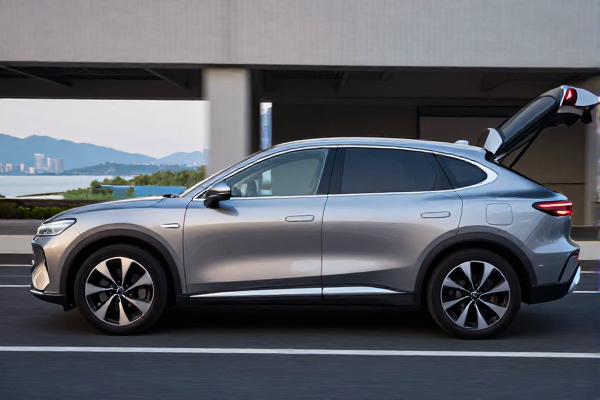
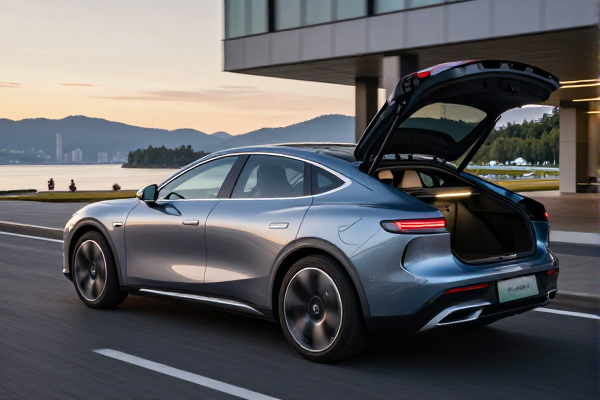
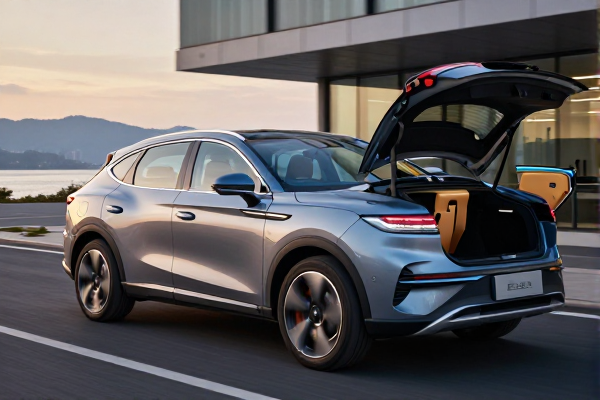
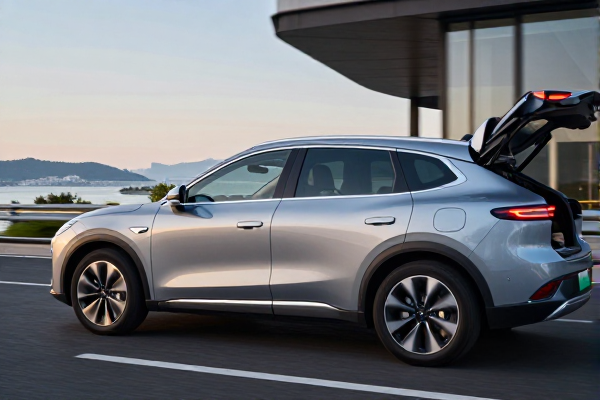
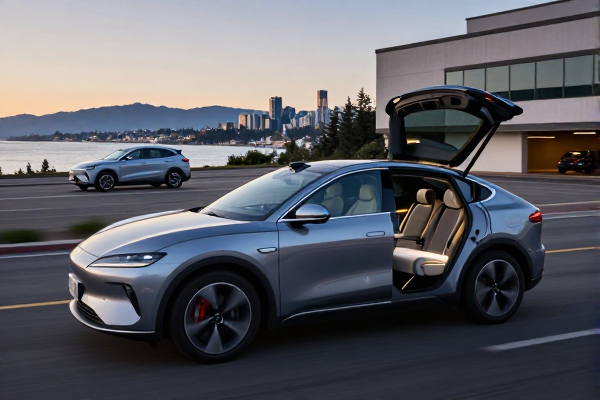
The official images show a production-ready model that stays true to the language introduced by the #1 and #3, but wrapped in a more conventional, SUV-like body. Up front, the slim LED light bar still spans the width of the nose, the grille is closed off, and the lower bumper adds a touch of ruggedness without sacrificing the city-friendly charm Smart continues to trade on.
At roughly 4.2 meters long, the #2 sits about 100 millimeters shorter than the #1, and its wheels have been pushed to the corners to make the most of the compact footprint. The profile reveals flush door handles, a black floating roof and beefy C-pillars that give the car a planted stance. Out back, the rear lighting is the signature detail: vertical LED strips built into the pillars, a modern reinterpretation of the original fortwo's tailgate graphic.
Personalization is clearly a priority. The pictures show a matte green exterior, contrasting roof colors, and multiple aerodynamic wheel designs. Smart has positioned its current lineup as lifestyle-oriented rather than purely utilitarian, and the #2 appears to lean into that message harder than either of its siblings.
Full technical data has not been released alongside the pictures, but the #2 is understood to ride on the same SEA architecture developed by Geely — the flexible electric platform shared with the Smart #1, the Smart #3, and the Volvo EX30. That decision matters commercially: common components across several high-volume models help keep costs down and engineering complexity manageable.
The powertrain lineup is expected to mirror the #1 closely. A single rear-mounted motor should open the range with about 268 horsepower, paired with a 47-kWh battery for an accessible entry price. A longer-range version is likely to use a 66-kWh pack, targeting roughly 260 miles on the WLTP cycle — enough to stay competitive with the Mini Aceman and the Jeep Avenger. At the top end, a Brabus-tuned dual-motor variant should add all-wheel drive and around 422 horsepower, continuing Smart's long-running partnership with the Mercedes-Benz performance arm.
Fast charging is expected at up to 150 kW, meaning a 10-to-80 percent top-up in about 30 minutes. In daily driving, the combination of a light body and compact dimensions should also make the #2 one of the more efficient vehicles in its class — and one of the easiest to park, which remains a core part of the Smart promise.
Interior shots have not been distributed yet, but buyers should expect a layout that follows the #1's template: a minimalist dashboard dominated by a single 12.8-inch touchscreen, no conventional instrument cluster, and a head-up display handling essential driving data. The interface will almost certainly include the brand's animated "Avatar" assistant, which manages voice commands, navigation, climate and over-the-air updates.
Sustainability is another theme the cabin is likely to continue. Recycled fabrics, vegan upholstery and renewable trim materials have featured across the current Smart range, and the #2 is expected to follow. Despite its short body, the long wheelbase should provide serviceable rear legroom, with luggage space of roughly 320 liters behind the rear seats.
The sub-4.5-meter electric crossover class is now the most contested space in the European market, and the #2 arrives with a crowded guest list. The Mini Aceman plays the same design-led card, the Jeep Avenger leads the pack on sales, and the Peugeot e-2008 remains a familiar choice. The platform-shared Volvo EX30 and the more mainstream Kia EV3 extend the competition further.
Smart's strategy is differentiation through personality and digital experience. The company has repeatedly described its mission as "progressive urban mobility," and the #2 is the model that translates that idea into a product for the mass market. Pricing is expected to start at around €30,000 in Germany before incentives — undercutting the #1 and pulling buyers away from the Avenger rather than the pricier EX30.
For American readers, the biggest story is not the design or the range figure — it is whether this small crossover will ever cross the Atlantic. Smart withdrew from the United States in 2019 after the slow-selling fortwo electric was discontinued, and the Geely-led company has concentrated its launch efforts on Europe and China ever since.
Circumstances have changed. The #2 shares its core with the Volvo EX30, which is already on sale in the US; that means its components, crash structures, and manufacturing processes are being validated against American regulations today. From a purely engineering standpoint, certifying a US-market Smart #2 would be a manageable task.
The commercial hurdles are larger. A US return would require a dealer network, service support, and a significant marketing push to revive a brand that most Americans remember as a tiny two-seater. Industry analysts have noted that neither Geely nor Mercedes-Benz has publicly ruled out North America, and the reception of the EX30 will strongly influence that thinking.
For now, Smart has made no US announcement, and the #2 will launch first in Europe, with right-hand-drive markets such as the UK following later in the model year. Yet if the compact EV segment continues to grow on this side of the Atlantic, a transatlantic launch for the #2 becomes a logical and increasingly tempting option for the alliance.
The #2 will be built at the Geely joint-venture plant in Xi'an, China, alongside the #1 and the #3. First deliveries are expected in the first half of 2026, starting with Germany, France and the Nordic countries. Smart says final details — including full specifications, precise pricing and complete interior photography — will be released in the coming months, likely around the car's public debut at a major European auto show later this year.
The #2 is the final piece of a product plan that Smart laid out when the Mercedes-Benz-Geely joint venture took shape in 2020. The #1 proved the brand could build a credible electric crossover, the #3 added a sharper dose of style, and now the #2 has to deliver the volume. This is the car that determines whether Smart is a niche lifestyle brand or a genuine player in the mainstream EV market.
If the reaction to these first images is any guide, the formula is working: distinctive looks, a practical size, and the brand's screen-first approach to the interior. The competitive pressure in this segment will be intense, but the #2's combination of accessible pricing and strong visual identity gives it a real chance to stand out. For a brand still rebuilding itself after a decade of uncertainty, that is exactly the position it needs to be in.