Browse

Log in / Register
 Share
Share

Paris, France – Oct. 15, 2026 – Smart has chosen the 2026 Paris Motor Show for one of the most counterintuitive reveals of the year: a small electric two-seater. The new #2 measures barely more than 2.7 meters long, weighs just 1,140 kilograms, and is built for the cramped, crowded, and often chaotic world of metropolitan driving. It is a purposeful answer to an industry that has spent the past decade convinced every new model must be bigger than the last.
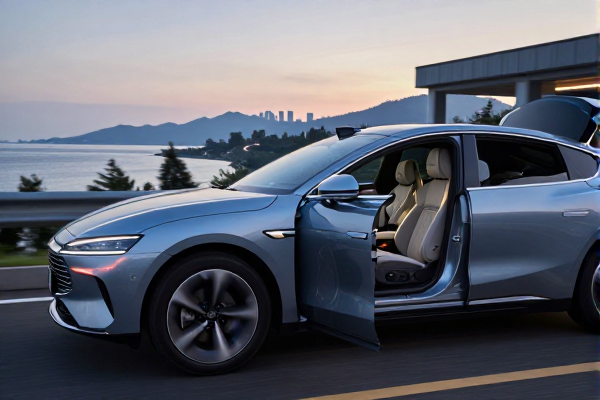
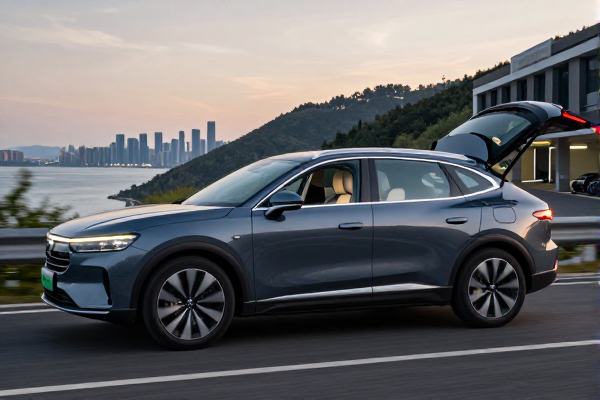
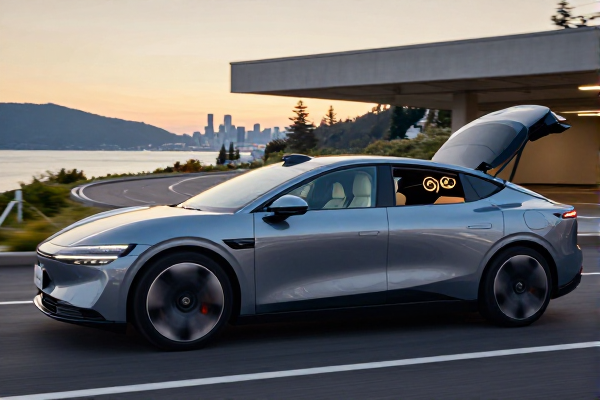
The #2 is unmistakably a Smart. Its wheels are pushed to the corners, it wears the familiar two-tone paint scheme, and the split tailgate survives into a new generation. Mercedes-Benz design still shapes the exterior, with updates that include LED graphics, flush door handles, and a more sculpted version of the old Tridion safety cell — now called Tridion Cell Evo. Under that compact shell, however, is a ground-up EV platform called ECA, developed specifically for Smart.
There is no engine under the hood because the #2’s motor sits at the rear. It produces 80 horsepower and 130 Newton-meters of torque, with drive sent to the back wheels through a single-speed gearbox. The performance figures — 11.6 seconds to 100 km/h and a 140 km/h top speed — may look modest on paper, but they feel appropriate for a runabout that will rarely venture beyond city limits. Smart quotes a curb-to-curb turning circle of just 6.95 meters, which is enough to make U-turns in remarkably tight streets.
One of the most impressive numbers about the #2 is its 1,140-kilogram kerb weight. In a market where electric cars routinely tip the scales past two tonnes, that makes it something of a featherweight, with knock-on benefits for handling, brake wear, and efficiency.
The battery is a 35.8 kWh lithium-iron-phosphate pack mounted low in the floor. It delivers a WLTP-rated range of up to 290 kilometers, or about 180 miles — enough for several days of urban driving. Smart puts energy use at 13.6 kWh per 100 kilometers, a strong efficiency figure that helps explain how such a modest battery can still cover a useful distance.
Charging should fit into daily routines as well. With a DC fast charger, the #2 can handle up to 65 kW, taking the battery from 10 to 80 percent in about 20 minutes in ideal conditions. On a home or public AC charger, an 11-kW unit restores the battery in about three hours; the entry-level Pure model uses a 7.4-kW onboard charger and takes longer. Vehicle-to-load capability is included, so owners can power external devices using the right cable — an extra convenience for picnics, tailgates, and roadside stops.
Inside, Smart resisted the temptation to turn the dashboard into one giant screen. A 10.1-inch central touchscreen handles most infotainment, while an 8.8-inch digital cluster sits behind the steering wheel. There is also a mount called the Smart Pillar, attached to the dashboard, which can hold small accessories such as a phone, sunglasses, or a dash cam without the usual suction-cup clutter.
The cabin offers two seats, a wide bench-style arrangement, and a fairly open feel for such a compact car. Cargo space is listed at 305 liters behind the seats, expanding to 527 liters with a cargo-area rearrangement. The split tailgate remains: the glass rear window can be opened on its own, which is handy when you only need to toss a grocery bag or a laptop case into the back.
On the safety front, the #2 includes seven airbags, adaptive cruise control with stop-and-go, lane-keeping assistance, blind-spot monitoring, traffic-sign recognition, highway assist, and a rear-view camera. The European lineup will be offered in Pure, Pure+, and Premium trims, with a limited Couture Edition capped at 999 units.
The Couture Edition adds a matte-white exterior, gold roof, black interior with gold accents, 16-inch wheels with gold trim, heated front seats, a heated steering wheel, a glass roof, a 256-color ambient lighting setup, a Sennheiser sound system, and a numbered badge. It costs approximately €25,500, or about $28,600.
The timing of this launch feels deliberate. Automakers have built enormous profit margins on SUVs and crossovers, while cities have responded with congestion charges, tighter parking rules, and emissions zones. The Smart #2 argues that a smaller footprint isn’t a compromise; in an urban environment, it’s the point.
It also represents a shift in Smart’s strategy. Since Mercedes-Benz and Geely formed their 50:50 joint venture in 2019, Smart has concentrated on China and Europe with the #1 and #3 crossovers. The #2 is the first full production model that returns to the original two-seat concept that made the brand famous, albeit with modern EV underpinnings and a digital-first cabin.
The compact car won’t suit everyone. It has no usable back seats, no towing rating, and a top speed that limits it to inner-city duties. But it is not trying to replace the family school-run vehicle; it is trying to reduce the need for it in the first place.
American readers should note that the #2 is initially aimed at Europe. Smart has been absent from the US market since 2019, and the company made no mention of North American availability during the Paris reveal. There are no announced plans for US certification or distribution at this stage, so the car likely will remain a European and possibly Chinese market product for the near term. That has not stopped analysts and enthusiasts from debating whether Geely’s global EV platforms could eventually make the case for bringing a small Smart stateside — especially as US cities also face parking constraints and lane-narrowing road diets.
Preorders have opened in Germany, France, Belgium, Austria, Portugal, and several other European markets. The entry-level price sits just under €20,000, or about $22,400, while the range-topping Couture Edition is listed at roughly €25,500, or $28,600. The first customer deliveries are scheduled for the first half of 2027.
That price, the sub-2.8-meter length, and an efficiency rating that outruns many larger EVs should make the Smart #2 a tempting second family vehicle — or a primary one for city dwellers who want to end the madness of circling for parking. In a marketplace dominated by three-row behemoths, the small car just made a quiet, electric comeback.