Browse

Log in / Register
 Share

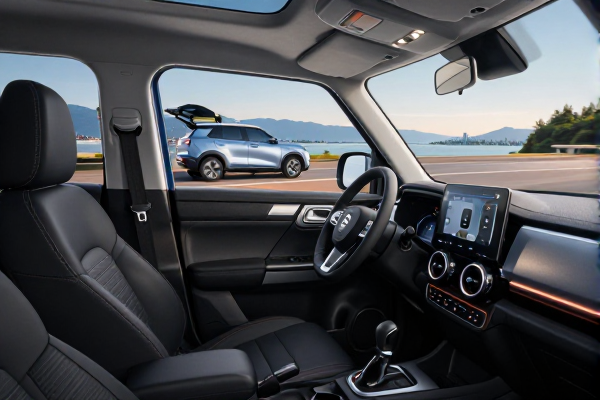
Maruti Suzuki India will introduce smaller electric vehicles only after its charging infrastructure is sufficiently developed, according to Managing Director and CEO Hisashi Takeuchi. Speaking at the company’s annual general meeting on July 31, 2025, Takeuchi emphasized that the automaker’s entry into the EV segment with the mid-size e Vitara SUV is a deliberate first step, with smaller models reserved for a later phase when charging availability is more widespread.
“As soon as our EV charging will be ready in India, we will add smaller EVs in our portfolio,” Takeuchi said. The e Vitara, produced at Maruti’s Hansalpur facility in Gujarat, currently serves as the company’s flagship EV. It competes directly with offerings from Tata Motors and JSW MG Motor, which already sell compact electric cars in the Indian market.
Unlike many global automakers that have launched small EVs ahead of widespread charging, Maruti Suzuki is taking a phased approach. Takeuchi noted that the company is targeting more than 100,000 charging points across India by the end of this decade, partnering with 13 charge-point operators. Already, more than 2,000 exclusive charging stations are operational across 1,100 cities, with a focus on highway and expressway corridors. The plan includes chargers every 5–10 km at key locations in the top 100 cities.
Industry observers point out that this strategy aligns with Maruti Suzuki’s historically conservative but effective rollout of new technologies. “Maruti is known for testing the market with a single, high-volume model before expanding,” said Ravi Sharma, an automotive analyst at Mumbai-based think tank AutoInsight. “Waiting for charging infrastructure to mature before launching small EVs reduces the risk of poor adoption and customer complaints.”
Takeuchi made it clear that the company’s commitment to electric vehicles does not mean abandoning internal combustion engines. “ICE vehicles will remain a significant part of our business. Investment in ICE facilities will continue to be an integral part of our manufacturing process,” he said. The growing use of compressed biogas (CBG) is expected to further extend the life of ICE powertrains.
Maruti’s new manufacturing plants, including the upcoming facility in Gujarat, are designed to be flexible. “In our new plants, we can make EVs, hybrid vehicles, CNG, and ICE vehicles on the same line,” Takeuchi added. This multi-powertrain approach allows the company to adjust production based on demand without committing entire factories to a single technology.
The strategy mirrors that of global peers like Toyota and Honda, which also hedge their bets across electrification and traditional fuels. In India, where price sensitivity is high and charging infrastructure is still nascent, such flexibility is critical.
Maruti Suzuki is also expanding its electric vehicle exports. The company already ships vehicles to nearly 120 countries, with a record 440,000 units exported last year — a 34% increase. Takeuchi highlighted that Europe was the first destination for Maruti’s EV exports, and Japan has now become the second-largest market for the brand.
“We are the largest exporter of EVs from India, with about 90% share in total EV exports from India,” he said. Free trade agreements with the UK, Germany, and France are expected to further boost exports to those markets. “In future, exports are expected to grow further and will play a greater role in our business growth.”
The shift toward exporting EVs from India is a notable trend. While India’s domestic EV market is still small, the country’s manufacturing base is becoming a hub for global EV production, especially for affordable models. Maruti Suzuki’s success in this area could pressure other automakers like Hyundai and Kia to accelerate their Indian EV export plans.
Maruti Suzuki has planned capital expenditure of Rs 77,500 crore (approximately $9.3 billion) between FY2027 and FY2031. The funds will be used for new manufacturing capacity, research and development, and digital transformation. The company is working with Suzuki Motor Japan on next-generation technologies, including battery systems and connected car platforms.
Takeuchi also mentioned that Maruti is engaging with startup companies to explore new product and manufacturing technologies. “We are building flexibility into our manufacturing plants at the design stage itself,” he said. This approach is intended to reduce time-to-market for new products and allow the company to pivot quickly as consumer preferences evolve.
The $9.3 billion capex plan is one of the largest in India’s automotive industry, signaling Maruti Suzuki’s long-term commitment to both electric and conventional vehicles. It also underscores the company’s confidence in the Indian market’s growth trajectory, even as the global auto industry faces headwinds from supply chain disruptions and shifting regulations.
While Maruti Suzuki does not directly sell cars in the United States, its strategy has implications for global automakers and investors. The company’s success in exporting EVs from India could lead to lower-cost electric vehicles entering markets like Europe and Japan, potentially affecting pricing and supply chains. Additionally, Maruti’s approach of waiting for charging infrastructure before launching small EVs is a cautionary tale for markets with similar infrastructure gaps.
Analysts note that the multi-powertrain strategy could serve as a model for emerging markets where charging networks are developing unevenly. “Maruti is essentially de-risking its EV transition by waiting for the ecosystem to catch up,” said Sharma. “That’s a smart move in a market like India, and it could be replicated in other developing countries.”
As the company prepares to roll out more charging stations and expand its EV lineup, all eyes will be on the launch timeline for smaller electric models. For now, Takeuchi’s message is clear: the infrastructure must come first.