Browse

Log in / Register
 Share
Share

In a bold move that questions the electric vehicle industry's relentless focus on battery size, energy titan Shell has unveiled a prototype car achieving three remarkable benchmarks simultaneously. The "Triple 10 Challenge" concept vehicle, revealed on June 23, 2026, demonstrates that significant leaps in charging speed, efficiency, and sustainability may be unlocked not by next-generation battery chemistry, but by rethinking the thermal systems that surround today's technology.
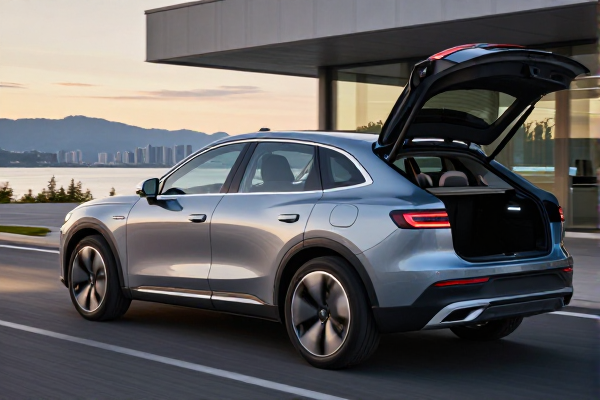
The automotive world has long operated under a "battery-first" orthodoxy, where extending range and reducing charge times primarily involve packing in more or better battery cells. Shell's project, developed with engineering partners RML and Empel Systems, proposes a different path. By implementing an advanced, single-circuit immersive cooling system, the team has created a compact EV that charges from 10% to 80% in under ten minutes, travels 10 kilometers per kilowatt-hour of energy, and is estimated to have a lifecycle carbon footprint of just 10 tonnes.
The Core Innovation: System-Wide Thermal Harmony
The breakthrough centers on a holistic thermal management architecture. Unlike conventional electric cars that use separate, complex coolant loops for the battery, motor, and electronics, the Triple 10 concept immerses all key components in a single bath of a specially engineered dielectric fluid. This Shell-developed fluid, derived from natural gas, has exceptional heat-transfer properties and low viscosity, allowing it to wick heat away directly from the surfaces of cells and motors.
This direct-contact, or "immersive," cooling eliminates thermal hotspots and maintains the entire powertrain at a consistent, optimal temperature. The engineering benefit is twofold: it prevents performance throttling during fast charging, and it allows for the use of smaller, lighter, and less expensive components. The battery pack, at just 32 kWh, is notably modest by today's standards, yet the system's efficiency enables a claimed real-world range exceeding 300 kilometers.
Redefining the Practical EV Experience
For consumers, the translated benefits are profound. The 9-minute and 54-second charge time was achieved using a standard 175kW DC fast charger, not a rare ultra-high-power unit. This practicality is crucial, adding approximately 24 kilometers of range per minute of charging—nearly double the current average. The efficiency figure of 10 km/kWh represents a roughly 30% improvement over leading models like the Tesla Model 3 RWD, meaning more miles from less energy and a smaller battery.
The environmental claim is perhaps the most ambitious. The estimated 10-tonne CO2e lifecycle footprint—about half that of a typical European battery-electric vehicle—stems from the smaller battery's reduced material demand, a lightweight chassis using recycled aluminum and carbon fiber, and an assumption of renewable energy for charging. Shell suggests this integrated approach could reduce battery pack costs by up to 25% compared to conventional designs.
A Strategic Play in the Evolving Mobility Ecosystem
Shell's foray into vehicle concept development is a clear strategic signal. As the company consolidates its charging networks, lubricants, and advanced fluids under the "Shell Recharge" brand, it is positioning itself as a solutions provider for the electric age, not just an energy retailer. This concept car is a physical manifesto of that strategy, demonstrating how its core expertise in fluids and energy systems can directly address automotive engineering challenges.
The move also reflects a growing industry acknowledgment that the path to mainstream EV adoption requires tackling cost and convenience simultaneously. While competitors like TotalEnergies and chemical firm Solvay are also exploring advanced thermal management, and battery makers like SK On are developing immersion-cooled cells, Shell's unique integration of fluid science, charging infrastructure, and vehicle-level engineering offers a distinct, systems-level argument.
Exclusive Perspective: A Near-Term Pathway, Not a Distant Promise
Analysts note that the most compelling aspect of Shell's demonstration may be its timeline. The technology relies on scaling existing immersion cooling techniques and available materials, rather than awaiting speculative solid-state or lithium-metal battery breakthroughs. Independent testing firm HORIBA MIRA has already validated the system's durability under extreme conditions, adding a layer of real-world credibility. This presents automakers with a potentially faster route to more affordable and efficient EVs, shifting the innovation focus from the cell itself to the ecosystem that enables it.
The Triple 10 concept does not promise a production car, but it forcefully challenges the industry's prevailing roadmap. By proving that radical improvements are possible by optimizing the entire thermal system, Shell is advocating for a more nuanced engineering philosophy. In the race to electrify transportation, the winner may not be whoever builds the biggest battery, but whoever best manages the heat.