Browse

Log in / Register
 Share
Share

The automotive industry's center of gravity is shifting fast—from metal and motors to code and cloud. For decades, car buyers compared horsepower, fuel efficiency, and transmission smoothness. Today, the question is increasingly: can this vehicle improve itself after I buy it? That shift defines the era of the Software Defined Vehicle (SDV), and automakers worldwide are racing to claim leadership.
As of June 15, 2025, SDVs are no longer a futuristic concept. Major OEMs have placed software platforms at the heart of their product roadmaps, recognizing that a car’s value now depends on its ability to evolve through over-the-air (OTA) updates, integrate AI-powered features, and host third-party apps. The SDV architecture transforms a vehicle from a finished product at delivery into a continuously improvable platform—much like a smartphone.
What Makes a Car 'Software Defined'?
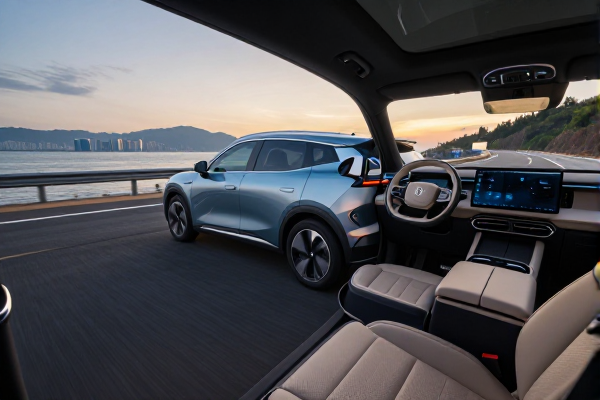
An SDV is not merely a vehicle with more software. It is a vehicle whose core functions—from infotainment and climate control to chassis dynamics and advanced driver assistance—can be redefined via software after the customer takes delivery. Traditional cars used dozens of discrete electronic control units (ECUs), each handling one task. SDVs consolidate those functions into a few high-performance computers (HPCs) organized around centralized or zonal electrical/electronic (E/E) architectures.
This hardware transformation is underpinned by a vehicle operating system (OS) and robust OTA capability. The OS enables automakers to add features, fix bugs, and even upgrade performance long after the car leaves the showroom. According to a recent McKinsey & Company analysis, the global SDV market could generate up to $1.5 trillion in annual value by 2030, driven by recurring revenue from services and over-the-air upgrades.
Who Is Leading the SDV Race?
A prime example of the SDV push comes from Hyundai Motor Group with its Pleos Connect system. Launched as the group's first major SDV step, Pleos Connect is a next-generation infotainment platform built on Android Automotive OS (AAOS). It integrates the generative AI assistant Gleo AI, full OTA capabilities, and an open app ecosystem that allows third-party developers to build in-vehicle applications. Shin Yong-jin, Principal Research Engineer at Hyundai’s Infotainment Platform Development Team, explained: “In the past, customer engagement ended at the sale. Under SDV, customers stay connected through OTA updates, AI services, and apps throughout the entire ownership experience.”
Other global automakers are pursuing similar but distinct paths. Mercedes-Benz is rolling out its proprietary MB.OS (Mercedes-Benz Operating System), which controls everything from infotainment to autonomous driving functions and can be updated wirelessly. BMW is preparing its next-generation Neue Klasse electric vehicles with four “Superbrains”—high-performance computers that centralize vehicle control, replacing dozens of individual ECUs. Volkswagen is restructuring its software subsidiary CARIAD and has formed a joint venture with U.S. EV maker Rivian to co-develop next-generation SDV architectures. Although technical approaches differ, the endgame is the same: transform cars into software platforms.
How SDVs Change Consumer Choice and Auto Competition
The rise of SDVs is also rewriting the criteria consumers use when choosing a car. While design, driving dynamics, and fuel efficiency still matter, OTA upgrade capability, AI-powered convenience (like smart voice assistants), digital user experience (UX), and the richness of in-car apps are becoming decisive factors. Automakers are racing to build app stores inside vehicles, mirroring the smartphone ecosystem model.
This shift has profound implications for industry competition. Automakers are no longer competing only with other car companies—they are up against software developers, semiconductor designers, and AI firms. “The essence of SDVs is not just adding software to cars, but transforming the automobile itself into a platform,” commented an industry insider. “In the future, a carmaker’s competitiveness will hinge on its operating system, AI capabilities, and app ecosystem as much as on horsepower or range.”
Challenges and What Comes Next
Despite the promise, SDV migration is not trivial. Automakers must invest heavily in cybersecurity (since OTA updates introduce attack surfaces), manage complex supplier relationships for chips and software, and retool engineering teams that were traditionally hardware-focused. Legacy E/E architectures must be redesigned from scratch, a multi-year process for most OEMs.
Yet the momentum is undeniable. Advances in autonomous driving, generative AI, and high-speed connectivity are accelerating SDV adoption. Industry experts expect that by 2030, nearly every new vehicle sold in developed markets will be software-defined to some degree. The winners will be those who can combine hardware excellence with software agility—and keep users engaged long after the sale.
For consumers, this means their next car might be their most upgradable purchase ever. For automakers, it means the race is no longer about who builds the best engine, but who builds the best platform.