Browse

Log in / Register
 Share

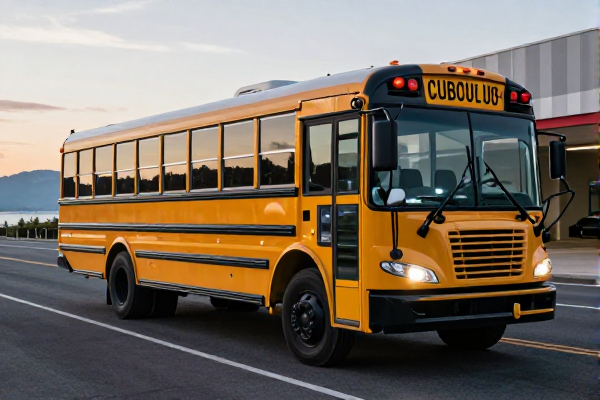
A 10th-grade student and another person died when a car struck a school bus and caused it to overturn during a multivehicle crash, authorities confirmed Monday, April 27, 2026.
The crash left the bus on its side and brought a large emergency response. Investigators have not released the names of the victims, saying family notification was still in progress. Officials also had not said how many students were aboard, whether the driver of the car was among the dead, or how many vehicles were involved beyond the car and the bus.
Authorities said the bus was hit by a car, and the impact sent the bus into a rollover. The incident then appeared to pull other vehicles into the crash sequence, though the exact number of vehicles was still unclear. First responders worked to secure the scene and check on students, but no additional details about injuries were immediately available.
School buses are statistically one of the safest ways for children to get to school, but rollover crashes are a known exception to that safety record. Most school bus crashes involve frontal impacts with passenger cars, and in those situations the padded, high-backed seats inside a bus do most of the work to protect passengers.
A rollover is different. When a bus tips onto its side, the forces push passengers sideways and away from the protective seating compartment. Students can be thrown against windows, door frames, seat edges, or one another. Even at moderate speed, a bus rollover creates a level of lateral motion that the compartmentalized seating design is not specifically built to manage.
National Transportation Safety Board recommendations have for years called for three-point seat belts on new large school buses. Federal safety rules require the padded high-back seat design, but they do not require lap-and-shoulder belts on full-size buses. Because of that, a school bus rollover can leave occupants significantly more exposed than they would be in a passenger car.
The central question in the investigation will be how the car and the bus came together. Crash reconstruction teams typically look at vehicle speed, road conditions, weather, lane positioning, and whether either driver was distracted, impaired, or deliberately evasive. They will also try to determine whether the bus was moving or stopped at the time of impact.
Video evidence will be important. Many school buses now have outward-facing cameras and stop-arm cameras. Traffic cameras and nearby security cameras along the route could also provide a timeline of the crash. Investigators said no timeline has been set for releasing the victims’ names, and no charges have been announced.
Multivehicle crashes involving school buses are especially difficult to reconstruct because the first impact often changes the movement of every vehicle involved. A car may have struck the bus for one reason, but the bus may then have hit another vehicle when it flipped. Determining exactly which death occurred at which stage could matter in any legal review.
Every serious school bus crash tends to reignite the debate over seat belts. About half of states have taken some step toward requiring seat belts on new school buses, but the rules are not uniform. The National Safety Council and other advocates have pointed out that seat belts keep passengers in the seating compartment during a rollover and reduce the chance of being thrown into another occupant or out of a window.
Seat belts are not a simple fix, however. School buses have a design that works well in most crashes, and adding belts means heavier seats, more maintenance, and different evacuation procedures. Experts who study pupil transportation say belts should be viewed as an extra layer of protection rather than a replacement for the existing compartmentalization design.
What makes a rollover so difficult is that a child may remain in a seated position, but the body can still slide sideways under the lap belt if the restraint is not worn properly. Lap-and-shoulder belts, which many states now require, are considered more effective because they hold the upper body in place. This crash is likely to be cited by advocates pushing for those stronger belts.
When a student dies in a school bus crash, the loss extends well beyond the physical crash site. Classmates, bus drivers, and parents are all part of the same daily routine, and the memory of the overturned bus can create fear around an ordinary ride to school.
School districts in similar situations usually activate crisis response teams. Grief counselors are brought in to meet with students who ride the same bus route, attend the same school, or simply have questions about what happened. Officials did not say whether such services had been deployed in this case, but the expectation is that support would be offered as soon as families were notified.
Parents may need to be part of the response as well. Watching footage of an overturned school bus, or hearing about it through social media, can be deeply unsettling. Experts recommend that adults acknowledge the event calmly, reassure children that school buses remain safe, and encourage them to talk about what they are feeling.
One deadly crash does not erase the overall safety record of school buses. Federal crash data over many years has consistently shown that school bus trips involve far fewer deaths per passenger mile than passenger car trips. The risk of dying on the way to school is already very low, and crashes involving dozens of students are rare.
Still, this crash is a stark reminder that rarity is not the same as impossibility. The school bus that overturned was protecting its passengers one moment and, in a split second, became the source of danger. That unpredictability is what makes rollover crashes different from the far more common fender-benders and rear-end collisions that buses survive every day.
The investigation is still in its early stages. The identities of the two victims, the school involved, and the precise chain of events have not been announced. More information is expected as law enforcement completes interviews, reviews video, and processes the scene.
In the meantime, the focus remains on the families who lost loved ones, the students who witnessed the crash, and the emergency crews who responded. The loss of a 10th-grade student is not just a line in a report; it is a life interrupted in the middle of the school year. The second person killed in the crash also leaves behind a family that is now waiting for answers.
The coming days are likely to bring more details about the crash scene, the vehicles involved, and the decisions made by the drivers in the moments before impact. Those details will not change the outcome. They may, however, give families a clearer picture of what happened and give safety officials another case against which to measure the need for stronger protections on school buses.
For now, authorities are asking anyone with information about the crash to come forward. They also reminded nearby residents to remain cautious around school bus routes, especially during morning and afternoon pickup times. The investigation continues, and no further updates were available Monday evening.