Browse

Log in / Register
 Share

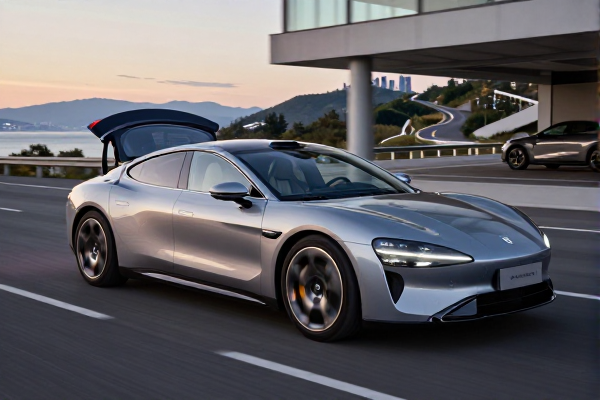
June 4, 2024 — The automotive world's latest entrant, Dutch startup Sanrivatti, is taking its "human body-first" design philosophy to an extreme few anticipated. Moving beyond mere speculation, the company has revealed the first concrete detail of its unnamed hypercar: a driver's seat that positions the occupant head-first, mirroring the posture of a superbike rider. This radical approach, dubbed the "Apex Position," promises to fundamentally alter the driver-machine interface in a high-performance car.
At the heart of Sanrivatti's vision is a critique of modern supercar design. Founder and CEO Santiago Sánchez Rivero argues that even the most advanced performance cars create a barrier between driver and machine. "Layers of architecture, packaging, and conventional systems separate the driver from the raw experience," Rivero states. In contrast, the Apex Position seeks to replicate the visceral, immediate connection of a motorcycle, where every shift in balance and posture directly translates to the vehicle's behavior.
The released design sketch, while conceptual, shows a cabin where the driver is reclined dramatically forward. Sanrivatti claims this configuration offers immersive ergonomics, enhanced body alignment for better g-force management, and an extended field of vision. Perhaps most intriguingly, the company hints at developing technologies that allow the driver's body movements to interact with the car's dynamics, suggesting a level of physical integration never seen in a four-wheeled vehicle.
Exclusive Perspective: The Engineering Credibility and Inherent Challenges
While the concept is audacious, Sanrivatti is bolstering its credibility with serious engineering talent. A key figure is Paul Arkesden, recently appointed Executive Director of Technology Partnerships. Arkesden's resume includes leading the engineering development of the legendary McLaren P1 hypercar and holding the Vice President of Engineering role at Singer Vehicle Design, renowned for its reimagined Porsche 911s. His involvement signals that Sanrivatti's project is more than a design exercise; it's a serious engineering endeavor aimed at high-performance execution.
However, this exclusive focus on a motorcycle-like pose presents significant challenges not addressed in the initial announcement. Safety regulations for road cars, particularly concerning airbag deployment and crash structure compatibility with such a non-standard seating position, will be a major hurdle. Furthermore, the practicality of vehicle controls—steering, pedals, and gear selection—within this layout remains an open question. Whether the design can accommodate a passenger, or if it will be a strict single-seater, is also unclear. These are critical details that will determine if the Apex Position can transition from a stunning sketch to a functional, road-legal cockpit.
The company's decision to prioritize this radical seating architecture over revealing powertrain details is a bold statement. It underscores a belief that the primary limitation in modern hypercar performance is not power or aerodynamics, but the driver's capacity to perceive and react. By aligning the driver's sensory input with the vehicle's dynamics, Sanrivatti believes it can unlock a new level of driving engagement, potentially reducing lap times through enhanced human performance rather than just adding more horsepower.
Industry observers are watching closely. If successful, Sanrivatti's approach could spawn a new sub-genre of hypercars focused on physiological integration. If the practical and regulatory challenges prove insurmountable, it may remain a fascinating footnote in automotive design. For now, the startup has successfully shifted the conversation from sheer horsepower to the philosophy of connection, challenging established giants to reconsider the very nature of the driver's seat. Prototypes are reportedly underway, suggesting answers to these pressing questions may be on the horizon.