Browse

Log in / Register
 Share

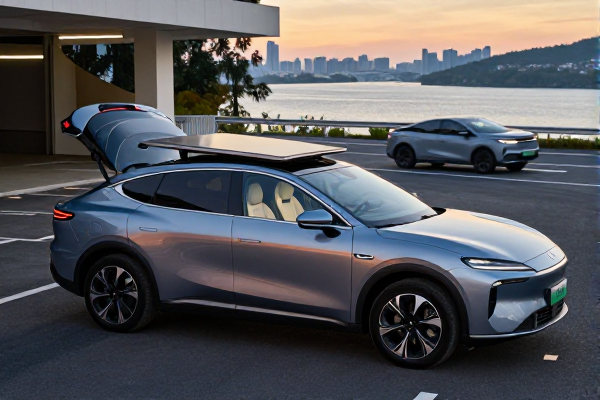
April 15, 2025 – A growing body of data shows that American suburbs with dense rooftop solar installations are becoming unexpected hotbeds for electric vehicle (EV) uptake. Rather than being confined to urban centers or coastal tech hubs, the EV revolution is gaining strong traction in the leafier, sun-soaked neighborhoods where homeowners are pairing photovoltaic panels with plug-in cars.
Recent analysis from the National Renewable Energy Laboratory (NREL) and the U.S. Department of Energy indicates that suburban ZIP codes with above-average solar panel adoption saw EV registration rates jump by 40% between 2023 and 2025, compared to a 22% national average. The pattern is most pronounced in states like California, Arizona, Nevada, and Texas, where abundant sunshine makes solar economics attractive.
“The overlap isn’t a coincidence,” said Dr. Elena Marquez, a senior analyst at the Clean Energy Policy Institute. “Homeowners with rooftop solar are already thinking about energy costs, and adding an EV becomes a natural next step to maximize their investment. They can effectively ‘fuel’ their car with sunlight, drastically reducing driving expenses.”
The underlying driver is simple math. A typical suburban household with a 7-kilowatt solar system can offset the electricity needed to charge an EV for 10,000 miles a year, saving roughly $1,200 annually in fuel costs compared to gasoline. When combined with federal tax credits for both solar and EVs, the payback period shrinks, making the duo a clear economic win.
This trend is reshaping where automakers and charging networks invest. Tesla, Ford, and GM have all reported higher-than-expected demand in solar-heavy suburbs, and companies like ChargePoint and Electrify America are prioritizing these areas for new Level 2 and DC fast-charging stations. “We used to think of EV adoption as a city-first phenomenon,” said Ravi Patel, director of EV strategy at ChargePoint. “But the data now shows that suburbs with strong solar adoption are actually our fastest-growing market segment.”
Utility companies are taking notice, too. In states with time-of-use rates and net metering, solar-plus-EV homes can shift charging to off-peak periods, easing grid strain. Some utilities, such as Arizona Public Service, have launched pilot programs offering discounted EV rates to customers who also have rooftop solar. The synergy helps stabilize the grid while rewarding homeowners for smart energy behavior.
However, the relationship is not without challenges. The upfront cost of a combined solar-plus-EV system remains high—typically $25,000 to $40,000 before incentives. While federal tax credits cover 30% of solar costs and up to $7,500 for EVs, lower-income communities often lack access to the capital needed. Advocacy groups warn that without targeted policies, the solar-EV boom could widen the energy equity gap.
“We’re seeing a ‘green premium’ that benefits wealthier homeowners,” noted Jenna Torres, energy equity director at the Urban Sustainability Network. “To truly scale, we need community solar programs, used EV incentives, and better financing options for renters and lower-income households.”
Despite these hurdles, the momentum is undeniable. Home builders are increasingly marketing new subdivisions as “solar-ready” and including EV-capable garages. In markets like Las Vegas and Phoenix, where summer temperatures push air conditioning demand, solar panels that would otherwise be oversized for a home’s base load can be fully utilized by an EV.
The symbiotic relationship between rooftop solar and electric vehicles is also influencing policy. Several states, including Colorado and New Jersey, are now offering combined rebates for homeowners who install both solar and a home charging station. On the federal level, the Inflation Reduction Act’s direct-pay provisions for solar and EV chargers have made the combination more accessible than ever.
Looking ahead, analysts expect the trend to accelerate as battery costs fall and solar efficiency improves. By 2030, NREL projects that nearly one in five single-family homes in the U.S. will have both rooftop solar and an EV, up from less than 1% today. The suburbs, long seen as bastions of gas-guzzling commutes, are quietly becoming the epicenter of the clean energy transition.
For now, the message is clear: if you want to spot where EVs are really taking off, look for the rooftops gleaming with solar panels. The data shows that in the battle against tailpipe emissions, the sun is proving to be a powerful ally.