Browse

Log in / Register
 Share
Share
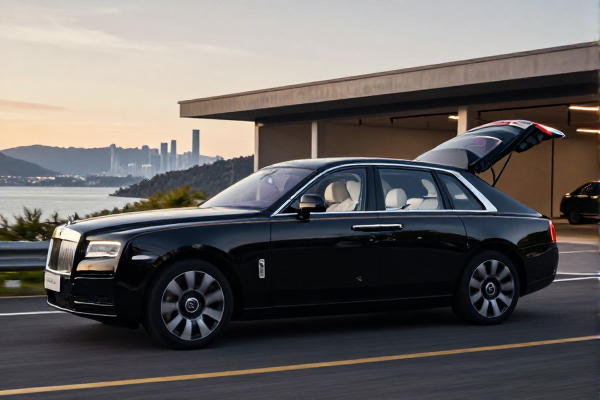
Rolls-Royce has put its upcoming Project Nightingale electric roadster through what is shaping up to be one of the longest validation schedules in modern luxury car history. As of May 10, 2026, Autoblog, via UNN, reported that the two-seat, open-top grand tourer will go through a 350-week test program. Early estimates put the cost of each car at $9.5 million to $10 million.
For anyone used to conventional car launches, the number jumps off the page: 350 weeks is roughly 6.7 years. This is not a six-month marketing push. It is a deliberately extended validation process that will take prototypes through some of the harshest environments on the planet before the first hand-built example reaches a client.
Project Nightingale is part of Rolls-Royce's revived coachbuilding program, which produces cars that go far beyond a normal options list. The two-seat, open-top layout is unusual for a brand that has often focused on large luxury sedans and coupes. Its design reportedly draws from experimental Rolls-Royce models built in the 1920s, connecting the new electric car to the company's early tradition of bespoke engineering.
The electric powertrain is a crucial difference from the brand's other recent coachbuilt projects. Rolls-Royce already sells the Spectre as its first production EV, but Project Nightingale is a far more exclusive exercise. With only 100 cars planned, it will be one of the rarest modern Rolls-Royce models ever offered.
The 350-week figure is the most revealing part of the announcement. A full year has 52 weeks, so rolling out the development program across 350 weeks means the full engineering effort will stretch well beyond six years. That is a long gestation by any standard.
Rolls-Royce has not published a precise start date or delivery window for the first customer cars. Still, the extended schedule suggests that the company is prioritizing durability, refinement, and electrical-system reliability over speed to market.
The testing conditions are equally broad. Prototypes will be sent to the Arctic Circle to assess cold-weather performance, to the Arabian Peninsula for desert heat testing, and to high-altitude roads around 2,750 meters — roughly 9,000 feet — to check how the EV's cooling system and power delivery behave in thinner air.
According to the report, several Project Nightingale prototypes have already completed 1,430 hours of computer-based aerodynamic modeling and wind-tunnel testing. In other words, more than 1,400 hours of development took place before the road-test phase expanded.
Why such an intense aero program? Electric grand tourers carry heavy battery packs and generate a lot of heat. Managing that heat requires carefully directed airflow, and at high speed the body has to remain stable without creating intrusive wind noise. Rolls-Royce has built its reputation on silence. A car that is meant to be an open-top EV cannot afford to be fidgety at high cruising speeds or noisy in a crosswind.
The fact that the aerodynamic program has already consumed 1,430 hours shows that Project Nightingale is being engineered with a level of care usually reserved for low-volume hypercars, not traditional luxury convertibles.
One of the most unusual elements in the testing schedule is the mechanism for the Piano Bag cover. This special cover opens sideways, and Rolls-Royce plans to cycle it more than 15,000 times. That kind of operation may sound like a small detail, but in a coachbuilt car, every touchpoint matters.
The test is essentially a durability marathon. A mechanism that moves sideways can wear unevenly, and even small alignment issues can ruin the way a cover feels when an owner opens it. By running it through 15,000 opens and closes, Rolls-Royce is trying to ensure that the mechanism will feel just as precise after years of ownership as it does at delivery.
The production cap is an important part of the car's identity. Rolls-Royce has generally treated coachbuilding as a tailor-made operation, with each car getting unique exterior and interior treatments. That kind of work cannot be scaled. With only 100 vehicles, the brand can maintain a level of handcrafting that would be impossible on a regular assembly line.
The sales process is just as telling. Project Nightingale will be available only to buyers personally invited by Rolls-Royce. That puts the automaker in control of who gets to own the car. It is consistent with how Rolls-Royce has handled some of its most recent ultra-exclusive commissions, where clients are selected first and details remain highly confidential.
Official pricing has not been announced. Autoblog's report puts the expected cost at roughly $9.5 million to $10 million. That places Project Nightingale in a very small market segment, far above the regular Rolls-Royce lineup and closer to the territory of one-off hypercars and private aviation.
For that kind of money, a buyer is not just purchasing transportation. The testing program itself becomes part of the story: the fact that Rolls-Royce is spending years validating the car is a reassurance that the final product has been obsessively refined.
The invite-only structure also reinforces the idea that this is less a conventional car and more a piece of moving sculpture. For the handful of clients who receive an invitation, the long validation process should be part of the appeal.
Project Nightingale shows that Rolls-Royce sees electrification as fully compatible with the rarefied world of personal luxury. An extended engineering schedule like this would be hard to justify for a mainstream EV maker trying to recover development costs quickly. Low volume changes the economics: a 100-car run can absorb a longer test phase because each car is priced to cover millions of dollars of engineering time.
It also sends a message to the wider automotive market. At a moment when many brands are rushing electric vehicles into showrooms, Rolls-Royce is taking the opposite approach. Marathon development cycles can become a selling point, especially among buyers who value rarity, craftsmanship, and long-term reliability above delivery speed.
The next chapter for Project Nightingale will be defined by those 350 weeks of testing. If the prototypes survive arctic cold, desert heat, mountain altitudes, and thousands of operations on something as delicate as the Piano Bag cover, the car that eventually appears will have earned its exceptional price tag.