Browse

Log in / Register
 Share
Share
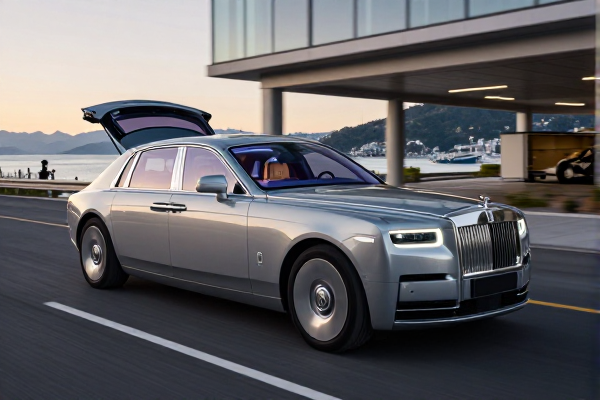
June 13, 2025 – A 1973 Rolls-Royce Phantom VI, once the official limousine of the City of London, has been reborn as a silent, zero-emission electric vehicle. The conversion, carried out by British EV technology firm Electrogenic, represents a landmark in sustainable preservation of classic luxury cars—and offers a blueprint for U.S. cities and private collectors aiming to reconcile heritage with climate goals.
The project was commissioned by Dame Susan Langley DBE, the 697th Lord Mayor of the City of London, as part of the City Corporation’s drive to reach net zero carbon emissions by 2027. Rather than retiring the historic Phantom, officials chose to give it a new lease on life through electrification, retaining its iconic coachwork and craftsmanship.
Electrogenic, based in Oxford, installed a 120 kW (161 hp) electric motor producing 310 Nm of torque, replacing the original petrol engine. The powertrain is fed by a 62 kWh battery pack mounted under the hood, connected to a single-speed direct-drive transmission. The result is a real-world range of 100 to 120 miles—sufficient for ceremonial duties within London and beyond.
“Our team has sympathetically preserved everything that made the original car so special, while giving it a clean, modern powertrain perfectly suited to carrying out ceremonial duties in a modern city,” said Steve Drummond, CEO of Electrogenic. “The result is the ideal ceremonial limousine, full of character and now future-proofed.”
Dame Susan Langley highlighted the dual benefit of heritage and innovation: “This is exactly the kind of innovation we should embrace: respecting our heritage while finding new ways to make the mayoralty more sustainable, relevant and fit for the future. I’m particularly excited to see one of these historic vehicles given a new lease of life through electric power.”
While the project is rooted in London, its implications resonate strongly with the U.S. market. American cities like New York, Los Angeles, and San Francisco face similar challenges: maintaining ceremonial fleets of vintage vehicles while meeting aggressive emissions reduction targets. Meanwhile, a growing number of U.S. collectors are turning to companies like EV West, Zero Labs, and Kindred Motorworks to convert classic cars—from Ford Mustangs to Chevrolet pickups—to electric powertrains. The Rolls-Royce Phantom conversion, however, pushes the envelope in terms of prestige and complexity.
“Electrogenic’s approach—keeping the original chassis, body, and interior meticulously intact—is exactly what the high-end collector market demands,” said Mark Vaughn, veteran automotive journalist and former editor of Autoweek. “For a Phantom VI, which is both a piece of art and a historical artifact, a drop-in electric conversion is far less invasive than a full restoration. It preserves the car’s soul while making it operational for the next century.”
The conversion also highlights a technical nuance: the 62 kWh battery is placed under the bonnet (hood) in the original engine compartment, preserving the car’s weight distribution and appearance. No modifications were made to the rear seating area or the iconic "Spirit of Ecstasy" hood ornament. The single-speed transmission eliminates the need for a clutch, making the car easier to drive in stop-and-go city traffic.
For U.S. readers, the Phantom’s electric conversion raises an important question: Could similar conversions unlock new revenue streams for cities? In London, the vehicle will carry out official duties for decades without tailpipe emissions, reducing fuel and maintenance costs. Many U.S. municipalities still operate vintage police cars, fire engines, or mayoral limousines that could undergo similar retrofits, turning them into low‑cost, low‑emission ambassadors for sustainability.
“The Rolls‑Royce Phantom project is a case study in how to blend tradition with technology,” said Dr. Emily Townsend, director of the Center for Sustainable Transportation at the University of Texas at Austin. “It shows that decarbonization doesn’t have to mean ditching heritage vehicles. With the right engineering, historic cars can become rolling exhibits of environmental responsibility.”
Electrogenic, which has converted several other classic Rolls‑Royces, Bentleys, and Jags, plans to expand its business in North America. The company already offers a “drop‑in” conversion kit for the Land Rover Defender, and is evaluating demand for a similar kit for the Rolls‑Royce Silver Shadow, a model that shares the Phantom VI’s underpinnings.
As the 2027 deadline for London’s net‑zero operations approaches, the electrified Phantom will be a regular sight at mayoral ceremonies, state visits, and community events. Its quiet, emission‑free glide through the streets of London will serve as a constant reminder that the past and future can coexist—and that the world’s most iconic cars can be part of the solution.
For U.S. enthusiasts and fleet managers, the message is clear: the age of the electric classic car is no longer a niche fantasy. It’s a practical, elegant, and increasingly popular path to sustainability. And if a 1973 Rolls‑Royce Phantom can go electric, almost any classic can.