Browse

Log in / Register
 Share
Share
London’s streets are about to see a new kind of cab—one that can drive itself, but only with a human at the wheel. On March 25, 2025, Transport for London (TfL) granted private hire vehicle (PHV) licenses to a fleet of autonomous electric Ford Mustang Mach-Es equipped with technology from British startup Wayve. The catch: a qualified driver must be present and remain fully responsible for the vehicle at all times.
The move marks a significant step for self-driving technology in the UK capital, but it stops short of a fully driverless rollout. Uber, which will operate the robotaxis, said TfL inspectors confirmed that Wayve’s camera-based system met all policy and safety standards. The company plans to offer rides to a subset of the 100,000 people who signed up to an interest list “later this summer,” ahead of a full public launch.
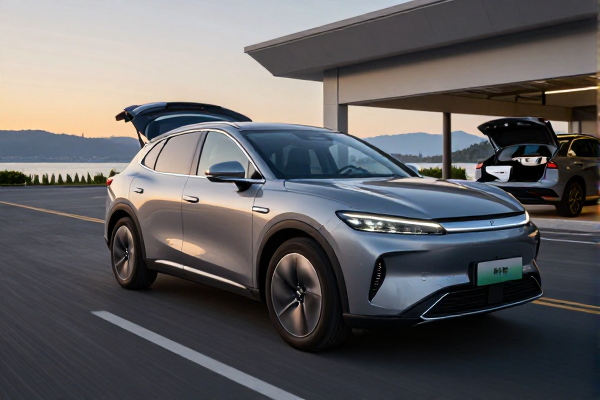
TfL made clear that safety is the overriding priority. The agency’s “Vision Zero” goal aims to eliminate all deaths and serious injuries on London’s roads by 2041, and any new passenger vehicle must align with that target. The modified Mustang Mach-Es feature camera pods on the roof, additional mirrors, and small radar units—a sensor suite that uses five cameras and no lidar, a design choice that sets Wayve apart from competitors like Waymo and Cruise.
The licensing completes the “triple-lock” requirement for private hire trips: the operator (Uber), the driver, and the vehicle must all hold licenses with the same authority. For the vehicles to operate without a human driver, a separate approval from the UK’s Driver and Vehicle Standards Agency (DVSA) would be needed—a step that remains months or years away.
The Licensed Taxi Drivers’ Association has not yet commented, but minicab unions are expected to push back, fearing job losses and the erosion of traditional driver roles. The London black cab drivers’ union has historically opposed ride-hailing and autonomous vehicles, arguing that safety and accountability are compromised when a human is not in full control.
Wayve’s vice president for global affairs and assurance, Sarah Gates, called the license “an important step” and said it would bring “safer, cleaner and quieter streets.” Uber’s global head of autonomous mobility operations, Annie Duvnjak, described the approval as a “key milestone” and noted the “incredible response from Londoners” eager to try the British-built technology.
Wayve, founded in 2017 by two University of Cambridge PhD students, uses a “end-to-end” deep learning approach that trains its AI on real-world driving data rather than relying on high-definition maps or heavy lidar arrays. The company has attracted investment from Microsoft, Virgin, and Lightspeed, and is also working with Nissan and Stellantis to deploy its systems in private vehicles. London will be the first city in the world to use Wayve’s technology for commercial passenger journeys.
While the London robotaxi license is a UK story, it carries implications for the US market, where Wayve has been quietly testing its technology. The company received a permit to test on California public roads in 2023, though it has not yet applied for a driverless deployment permit. The UK’s step-by-step approach—requiring a human driver first—mirrors early regulatory frameworks in several US states, including California and Arizona, where companies like Waymo and Cruise initially operated with safety drivers before graduating to fully driverless operations.
US regulators, including the National Highway Traffic Safety Administration (NHTSA), have been cautious about autonomous vehicles, especially after high-profile incidents involving Cruise’s robotaxis in San Francisco last year. The London model—requiring a licensed driver who remains responsible—could serve as a template for cities that want to test autonomy without removing the safety net of a human operator.
The London license also highlights a growing divide between autonomy approaches: Wayve’s camera-only, AI-based system versus the lidar-heavy sensor suites used by Waymo and others. Industry experts note that camera-only systems can be more cost-effective and easier to scale, but they face challenges in low-light or adverse weather conditions—both common in London. Wayve claims its technology is robust enough to handle such conditions, and the TfL approval suggests regulators agree.
Despite the milestone, significant hurdles remain. The Licensed Taxi Drivers’ Association is likely to challenge the decision, and the broader public remains skeptical about self-driving cars. A 2024 survey by the AA found that only 35% of UK drivers would trust a robotaxi, and 60% said they would not feel safe riding in a driverless vehicle. The presence of a human driver in the London fleet may help ease those concerns, but it also blurs the line between “autonomous” and “assisted” driving.
Safety data from Wayve’s testing will be closely watched. The company has not released detailed incident reports, but Uber’s confirmation that TfL inspectors validated the system suggests that the technology has passed rigorous assessments. TfL’s spokesperson emphasized that safety is “our top priority” and that the agency will continue to monitor performance.
Journalists who have experienced Wayve’s autonomous driving describe it as “incredibly discombobulating.” The car’s driving style is smooth but sometimes hesitant, and the lack of a physical steering wheel movement (since the car drives itself) can be unsettling for passengers. However, early testers have reported that the AI handles complex London traffic—including roundabouts, cyclists, and pedestrians—with surprising competence.
For now, the robotaxis will be a novel addition to London’s crowded transport landscape. Uber says it will gradually increase the number of vehicles and routes, and that the 100,000-person waitlist will be processed in batches. The company is also working on a smartphone app interface that allows riders to choose whether they want a human-driven or autonomous vehicle, with prices likely to be comparable.
The London robotaxi license is a concrete step toward